


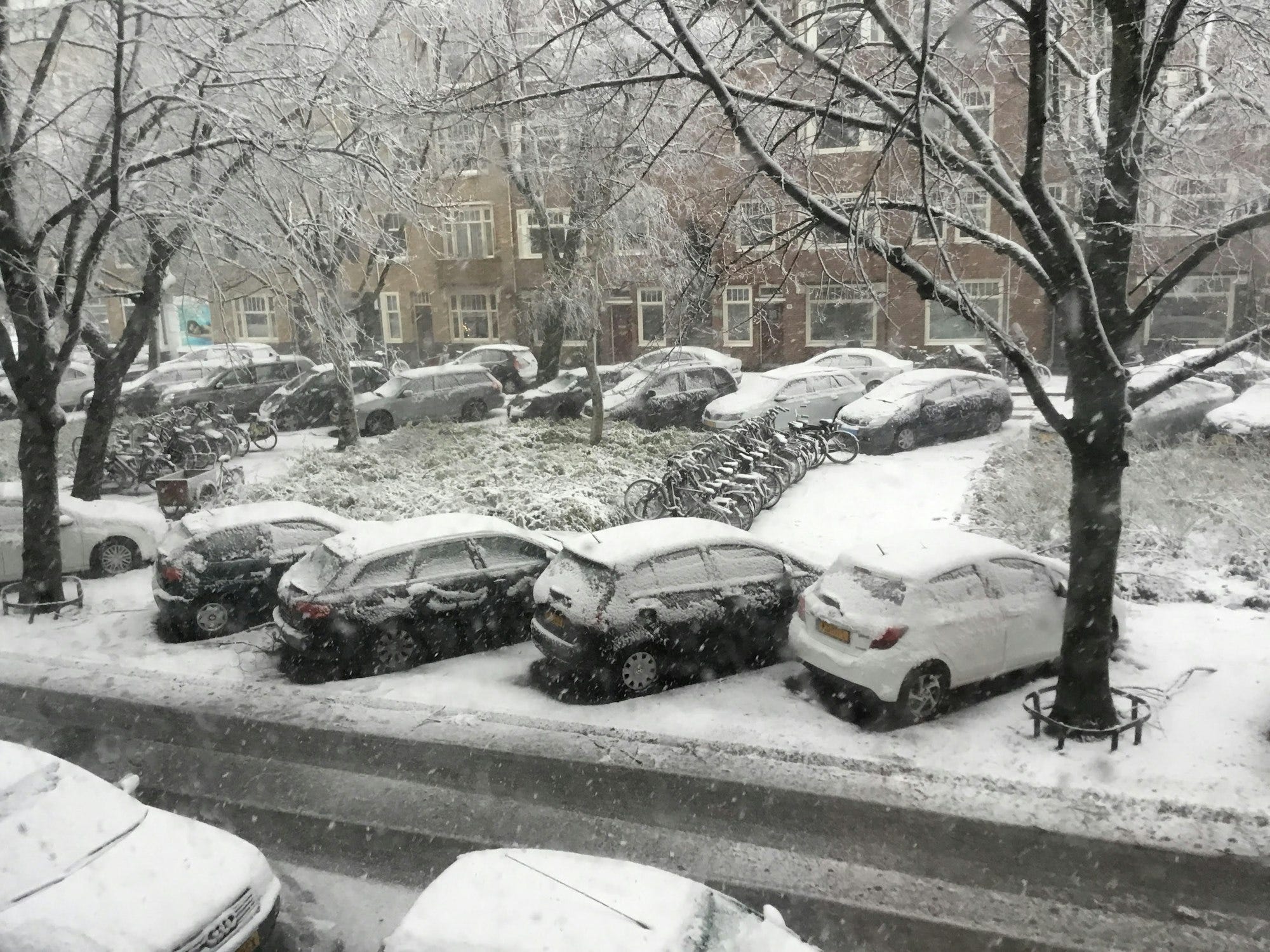

Trains, flights, and roads were hit at the same time
In early January, snow and freezing conditions disrupted travel across the Netherlands on multiple fronts. Rail services ran with delays and cancellations, Schiphol saw large-scale flight disruption, and road conditions led to major warnings and accidents. In several provinces, weather alerts were raised to code orange for slippery roads caused by snow and freezing.
The disruption also fed on itself: when one part of the system slows down, it pushes more people onto other forms of transport while those systems are also under strain.
Rail is vulnerable to frozen switches and knock-on delays
Dutch rail runs at high frequency, with tight planning and many connections. That is efficient in normal weather, but it leaves less room for error when equipment fails.
Winter weather can cause switch failures (frozen or blocked points), forcing trains to slow down, reroute, or be cancelled. NS and international rail updates have warned that winter conditions lead to switch problems and that disruption teams are deployed to fix them.
To keep the system stable, NS has used a winter timetable, meaning fewer trains run on certain routes. NS has explicitly told passengers to expect extra travel time, more transfers, and crowded trains when this timetable is active.
The problem is that rail disruption is rarely isolated. If a train is cancelled or delayed early in the day, rolling stock and staff end up in the wrong place, causing secondary delays elsewhere. With a network as interconnected as the Netherlands’, small faults quickly cascade.
Schiphol faces a “ground operations” bottleneck, not just snow
For aviation, the biggest disruption often happens on the ground. Aircraft need de-icing before departure, and this slows turnaround times, limits the number of flights that can safely leave, and creates delays across the schedule.
This week’s disruption became more serious because KLM warned it was running short of de-icing fluid after days of heavy operations. The airline said it had been using around 85,000 litres per day with all its de-icing trucks working continuously, while supply delays worsened the situation.
When de-icing becomes the limiting factor, cancellations can surge even if runways remain technically usable. That is why the disruption at Schiphol continued for days and affected large numbers of passengers.
Roads can be treated, but ice still forms fast
The Netherlands has a strong road maintenance system, but freezing conditions are difficult when temperatures hover around zero and precipitation shifts between snow, sleet, and refreezing water.
Rijkswaterstaat reported deploying millions of kilograms of salt on highways during this period, yet many accidents still occurred and long traffic jams built up.
Salting helps, but it is not a guarantee: especially on bridges, slip roads, shaded sections, and roads that cool quickly overnight. In some conditions, snow can also compact into a slippery layer before salt fully works.
Why the Netherlands can feel “unprepared”
The Netherlands is not ignoring winter planning. The issue is that the country’s infrastructure and operating model are built for high efficiency in normal conditions, not for long periods of snow and ice.
Several factors make disruption more likely:
1) Milder winters reduce readiness and capacity
Winters in the Netherlands are often wet and relatively mild. When snow is less frequent, it becomes harder to justify very large investments in equipment, supplies, and staff that may only be used a few days per year. This can create a “thin margin” problem when a real cold snap arrives.
Climate trends also point to a complicated reality: average temperatures rise, but extreme events still happen. The Netherlands has warmed significantly over the long term, but that does not eliminate the risk of severe winter episodes.
2) High density makes the system fragile under stress
The Netherlands runs one of Europe’s densest transport systems. That is normally a strength: frequent trains, busy airports, and efficient roads. But during snow and ice, it can mean:
less spare track capacity when switches fail,
fewer alternative routes if one corridor is blocked,
faster spillover from one region to another.
3) Tight scheduling leaves little buffer
Airlines schedule aircraft and crews in tightly linked rotations. Rail timetables also rely on precise sequencing. When winter weather adds even small delays (extra de-icing time, slower train speeds, longer braking distances) everything downstream is affected.
4) Winter response depends on supply chains
The de-icing fluid shortage warning highlights a wider point: winter disruption is not only about snow removal. It is also about whether critical supplies can be delivered on time during extreme conditions.
5) Safety rules become stricter under uncertainty
Transport systems are designed to fail safely. That means reducing speed, cancelling services, spacing out flights, and issuing warnings when risks rise. Code orange warnings for slippery roads are a sign that authorities are prioritising safety over “business as usual.”
The Netherlands is struggling not because it never planned for winter, but because it runs a highly optimised, high-density system with limited spare capacity. When snow and ice arrive suddenly and persist for several days, the weak points appear quickly: frozen switches, slow ground operations at airports, and roads that refreeze faster than crews can treat them. The result is disruption that spreads across the country and takes time to stabilise even after conditions start to improve.