


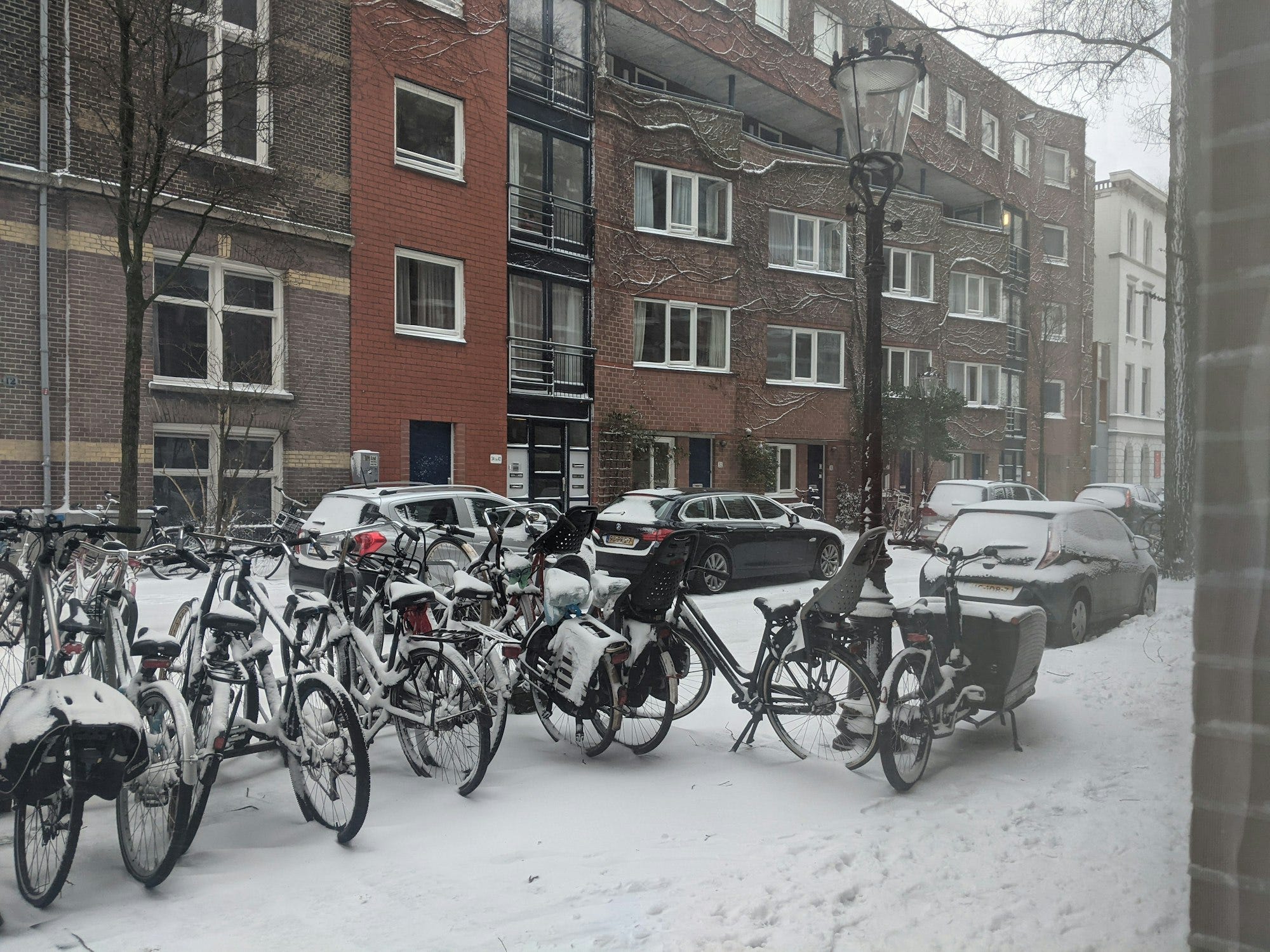

In several parts of the Netherlands, winter conditions have forced municipalities and waste companies to pause or scale back garbage collection. The main issue is safety: heavy vehicles like waste trucks struggle on slippery residential streets, and drivers can’t safely stop and start repeatedly when roads are icy.
Some waste services have publicly announced that containers could not be emptied due to snow and slippery conditions, and that collections will be rescheduled later. In these cases, residents are often asked to bring bins back inside to avoid hazards on sidewalks and streets.
In Amsterdam, the city has warned that street cleaning is not always possible during severe winter weather. The municipality said cleaning staff are also being used for gritting work, focusing on high-risk areas such as bus stops, stairs, bridges, pavements near hospitals, and cycle routes near schools. The city said it would collect as much waste as possible, but stressed that safety comes first.
Supermarkets see delayed deliveries and empty shelves
The disruption has also reached everyday shopping. Multiple reports have described delivery delays, particularly for fresh items that depend on tight logistics schedules.
Some Albert Heijn supermarkets reported empty shelves, with problems especially affecting dairy, meat, and fruit and vegetables. The main reason given was that deliveries were held up by snow and transport disruption.
Other updates suggest the picture varies by region. Some chains said stores remained mostly stocked overall, but acknowledged minor delays and, in some cases, the cancellation of a small number of online deliveries when conditions were considered unsafe for drivers.
Even short disruptions can be visible in Dutch supermarkets because many locations rely on frequent deliveries and relatively low storage. When trucks arrive late (or not at all) fresh food sections can look empty quickly, even if shelves recover within a day.
Events cancelled as cities run low on salt
Beyond transport and shopping, winter weather has led to cancelled local events and changes to normal routines.
Some municipalities have warned that supplies of road salt are running low, forcing them to make choices about where to grit. In some places, authorities have said they may focus only on main roads or mix remaining salt with sand. This has contributed to event cancellations and a wider sense that services cannot run as normal everywhere at once.
Separately, some winter and New Year activities have also been called off due to ice or unsafe conditions: for example, several traditional New Year’s “dives” were cancelled in locations where ice made entering the water dangerous.
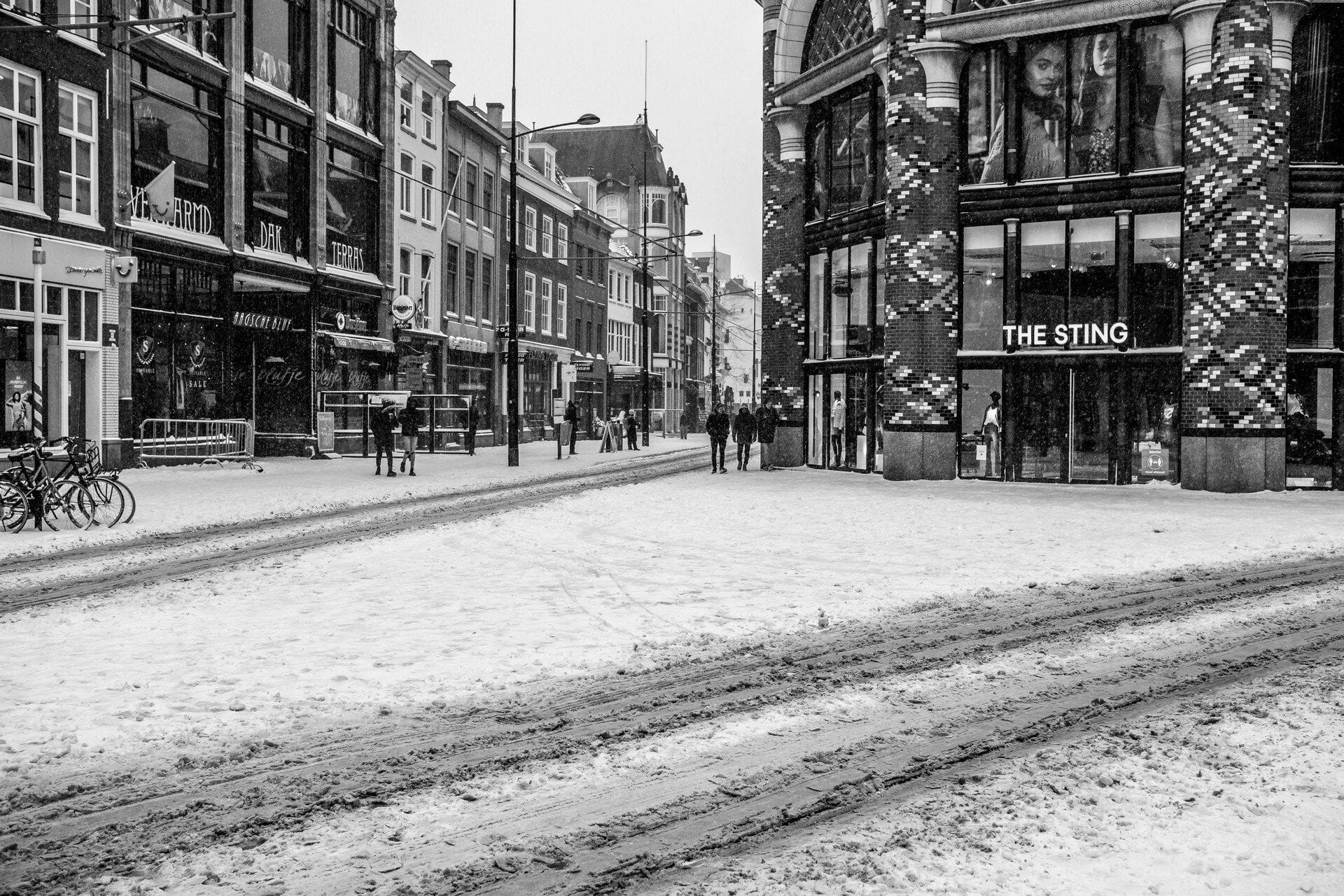
Travel disruption adds pressure to local services
Many of these service problems are linked to the same root issue: when roads are icy, everything slows down. Not only commuters, but also delivery trucks, municipal vehicles, and service providers.
The broader transport impact has been significant. Reuters reported that heavy snowfall disrupted air, road, and rail travel, including large-scale flight cancellations and disruption around Amsterdam.
When airports and highways are strained, logistics systems also struggle. That can make it harder to restock stores, deliver medical supplies, or run municipal schedules normally, even if the snowfall itself is not extreme.
Why disruption feels so widespread in the Netherlands
The Netherlands is especially vulnerable to these chain reactions for a few practical reasons:
High density and tight scheduling: many services rely on precise planning and frequent trips.
Local streets and cycling routes: even if major roads are treated, smaller streets and bike paths can remain slippery.
Stop-start driving: waste trucks and delivery vans do constant stopping, which is risky on ice.
Limited slack: supermarkets and service providers often run “just-in-time” systems, so delays show up quickly.
This doesn’t mean the country has no winter planning. It means that when snow and ice hit multiple days in a row, the systems that are designed for speed and efficiency become easier to disrupt.
How long could the snow last
Forecasts suggest winter weather is not finished yet, though conditions may fluctuate rather than staying snowy every day.
For Amsterdam and much of the west, the latest forecast shows:
Friday (Jan 9): periods of snow and rain, little or no accumulation
Saturday (Jan 10): intermittent snow and flurries, around a light coating to a few centimetres possible
Sunday (Jan 11): colder and drier
Monday (Jan 12): another round of snow is possible, with several centimetres of accumulation forecast, plus a risk of sleet or freezing rain later
Tuesday (Jan 13): some additional light snow possible
The KNMI alert included with the forecast data also shows a yellow warning for snow and ice in North Holland lasting into early Saturday morning, highlighting ongoing risk from freezing and snow remnants even when snowfall is light.
What to expect next
In practice, many services restart gradually. Waste collection often resumes first on main routes, while smaller streets may take longer. Supermarket supply chains tend to recover quickly once highways clear, but fresh food gaps can reappear after any new snow band.
If the forecasted snow next week arrives as expected, the Netherlands may see another round of service disruption, especially if temperatures drop overnight and refreezing becomes a bigger problem than snowfall itself.