


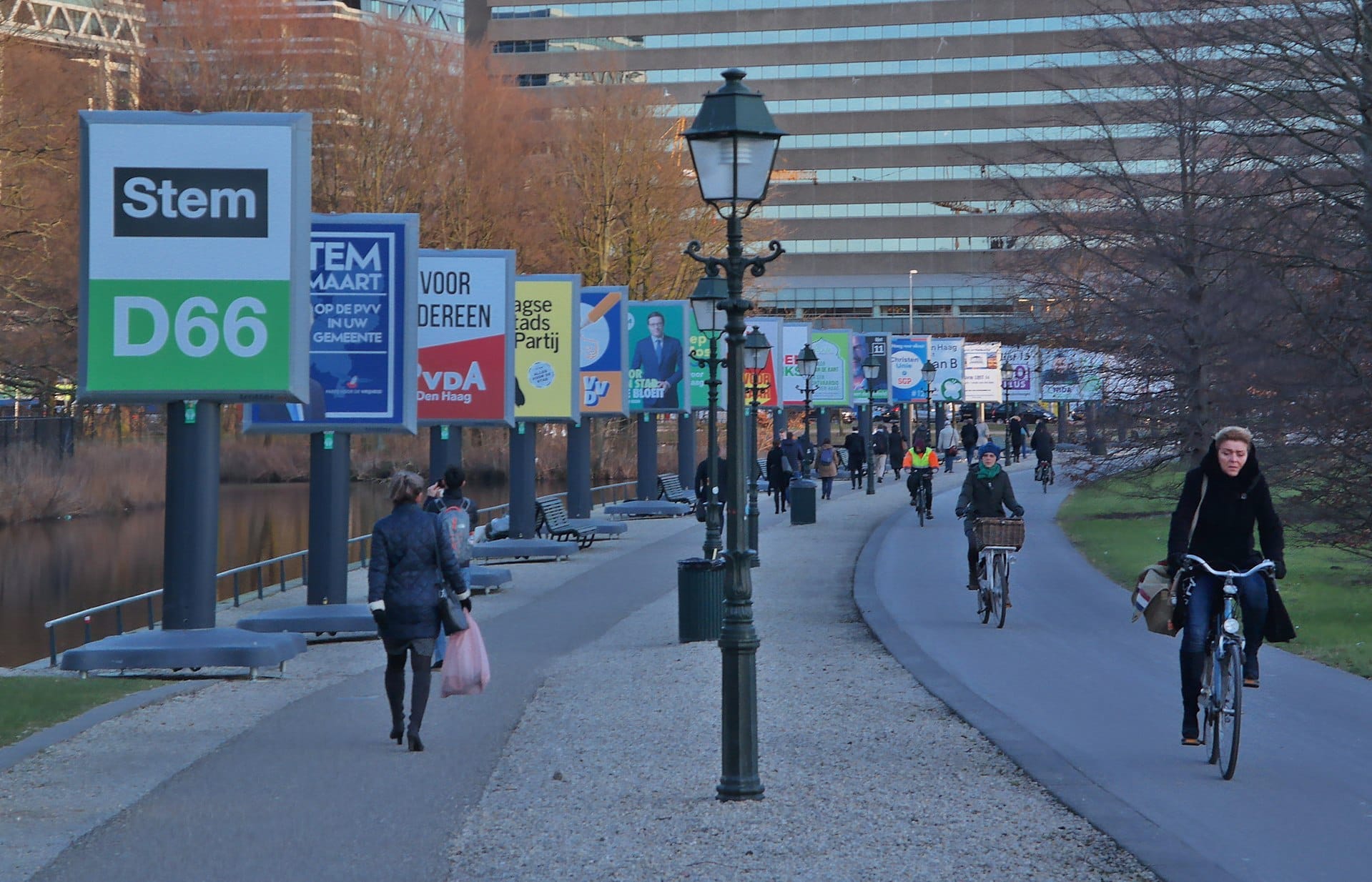
Voting aids for the upcoming Dutch municipal elections have gone online, with StemWijzer now available for 258 of the 340 participating municipalities. The tools are designed to help voters navigate local issues and party positions ahead of the 18 March elections, though a technical glitch initially blocked access for non-subscribers to certain regional newspapers.
The number of municipalities covered by StemWijzer has increased dramatically compared to four years ago, when the voting aid was available for just 55 municipalities. A competing tool, Kieskompas, covers an additional 49 municipalities.
Partnership with regional media
For the first time, ProDemos, the organisation behind StemWijzer, has partnered with DPG Media to develop the voting aids. Local journalists from regional titles including Het Parool, Brabants Dagblad, De Stentor, De Gelderlander and Tubantia helped formulate 25 to 30 statements per municipality on relevant local political issues.
Users can access the StemWijzer through Stemwijzer.nl by selecting their municipality, which redirects them to the relevant regional newspaper website. However, non-subscribers to AD and regional titles initially encountered a login screen. A ProDemos spokesperson said this was a technical error and that the voting aids would be made accessible without login or paywall "as soon as possible."
The voting aids are available in Dutch, Frisian and English. It is up to individual municipalities to decide whether to commission a voting aid and which provider to use. StemWijzer compares the positions of all participating local parties unless a party opts out.
8 million users for national elections
During the November 2025 parliamentary elections, more than 8 million visitors completed the StemWijzer, according to ProDemos. The 55 voting aids created for the 2022 municipal elections were completed more than 1.6 million times, with the day before the elections and election day itself proving most popular.
The Dutch data protection authority has warned voters not to rely on AI chatbots as voting aids, noting that large language models can produce inaccurate or biased information about party positions.
Threats against council members double
As voters prepare to cast their ballots, new research reveals the challenging environment facing local politicians. A survey by the NOS and regional broadcasters in cooperation with the Dutch Association for Council Members found that one third of council members experienced aggression, threats or verbal violence during the current term, more than double the 15 percent recorded in 2022 and six times the 5 percent reported in 2015.
Thirty percent of those who experienced threats said it affected their ability to function, up from 25 percent four years ago. Women are threatened and verbally abused more frequently than men. Much of the intimidation related to plans for asylum seeker reception centres, though disputes over local swimming pools, library closures and even traffic calming measures in 30 km/h zones have also triggered verbal violence.
"I was threatened with death via my private email because of a contribution in the council. Later I was followed for some time by someone on a fatbike," one experienced female council member in Zuid-Holland told researchers. A VVD council member in Gelderland reported having eggs thrown at his kitchen window.
Three-quarters seek re-election
Despite the increased hostility, three-quarters of council members plan to stand for re-election, the same proportion as four years ago. Eighty-six percent said they were satisfied with what they achieved during the current term.
"Every case of aggression and intimidation is one too many," said Abdullah Uysal, chair of the Dutch Association for Council Members. "Together with the ministry and other organisations, we are trying to prevent these excesses and provide aftercare when it does happen."
The average council member spends around 20 hours per week on council work, with 42 percent doing so alongside a full-time job. Time constraints and workload are the main reasons council members choose not to continue.
New ballot paper tested in 11 municipalities
Eleven municipalities will trial a smaller A3-format ballot paper during the elections. The participating municipalities are Alphen aan den Rijn, Boekel, Gouda, 's-Hertogenbosch, Leiden, Meierijstad, Midden-Delfland, Nijmegen, Noordoostpolder, Soest and Tynaarlo.
The new ballot lists candidate numbers rather than names, allowing voters to select both a party and a candidate number. Research following earlier trials found more invalid votes were cast with the new format. The municipality of Borne withdrew from the experiment due to concerns about invalid votes and reduced candidate recognisability.
Hilversum and Wijdemeren will not participate in the March elections as they are merging into a single municipality from 1 January 2027. Residents of those municipalities will vote in November 2026 for the new combined council.