


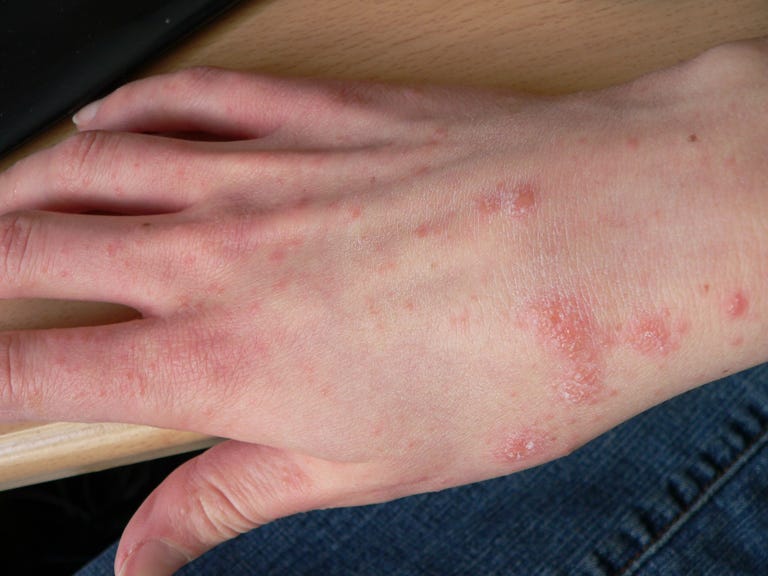

Scabies infections have risen sharply in the Netherlands since the COVID-19 pandemic, prompting a new nationwide research effort to control the outbreaks. Cases have spread beyond student housing, where the skin condition first took hold, into daycare centres and nursing homes, putting vulnerable populations at risk.
Before the pandemic, scabies was rare in the Netherlands. In 2014, about 100 people per 100,000 residents were affected. By 2020, that number had risen to 260 per 100,000. Three years later, infections had quadrupled. Cases remained high in 2024, though slightly below the peak.
Erasmus MC, the university medical centre in Rotterdam, is now leading a national study in collaboration with Radboud University Medical Centre and several regional health services. The project, called "Schurft aan schurft!" (roughly, "Attack scabies!"), aims to find better ways to diagnose, treat, and prevent the disease.
A forgotten disease
Wilma Stolk, a public health researcher at Erasmus MC who is coordinating the study, told the newspaper AD that scabies has long been neglected. "It actually is exactly the problem now. Because it was a forgotten disease, very little research and development has been done," she said.
Scabies is caused by tiny mites that burrow into the skin and lay eggs, triggering an allergic reaction. Symptoms include intensely itchy red spots that are often worse at night. They typically appear four to six weeks after infection, meaning people can spread the disease before they know they have it.
The mites spread through prolonged skin-to-skin contact and can survive for days on clothing, bedding, and furniture. Treatment requires special creams or tablets, thorough cleaning of living spaces, and coordinating treatment with anyone who had close contact with the infected person in recent weeks, even if they show no symptoms.
Delayed diagnosis
One focus of the new study is faster diagnosis. Doctors rarely see scabies in clinical practice, making it easy to miss or misdiagnose. Researchers are developing an image database to help clinicians identify the condition and are testing whether a self-test could allow patients to collect their own skin scrapings for analysis.
"We would like to have a self-test for scabies, and are therefore investigating whether the condition can be detected in skin scrapings that a patient can take themselves," Stolk said. A pilot study has already shown promising results.
The team is also exploring whether outbreaks in institutions like nursing homes could be detected earlier by testing washing machine water for traces of the mites.
Nursing homes hit hard
Outbreaks in nursing homes are particularly difficult to control. Residents with dementia may not notice or report symptoms, allowing infections to spread undetected for weeks.
An outbreak at the Scheldehof nursing home in Vlissingen in 2023 illustrated the challenges. Frank Passchier, the location manager, told AD that one resident's infection went unnoticed at first. "The parasites under the skin of this resident had exploded and were already in the air," he said.
Once an outbreak is discovered, clearing a facility of mites can take considerable time and effort, requiring treatment of all residents and staff who had contact with infected individuals, along with thorough cleaning of rooms, furniture, and textiles.
Students still most affected
Young adults, particularly students, remain the group most affected by scabies. Research by Erasmus MC found that over half of students who had scabies experienced multiple episodes, and nearly half diagnosed themselves because they had difficulty accessing medical care or getting a timely appointment.
Many students also failed to notify all their contacts, particularly casual partners, allowing the infection to continue spreading. Researchers found that unclear guidelines, uncertainty about how they became infected, and embarrassment all played a role.
The new study will also develop a mobile app to guide patients and their contacts through the treatment process and remind them to take all necessary steps.
Looking for solutions
Ultimately, researchers want to understand what it will take to stop the epidemic. "Is it enough to diagnose faster and treat better, or will that only succeed with new medicines or large-scale treatment of risk groups?" Stolk said.
The advice for anyone with persistent itching and red spots is to see a doctor, and anyone who has had close contact with an infected person should be treated, even without symptoms.