


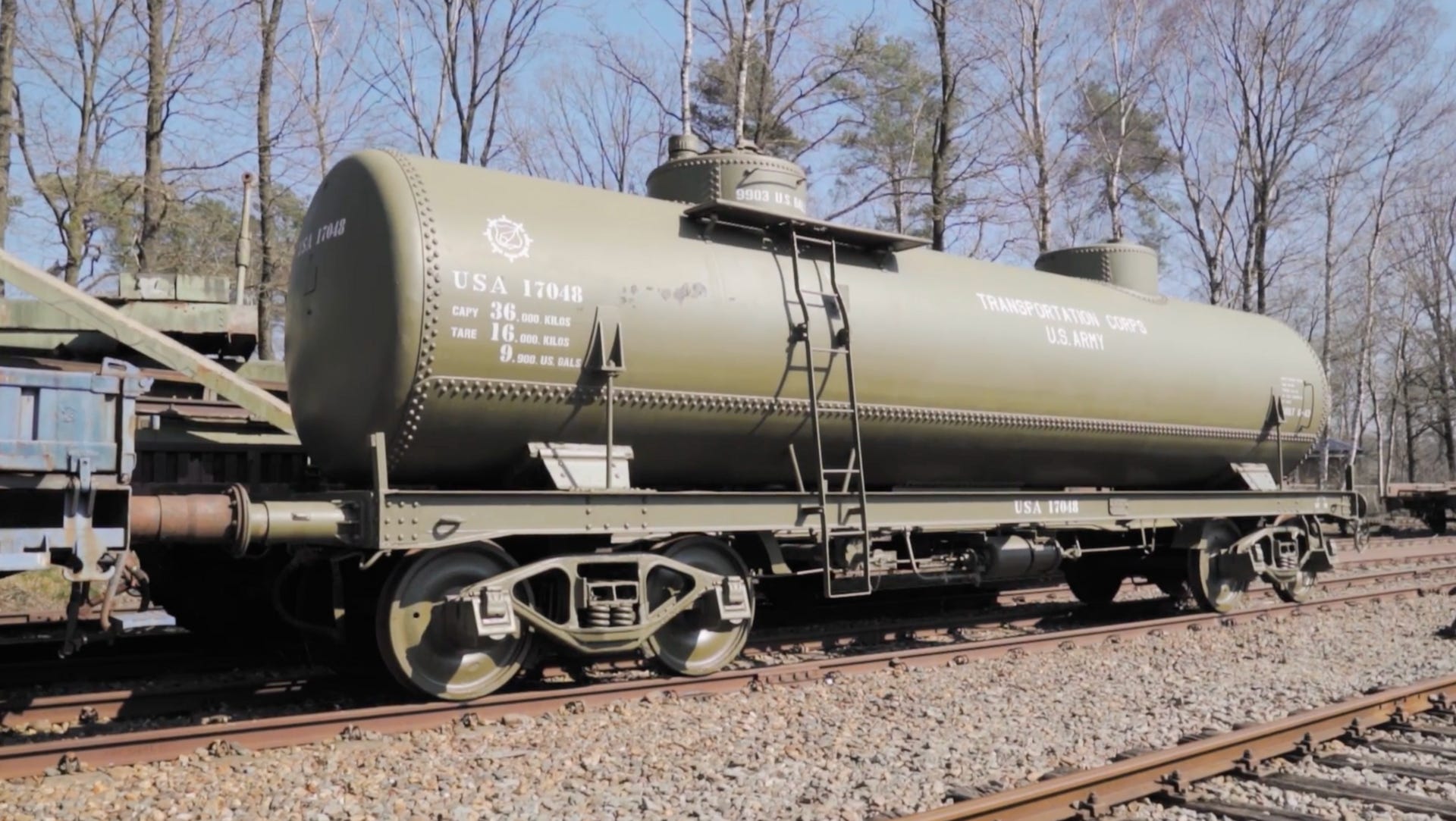
The Dutch government has decided that urgent military trains will get priority over passenger and freight services starting late 2026, a change that could disrupt regular train traffic for hours at a time. The decision marks a major shift in how the Netherlands manages its crowded rail network and reflects growing security concerns in Europe.
How the Priority System Is Changing
Currently, NS passenger trains have the highest priority on Dutch tracks, followed by regional carriers like Arriva, then freight trains, with military transport coming last. Caretaker Infrastructure State Secretary Thierry Aartsen says this system "no longer fits the world we live in."
Starting late 2026, urgent military trains will be able to jump to the front of the line. Aartsen acknowledged the direct impact on regular travellers: "It is an extreme measure, but it may happen that travellers hear: 'NS trains will not run for the next two hours because there is a military transport.'"
Not Every Military Train Gets Priority
An important detail: the policy doesn't mean all military trains automatically go first. Only those labeled as "urgent" will get priority. The ministers of Defence and Infrastructure will jointly decide when this priority applies, based on security risks or hard deadlines.
Aartsen stressed that routine military transports will continue under the normal priority system. Only when there's a genuine urgent need (such as responding to a security crisis or meeting critical NATO deadlines) will military trains be allowed to halt passenger services.
Why the Change Is Happening Now
The Netherlands handles several dozen military rail transports each year currently, but that number is expected to rise sharply as Defence prepares for potential large-scale military movements. The country plays a crucial logistical role in NATO because of its major seaports, from Vlissingen to the Eemshaven, where ships can load and unload heavy military equipment.
However, military movements are extremely slow under current rules. "A tank that has to go from Rotterdam to Ukraine already spends time waiting at multiple locations within the Netherlands because it has no priority, or due to endless paperwork," Aartsen explained. "As a result, trains often stand still for long periods at the border. Altogether, it quickly takes more than a month to get a military transport from the Netherlands to Ukraine."
That delay is a serious problem for NATO's ability to respond to crises. Radmila Šekerinska, a senior NATO official and close aide to Secretary-General Mark Rutte, told NOS: "We can have the best NATO troops in the world, but if we cannot get them to our eastern border on time, we are nowhere."
The Rail Network Isn't Ready
Priority alone won't solve the problem, though. A report presented in mid-October by the Van der Maat commission concluded that the Dutch rail system is far from "war-ready." The report identified 65 bottlenecks that make military transport difficult, including:
Platforms that are too short for long military trains
Trackside markers and equipment that get in the way of oversized loads
Width restrictions that force adjacent tracks to close when wide military equipment passes
If a tank is wider than 3.15 meters, adjacent tracks often must be shut down for safety, meaning a single military train can disrupt rail traffic for hours even without the priority rule. Making the network fully suitable for military use would require an estimated €600 million, according to the report. That funding hasn't been allocated yet and will be left to the next government to decide.
Legal and Practical Concerns
ProRail CEO John Voppen called the policy shift necessary but warned about legal complications. "Military transports are often organised at the last minute, which means there is no longer space," he said. "But if I, on behalf of ProRail, wrongly give priority to a military transport, the Authority for Consumers and Markets will immediately reprimand me."
In other words, ProRail could face penalties if it disrupts passenger services for a military train that turns out not to be genuinely urgent. This creates a difficult situation where ProRail must balance national security needs against legal requirements and commercial obligations to passenger and freight customers.
Push for "Military Schengen"
The government is also pushing for a European "military Schengen": a system aimed at removing bureaucratic and physical barriers to cross-border military rail traffic, similar to how the Schengen Agreement removed border controls for people.
The Netherlands is leading efforts to clear obstacles along the North Sea–Baltic Corridor, a more than 9,000-kilometre rail route from seaports through Germany to the Baltic states. The government has asked European partners along this corridor to study rail military mobility needs to ensure military equipment can move quickly across borders.
"These times demand resilient rail," Aartsen argued, pressing other countries to follow the Netherlands' example in preparing their rail networks for military use.
What This Means for Train Travelers
For regular train passengers, the practical impact remains unclear. If military transports remain relatively rare—dozens per year rather than hundreds—most travelers may never experience a delay caused by military priority. However, if military movements increase significantly as expected, passengers could face occasional multi-hour disruptions with little advance warning.
The government hasn't provided details about how much notice travelers will receive or whether alternative transportation will be arranged during military-caused disruptions. These operational details will likely be worked out as the system is implemented.
Aartsen acknowledged the inconvenience but framed it as a necessary obligation: "We have to say: 'Sorry, if necessary, the military comes first.'" The message is clear: in a world with rising security threats, defence needs are becoming a bigger priority, even if it means occasional disruption to everyday life.