


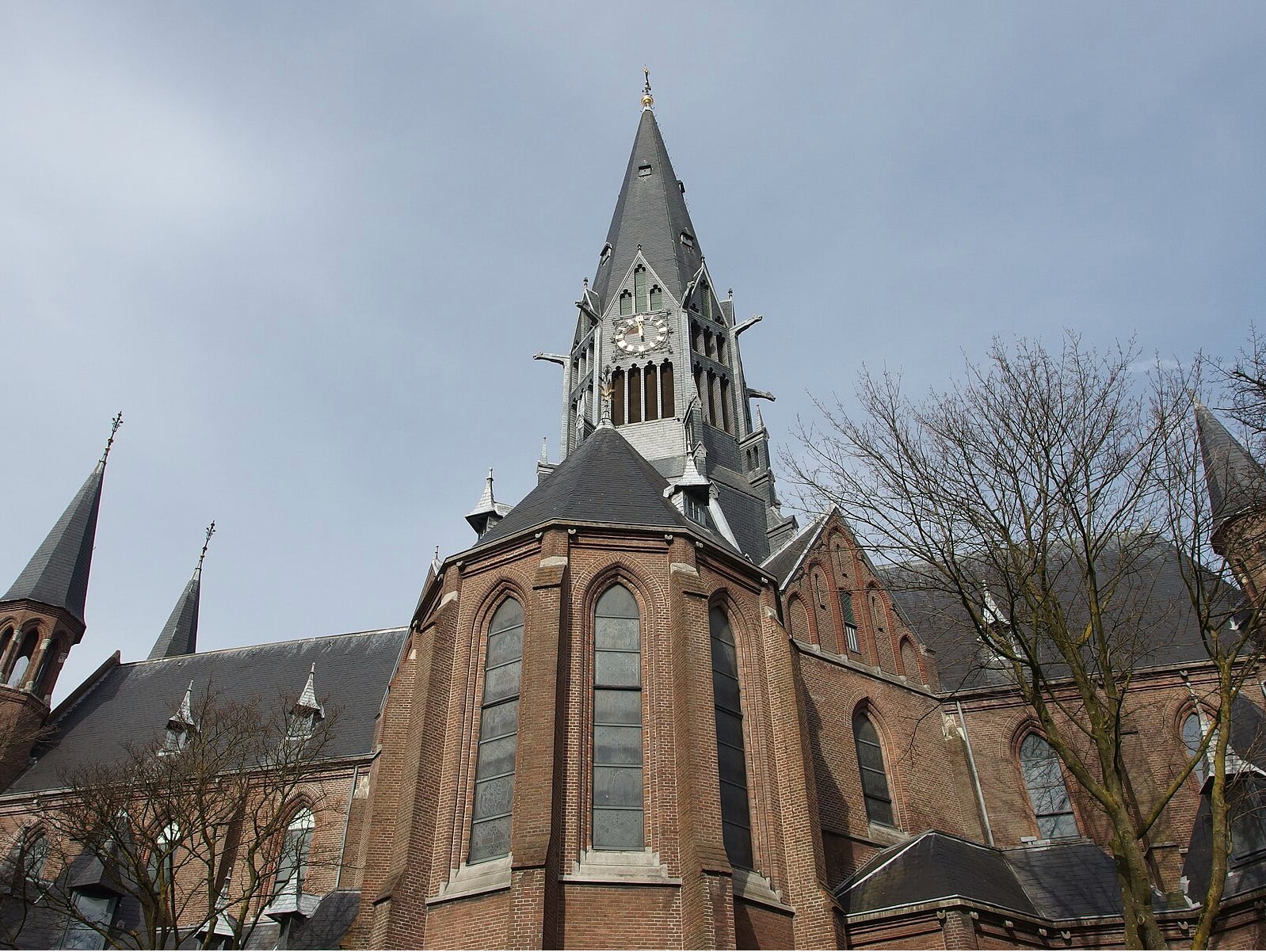

A historic neo-Gothic church in central Amsterdam was largely destroyed by fire shortly after midnight on New Year’s Eve, turning the final night of legal consumer fireworks in the Netherlands into a moment of cultural loss and renewed debate over public safety. Amsterdam Mayor Femke Halsema called the destruction of the Vondelkerk “a major loss for the city,” as emergency services across the country dealt with violence, fires, and widespread unrest.
Vondelkerk aflame
The fire broke out just after midnight on January 1, 2026, at the Vondelkerk, located next to Vondelpark. Flames quickly spread through the roof and tower of the 19th-century building, causing large sections to collapse. Firefighters said early on that the structure could not be saved and focused on preventing the blaze from spreading to nearby homes.
Residents in the surrounding area were evacuated as a precaution, and debris from the collapsing tower damaged nearby properties. No injuries were reported in connection with the church fire itself, but authorities warned residents about soot particles settling on cars and gardens.
The cause of the fire has not yet been confirmed. Police and fire services are investigating several possibilities, including whether fireworks may have ignited the blaze. While officials have not officially linked the fire to fireworks, the timing: minutes after midnight on the busiest fireworks night of the year, has raised questions.

A landmark with deep cultural value
The Vondelkerk was built in 1872 and designed by Pierre Cuypers, the architect behind Amsterdam Central Station and the Rijksmuseum. Originally a Roman Catholic church, it fell into disuse in the late 20th century before being restored and repurposed as a venue for concerts, lectures, weddings, and cultural events.
The building was owned by Stadsherstel Amsterdam, an organisation dedicated to preserving historic buildings. The group said it would first assess the damage before deciding whether any part of the structure can be preserved, though early indications suggest restoration may not be possible.
New Year’s Eve Under Heavy Strain
The church fire occurred during a night that placed extreme pressure on Amsterdam’s emergency services. The city reported 52 arrests, hundreds of ambulance deployments, and more than 300 fire brigade callouts. Emergency workers reported being targeted with fireworks in several incidents.
Nationwide, police recorded around 250 arrests, according to early figures, and authorities confirmed two deaths linked to fireworks accidents elsewhere in the country. These incidents reinforced long-standing concerns from police, doctors, and firefighters about the dangers of consumer fireworks.
Record fireworks spending
According to the Dutch Pyrotechnics Association, residents splashed out a record 129 million euros on fireworks. The spending surge reflected what many saw as a "last hurrah" before the nationwide consumer fireworks ban takes effect after this celebration.
Despite firework-free zones in some cities, enforcement proved difficult, and loud explosions continued well into the early morning hours in several areas.
A turning point for fireworks policy
The destruction of a historic landmark, combined with fatalities, arrests, and violence against emergency workers, has intensified the debate over fireworks in the Netherlands. Supporters of the ban say the events of New Year’s Eve highlight exactly why the tradition has become untenable.
As investigators work to determine the cause of the Vondelkerk fire, the city of Amsterdam faces the reality of losing a 150-year-old cultural landmark on a night that may come to symbolise the end of an era in Dutch New Year celebrations.