


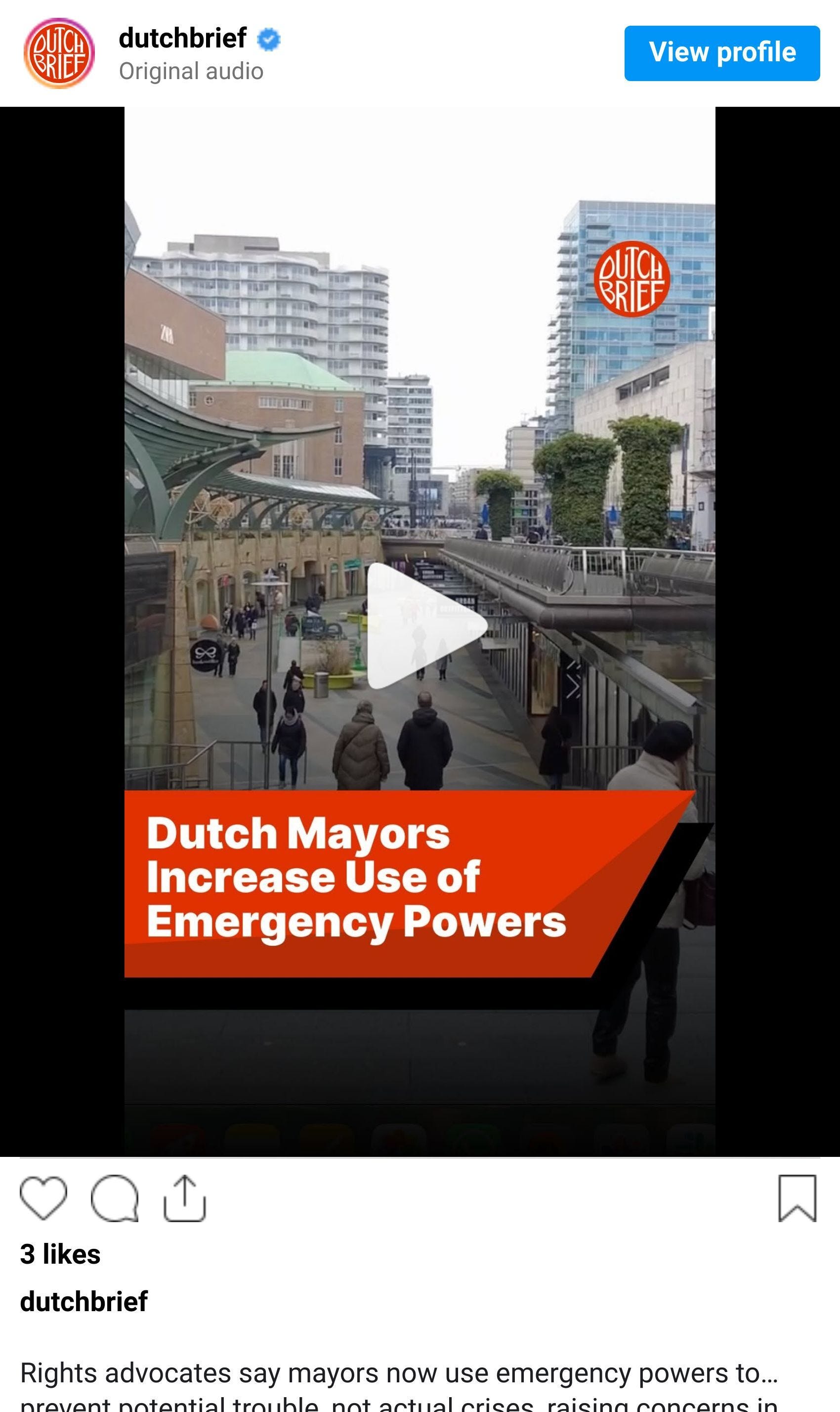
Dutch mayors are using special emergency powers much more frequently than before, worrying civil rights groups and legal experts who say these powers are limiting people's basic freedoms. According to data from NOS, mayors used emergency measures just 7 times across 6 cities in 2012. This year, they've used them 77 times across 38 cities, more than ten times as many.
What Emergency Powers Can Mayors Use?
Dutch law gives mayors two main emergency tools to deal with public safety problems quickly:
Emergency orders let mayors take immediate action like breaking up crowds, banning people from certain areas, or imposing curfews when serious trouble is happening or expected to happen soon.
Emergency by-laws are temporary rules that apply more broadly to a whole area, but still must be connected to an urgent safety need.
These powers come from Dutch municipal law (Articles 175 and 176 of the Municipalities Act). Mayors defend using them, saying they need fast ways to prevent violence at football matches, stop gang confrontations, or control protests that might get out of hand. They argue that normal legal processes are too slow when dangerous situations are developing quickly.
Why Critics Are Worried
Civil rights advocates say mayors are using the word "emergency" too loosely, making exceptional powers into normal everyday tools. Their main concerns are:
Stopping protests before they start: Mayors are increasingly banning protests and gatherings before anything bad happens, just because they fear something might go wrong. Amnesty International recently criticised Amsterdam for blanket protest bans around a risky football match, saying such heavy restrictions should only be used as a last resort and must be very specific, not broad.
Limiting basic freedoms: These emergency powers can restrict people's rights to gather, protest, move around freely, and maintain their privacy. Critics worry that what should be rare emergency measures are becoming routine ways to control public spaces.
Targeting certain groups unfairly: Vulnerable communities including migrants, young people, and activists fear that emergency rules are applied unevenly: affecting them more than others. This creates divisions and makes some groups feel public spaces aren't equally open to everyone.
Legal Challenges Growing
More people are taking legal action to challenge these emergency measures. One current case at the Council of State (the Netherlands' highest administrative court) questions whether cities can ban music and performances at climate protests. These lawsuits test whether municipalities are going too far in restricting constitutional rights.
The problem with going to court is that by the time judges rule on a case, the emergency measure has usually already done its damage: the protest was already banned, people were already stopped from gathering, or the event already passed. This makes court challenges less useful for protecting rights in real time.
What Experts Say Should Change
Legal experts and civil rights groups want several improvements:
Clearer rules: The government should define exactly what situations count as real emergencies and what situations don't.
Better oversight: Parliament and judges should review emergency measures more carefully to make sure they follow constitutional protections.
Transparency: Citizens need clear information about why emergency powers are being used, exactly what's restricted, and how long restrictions will last.
Accountability: There should be regular reviews to make sure emergency powers aren't being misused or kept in place longer than necessary.
National guidelines: Instead of each mayor deciding differently, the national government should set clear standards for when and how emergency powers can be used.
What's At Stake
The fundamental question is whether the Netherlands is moving from a system where laws protect rights to a system where those rights exist only when authorities decide not to temporarily suspend them. Emergency powers should be exceptions and used rarely when genuine threats exist. But if they become normal tools used dozens of times each year, they change the relationship between citizens and government.
Balancing public safety with democratic freedoms is genuinely difficult. Real threats exist, and mayors need effective tools to protect people. But those tools must have clear limits, transparent justification, and proper oversight to prevent them from undermining the very freedoms they're supposed to protect.