


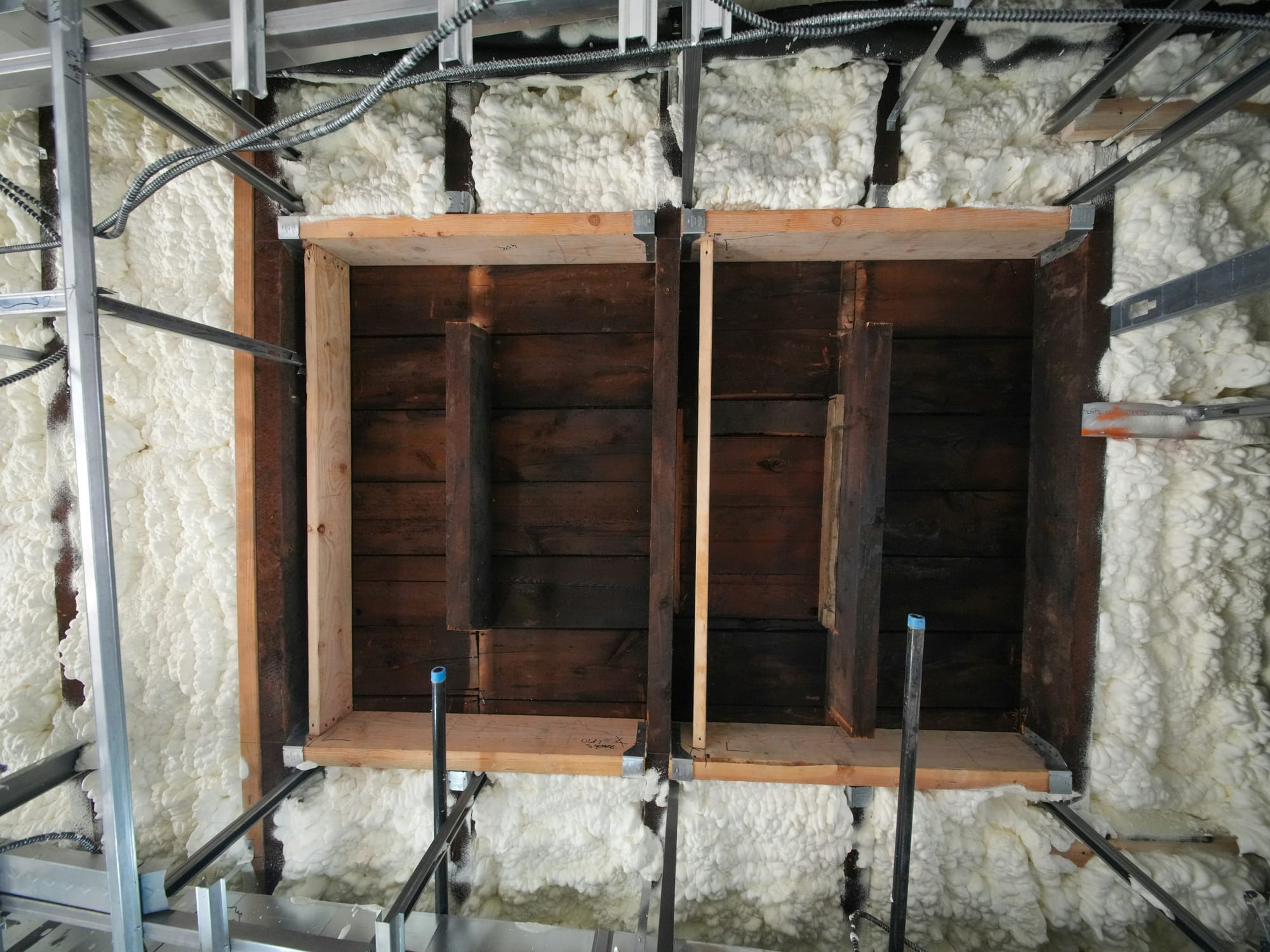
Municipal Health Service calls for immediate ban on UF-foam as government investigates prohibiting material or withdrawing subsidies.

Tens of thousands of Dutch homes contain insulation foam that releases formaldehyde, a carcinogenic chemical, prompting the Municipal Health Service (GGD) to call for an immediate ban on the material. At several locations, measured concentrations were so high that residents were advised to leave their homes immediately, while some properties have stood empty for three years.
The problems emerged from an investigation by television programme Zembla into UF-schuim, or urea-formaldehyde foam, an insulation material injected into cavity walls. Formaldehyde is classified as a substance of very high concern on the RIVM's list because it causes cancer and damages DNA. There is no safe dose.
Health complaints have been documented at seven locations across the Netherlands. Tenants in Elst, Dalfsen, Dedemsvaart, Capelle aan den IJssel and Purmerend, along with private homeowners in Oostzaan and Nieuwegein, have reported symptoms including breathing difficulties, headaches, eczema, insomnia and respiratory irritation. In some cases, the formaldehyde penetrated through walls into living spaces.
Apartments standing empty for three years
In Dalfsen, sixteen apartments managed by housing corporation VechtHorst were insulated with UF-schuim in 2021. Residents developed health complaints and were told by the GGD to leave immediately. Three years later, fourteen of those apartments remain uninhabitable because formaldehyde levels are still too high.
VechtHorst is now engaged in legal proceedings with insulation company Takkenkamp over responsibility for the situation. In court documents, the company reportedly acknowledged that this type of foam was not suitable for application in the manner used, yet proceeded anyway.
In Dedemsvaart, Roelof and Annie van der Weide have been forced out of the home where they lived for 52 years. Their house was insulated with UF-schuim last May, and they now live in a container on their property. Annie describes waking at night unable to breathe. "I went outside to get air because I couldn't breathe," she told RTV Oost. The toilet in their temporary container is not connected to sewerage. "This you wouldn't wish on anyone," Annie said. "That you can no longer live in your house is terrible."
Elsewhere, residents were confined for months to only a few rooms because the rest of their homes were unsafe.
Experts demand immediate ban
Jeroen de Hartog, environmental epidemiologist at GGD Utrecht, said the material should be banned immediately. "As far as the GGD is concerned, we should ban it now," he said. Only if research demonstrates the foam can be applied safely does he see any room for continued use. "But I don't know of such research."
Ad Ragas, professor of chemical risk analysis at Radboud University, supports an immediate prohibition. Formaldehyde causes throat and nasal cancer as well as leukemia, he explained, and because it is genotoxic, meaning it damages DNA, there is no dose that is absolutely safe. "Everything in me says: ban it. I would never in my life have my house insulated with UF-schuim."
Ragas described some of the measured values as "bizarrely high."
45 years of known risks
Zembla's investigation revealed that the health risks have been known for decades. Internal documents from the Ministry of Health, Welfare and Sport show that senior officials considered banning the insulation as early as 1980 due to cancer risks. However, the Ministry of Housing objected, citing the high costs of replacing formaldehyde-containing building materials.
Unlike Canada, which imposed a ban, the Netherlands allowed UF-schuim to continue being sold and used.
A special committee was established to advise on maximum permissible formaldehyde concentrations in homes. According to the documents, formaldehyde manufacturer Akzo had significant influence on this committee. The chemical industry downplayed cancer risks, after which the committee decided not to lower existing exposure standards.
Ragas called this "absurd." He said the norms urgently need critical re-examination. Formaldehyde appears not only in insulation but also in particleboard and cleaning products.
Energy efficiency push increased use
UF-schuim was first used more than fifty years ago and caused health complaints even then. Its use has increased significantly in recent years as the government encourages retrofitting older homes for energy efficiency. The foam can be easily injected from outside into existing cavity walls, even when remnants of older insulation are present, making it attractive for renovation projects.
Housing corporations have applied the material at dozens of projects involving thousands of homes, often targeting rental properties from the 1970s and 1980s.
Following the Zembla broadcast, insulation company Takkenkamp announced it would pause use of UF-schuim pending further research. "The research leads us to pause the application of UF-schuim until there is more clarity based on additional investigation," the company said in a statement.
Government response
The cabinet is now examining whether to ban UF-schuim or withdraw sustainability subsidies that currently support its use, according to a spokesperson for Minister Elanor Boekholt-O'Sullivan of Housing and Spatial Planning.
The Ministry of Interior Affairs said it welcomed the increased clarity about risks from UF-schuim application. It noted that when formaldehyde levels in buildings exceed safe thresholds as a result of the foam, municipal building and housing inspection departments can already take enforcement action.
The Ministry of Housing and Spatial Planning said it is aware of both current and historical problems and is awaiting results from an ongoing GGD investigation. "It will be examined whether current regulations are being sufficiently applied and whether they provide adequate protection."
Capelle aan den IJssel has taken immediate action, warning homeowners applying for municipal insulation subsidies and making agreements with landlords. The municipality will not provide insulation subsidies for projects using UF-schuim until its safety is clarified.
What residents can do
The GGD advises residents who suspect UF-foam in their homes to ventilate thoroughly. Those concerned about their situation can contact the GGD for advice, including about having measurements taken.
UF-schuim is sold under various brand names including Aminotherm, Thecotherm and Envirofoam. Homeowners can check documentation from their insulation work or contact the company that performed it. Tenants should enquire with their landlord.
Short-term formaldehyde exposure can cause breathing difficulties, headaches and eczema. Long-term exposure increases risk of throat and nasal cancer as well as leukemia.