


See more of Dutch Brief in your Google search results
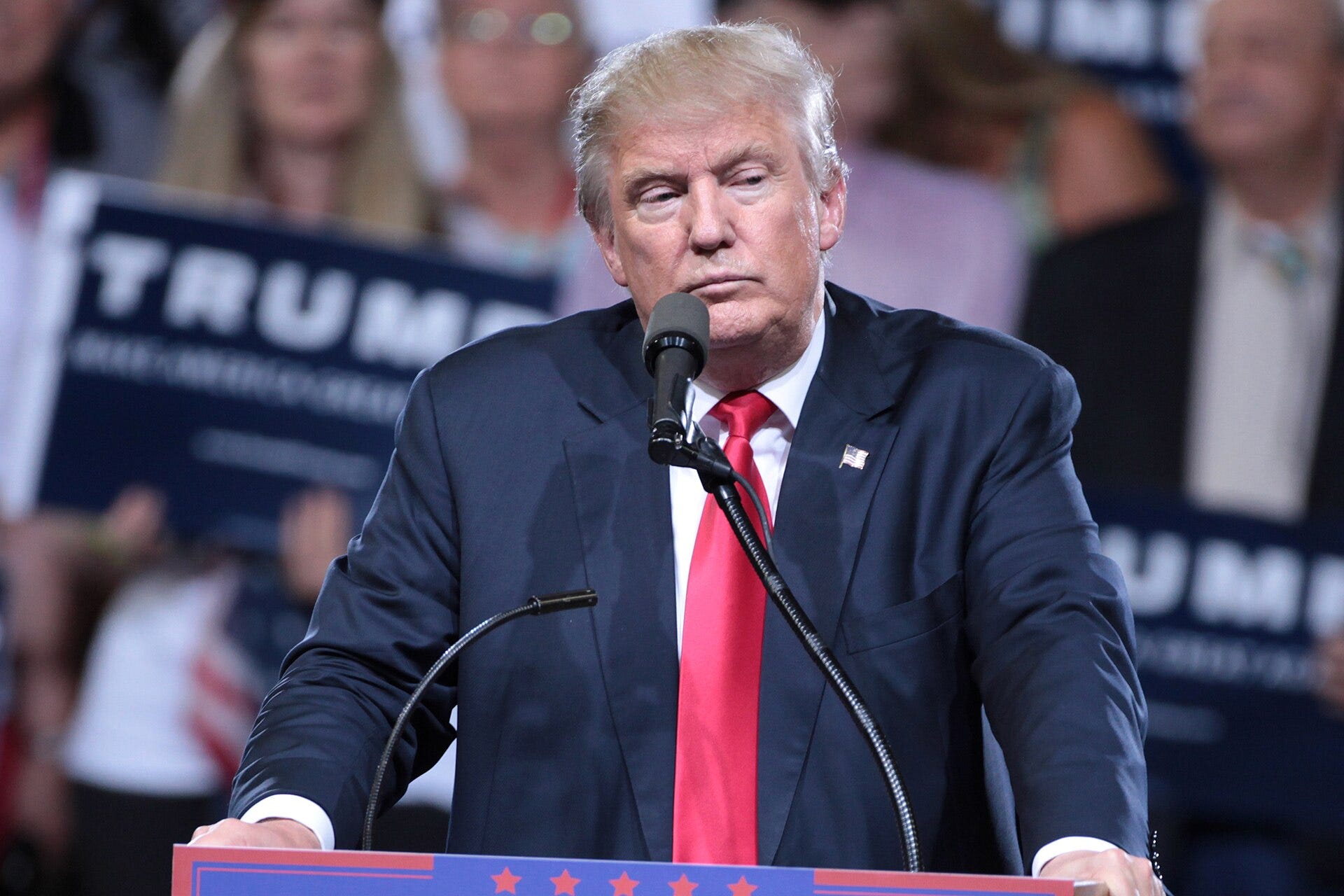
A decision under consideration in Washington could increase diesel prices across Europe. President Trump has stated he is seriously considering restricting US diesel exports to reduce domestic prices, a move energy companies and European leaders warn could significantly impact the continent.
Why Trump is considering it
US diesel prices have reached record highs in recent months, approaching $6.50 per gallon. This poses a political risk for Trump ahead of the November midterms, as polls indicate voters increasingly blame him for fuel costs. The proposed export restrictions aim to increase domestic supply and lower prices.
The proposal has strong support from Republican senators in farming states like Iowa, who argue that high diesel prices are harming farmers during harvest. However, it faces opposition within Trump’s administration. Energy Secretary Chris Wright has publicly opposed a blanket ban, warning it could raise petrol and jet fuel prices. The oil industry, typically aligned with Trump, also opposes the measure, citing concerns that reduced exports would lead refiners to process less crude oil, tightening supply. The White House has ruled out a full ban for now, focusing instead on voluntary limits or temporary, partial restrictions.
SPONSORED
You’re overpaying your accountant. And they still don’t call you back.

Neno gives you a dedicated bookkeeper, automated admin, real-time financial insights and a free business bank account. Everything your business needs, in one place.
No chasing. No surprises. No unnecessary costs.
Why Europe is exposed
For Europe, the key issue is why a US decision would have such an impact. The reason is the global diesel shortage and Europe’s increasing reliance on imports.
Multiple conflicts have tightened global diesel supply. Following Ukrainian attacks on Russian refineries, Russia, a major diesel exporter, imposed an export ban. The Middle East conflict has reduced exports from Saudi Arabia and the United Arab Emirates, while China has ordered its refineries to halt petrol and diesel exports. “All these factors together have created a worldwide shortage of diesel,” said Jan-Willem van den Beukel of the Dutch energy-sector body Vemobin. “If it comes to an export ban on diesel, the whole of Europe will suffer a lot.”
Europe has also lost much of its capacity to refine crude oil into diesel. “The Netherlands, with five refineries, still has good capacity to refine crude oil,” said Lucia van Geuns, an energy expert at the Hague Centre for Strategic Studies, “but within the EU as a whole, refining capacity falls short.” She noted that while global crude oil supply is sufficient, there is not enough capacity to produce adequate diesel and kerosene. This makes American fuel difficult to replace.
What it would mean
Diesel is essential for freight transport, agriculture, and shipping, which Van Geuns described as “the engine of small business.” Higher prices would affect the entire economy. This vulnerability has attracted broader attention. NATO Secretary-General Mark Rutte recently expressed concern about European refinery closures, noting that in the event of a Russian attack, “we need enormous quantities of diesel and kerosene for our fighter jets and tanks.”
It remains uncertain whether the restrictions will be implemented, as the legal situation is complex and the US lacks sufficient storage for surplus diesel. In the short term, Van Geuns said, US prices might fall, “but in the long term, America will pay a high price for this.”