


See more of Dutch Brief in your Google search results
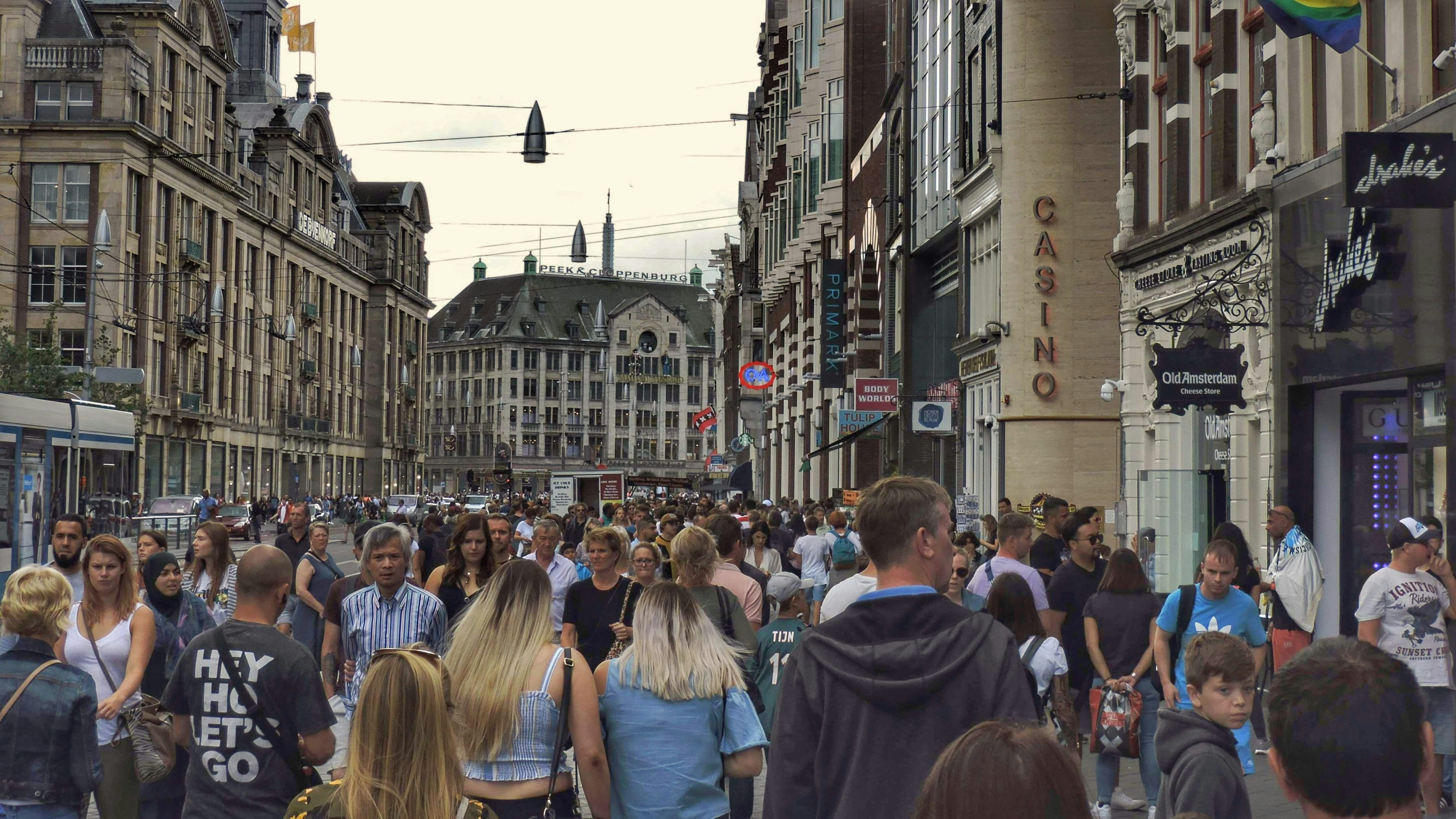
Anyone who has tried to board a rush-hour train or searched for an apartment already knows the Netherlands is crowded, and it’s getting even more so. New figures from the national statistics office, CBS, confirm that it is now the second most densely populated country in the European Union.
The main number
At the beginning of 2026, the Netherlands had 539 people per square kilometre, up from 468 in 2000, which is a 15 percent increase. In the EU, only Malta is more crowded, with 1,716 people per square kilometre, but Malta is much smaller. This means the Netherlands is the most densely populated of the EU’s larger mainland countries.
The main reason is simple population growth. Between 2000 and early 2026, the Dutch population grew from 15.9 million to 18.1 million people. All twelve provinces became more densely populated during this time.
Crowded in the west, spacious in the north
The national average hides big differences between regions. The west of the country is the most crowded, while the north is the least. Zuid-Holland has over 1,400 people per square kilometre, making it the most crowded province, followed by Noord-Holland (1,130) and Utrecht (953). Drenthe is the most spacious, with only 193 people per square kilometre, so Zuid-Holland is about seven times as crowded. People in Friesland (200) and Zeeland (222) also have a lot of space.
Looking at percentages, Flevoland saw the biggest increase since 2000, up 47 percent, which reflects its newer towns. Zuid-Holland also grew by 21 percent, both well above the national average.
SPONSORED
You’re overpaying your accountant. And they still don’t call you back.

Neno gives you a dedicated bookkeeper, automated admin, real-time financial insights and a free business bank account. Everything your business needs, in one place.
No chasing. No surprises. No unnecessary costs.
The extremes: The Hague and Schiermonnikoog
The differences are even bigger at the municipal level. The Hague is the most densely populated municipality, with about 6,900 people per square kilometre, followed by Leiden (5,900) and Haarlem (5,800). On the other hand, the Wadden island of Schiermonnikoog has only 24 people per square kilometre. Texel, Vlieland, Terschelling, and Ameland also give their residents plenty of space.
CBS pointed out an important detail about these numbers: a large population does not always mean high density, since it depends on the land area. For example, Rotterdam is not on the list of densest municipalities because of its huge port area, and Ede seems less crowded because of the undeveloped natural land of the Veluwe.
Why this matters
These numbers are more than just interesting facts. High and rising population density is at the centre of many challenges the Netherlands faces, especially the housing shortage, as more people compete for space in an already full country. It also puts pressure on the electricity grid, nature, nitrogen limits, infrastructure, and open spaces. This issue is a big part of the national debate about how much more the Netherlands should grow, and whether that growth should come from births or migration. In recent years, almost all population growth has come from immigration, though that has slowed down. For the many internationals living in the Netherlands, these numbers show what they experience every day: this is one of the most crowded countries in Europe, which helps explain why finding space and a home can be so difficult.