


See more of Dutch Brief in your Google search results
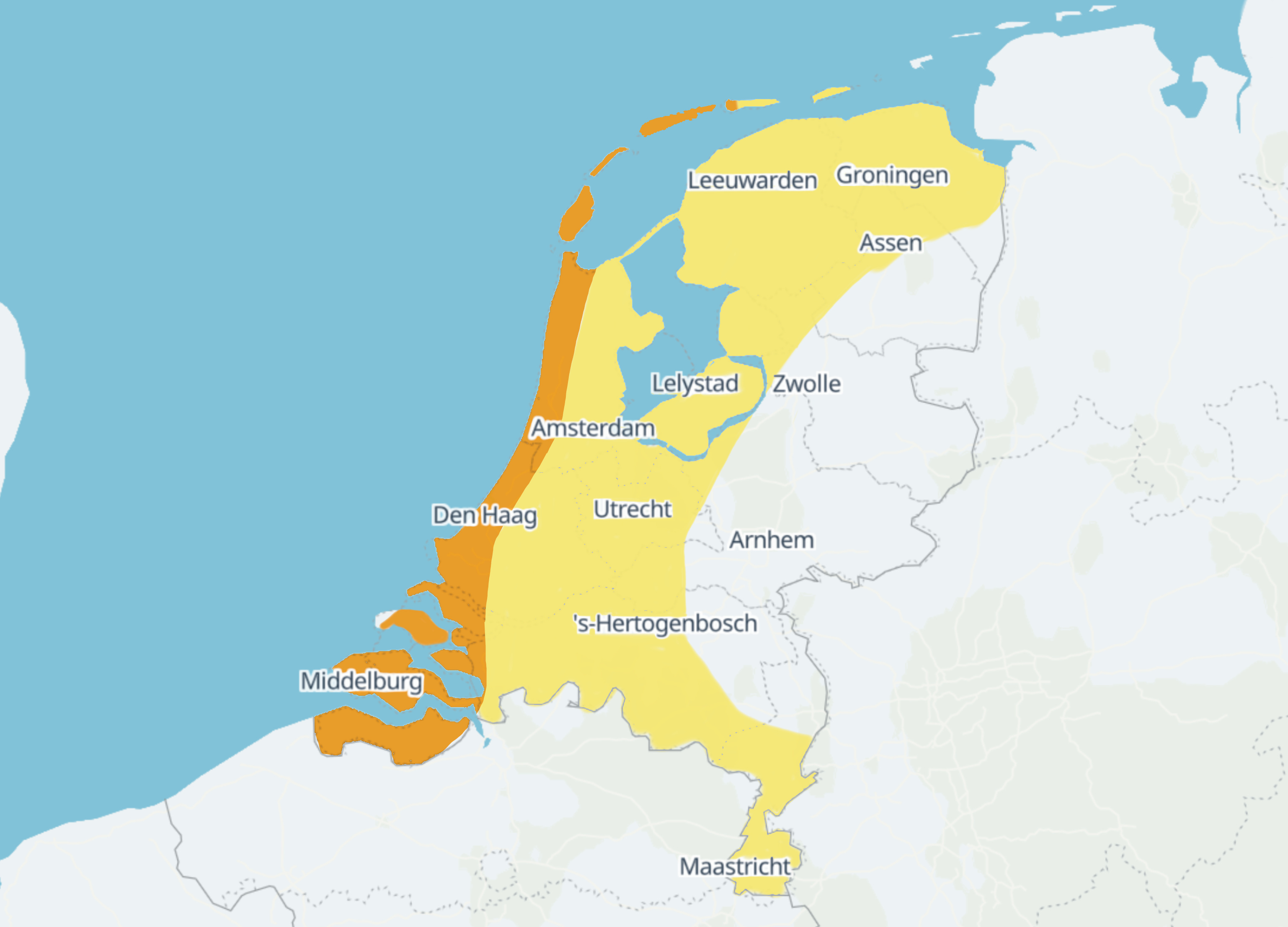
If you’ve ever seen a weather warning for your entire province, only for the bad weather to miss your area, you’ll understand the issue the Dutch weather service wants to solve. Starting Monday 2 November, the KNMI will make its weather warnings more local by changing how it uses colour codes.
What is changing
Up to now, the KNMI gave its warnings, code geel (yellow), oranje (orange), and rood (red), by province. This sometimes meant all of Gelderland was marked orange for thunderstorms only expected in the Achterhoek, or a whole province was on code yellow for ice when only part of it was barely freezing.
Now, the codes won’t stick to provincial borders. Meteorologists will draw the areas on the map where dangerous weather is expected, creating flexible zones that can cross provincial and municipal lines. “By making it really more local and targeted, we hope this warning also becomes much more relevant for the general public,” said Jorinde de Groot, a project manager at the KNMI.
What stays the same
The system isn’t being completely changed. The three colours stay the same, with the same meanings and advice. Code yellow means there’s a chance of dangerous weather and you should be extra careful, especially when travelling. Code orange means a high chance of dangerous weather that could cause disruption, damage, or injury. Code red is a weather alarm for extreme weather that could have a major impact on society, and it’s still issued together with other organisations. The thresholds for each code haven’t changed.
SPONSORED
You’re overpaying your accountant. And they still don’t call you back.

Neno gives you a dedicated bookkeeper, automated admin, real-time financial insights and a free business bank account. Everything your business needs, in one place.
No chasing. No surprises. No unnecessary costs.
How it works, and how to use it
Now, each type of weather gets its own map. The KNMI gives warnings for ice, heat, cold, fog, thunderstorms, snow, waterspouts, wind gusts, and heavy rain, and these are shown separately. So if the whole country is on code yellow for heat but a small area has severe thunderstorms in the evening, you’ll see two different maps.
For the public, the practical For the public, the main tool is the KNMI app and website. You can zoom in on the map or search for your location to check if a warning applies to you. The app can also send alerts for your current location and saved places. Another helpful change is that code orange and red warnings can now be given up to two days in advance, instead of just one, so people have more time to get ready.
Will there be fewer or more warnings?
It’s still unclear if the new approach will lead to more or fewer warnings overall. The KNMI isn’t sure yet. “It can go a bit in all directions,” said De Groot. For example, with fog, several separate areas might each get a warning at the same time. This change comes right after a stormy autumn, and it means that next time storms or ice move across the country, the warning you get should match what’s actually coming to your area, not just your province.