


See more of Dutch Brief in your Google search results
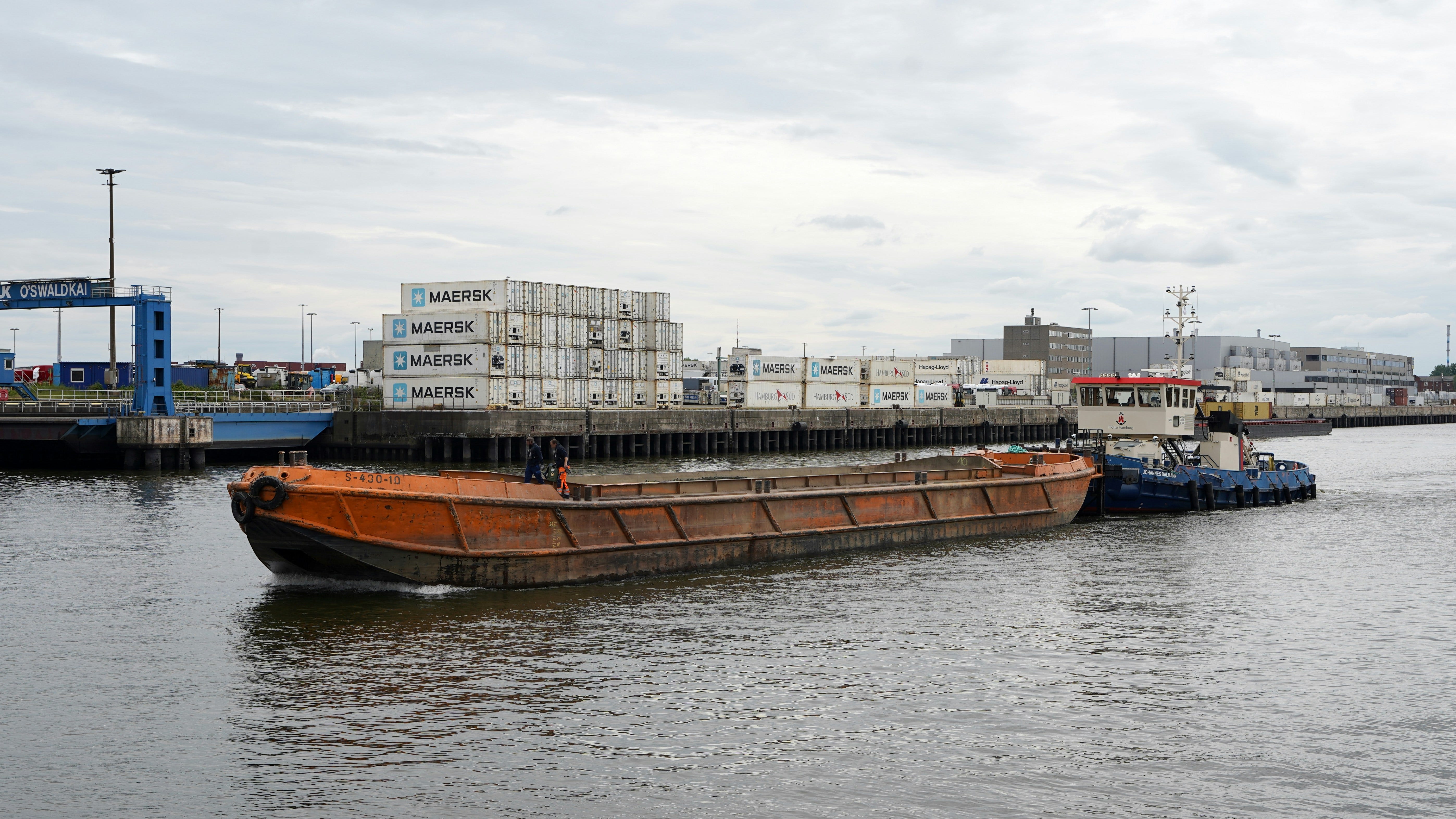
The long drought in the Netherlands has become a story about far more than parched gardens and low rivers. As water levels fall to historic lows, it is exposing just how much the Dutch economy depends on being able to move goods by water, and what happens when it cannot.
Closed canals, costly delays
The immediate problem is for inland shipping. Because of the low water, ships can no longer be fully loaded, and some waterways have been closed altogether. The lock at Eefde was shut earlier, cutting off the busy Twente Canal, and overnight the Parksluizen in Rotterdam were due to close, blocking the Delftse Schie, a route normally used to move concrete, sand and metal.
These closures come at a steep price. The closure of the Twente Canal is costing businesses hundreds of thousands of euros a day, and Royal Inland Shipping Netherlands estimates the shutdown of the Delftse Schie could run to hundreds of thousands of euros a week.
A small sector with a long reach
On paper, inland shipping is not a huge part of the economy. It supports around 22,000 jobs and added 1.8 billion euros in value last year, according to Statistics Netherlands, less than half a percent of the total. But that figure badly understates its importance, because it does not capture the many businesses that depend on goods arriving and leaving by water.
Take a livestock-feed producer in Lochem, or a concrete company that ships in the sand and gravel it needs, both of which rely on the Twente Canal. With the water low, it is suddenly clear they can no longer move anywhere near as much as before. “The importance of inland shipping there is very great. Some companies are set up to move thousands of kilos by water,” said Ricky Voorn, an inland shipping expert at the trade organisation Evofenedex. Such firms, he said, can now move only a fraction of what they could before the water dropped.
SPONSORED
You’re overpaying your accountant. And they still don’t call you back.
Neno gives you a dedicated bookkeeper, automated admin, real-time financial insights and a free business bank account. Everything your business needs, in one place.
No chasing. No surprises. No unnecessary costs.
What the ships actually carry
Last year, Dutch inland vessels carried 333 million tonnes of goods. A large share is ores and minerals, the raw materials for metals such as iron and copper, along with fuels and processed oil products like petrol, diesel and kerosene. The chemical industry also leans heavily on water transport, for the materials that go into rubber and plastics.
The scale is what makes it hard to replace. “If they cannot sail one ship, you need dozens of lorries to make up for it,” Voorn said. And much of it is international: more than half of the goods coming into the Netherlands by water last year arrived from Belgium and most of the rest from Germany, while most of what the country sends out by water goes to Germany. Around a third of inland shipping is purely domestic. “We need it, because not everything can go by road,” Voorn said.
Some cargo simply cannot move
For certain businesses, there is no fallback at all. Royal Van der Wees, a firm in Dordrecht, transports things like metres-long steel pipes, helicopter platforms and entire transformers weighing hundreds of thousands of kilos. These cannot simply be split into smaller loads or put on a truck. “We cannot transport this by road, because an object like that weighs more than 300 tonnes, and viaducts cannot take it,” said the company’s Wouter Lambregts.
The knock-on effects reach beyond the company itself. The transformers it moves by water are needed to reinforce the Dutch electricity grid, which is already under strain. For now, an empty pontoon sits in Dordrecht, unable to travel to Germany to collect one. Whether the heavy vessels can cross the Rhine depends on the water level at Kaub in Germany, and the firm is anxiously watching the forecast there. “It does not look hopeful for the time being,” Lambregts said. “So for us, it is simply a case of waiting.”
A sign of things to come
Experts say the episode is a warning. Because extreme conditions like these are likely to become more frequent, Voorn argued, companies will need to plan for them, for example by spreading their transport across different routes and times, where that is possible at all.
How long the drought will last is unclear. The level of the Rhine is historically low, and Rijkswaterstaat expects that over the next fifteen days the river’s flow will stay below what is needed to manage the distribution of water across the Netherlands properly. For a country criss-crossed by 7,000 kilometres of navigable water, that is more than an inconvenience; it is a reminder of how much rides on the rivers staying deep enough to sail.