


See more of Dutch Brief in your Google search results
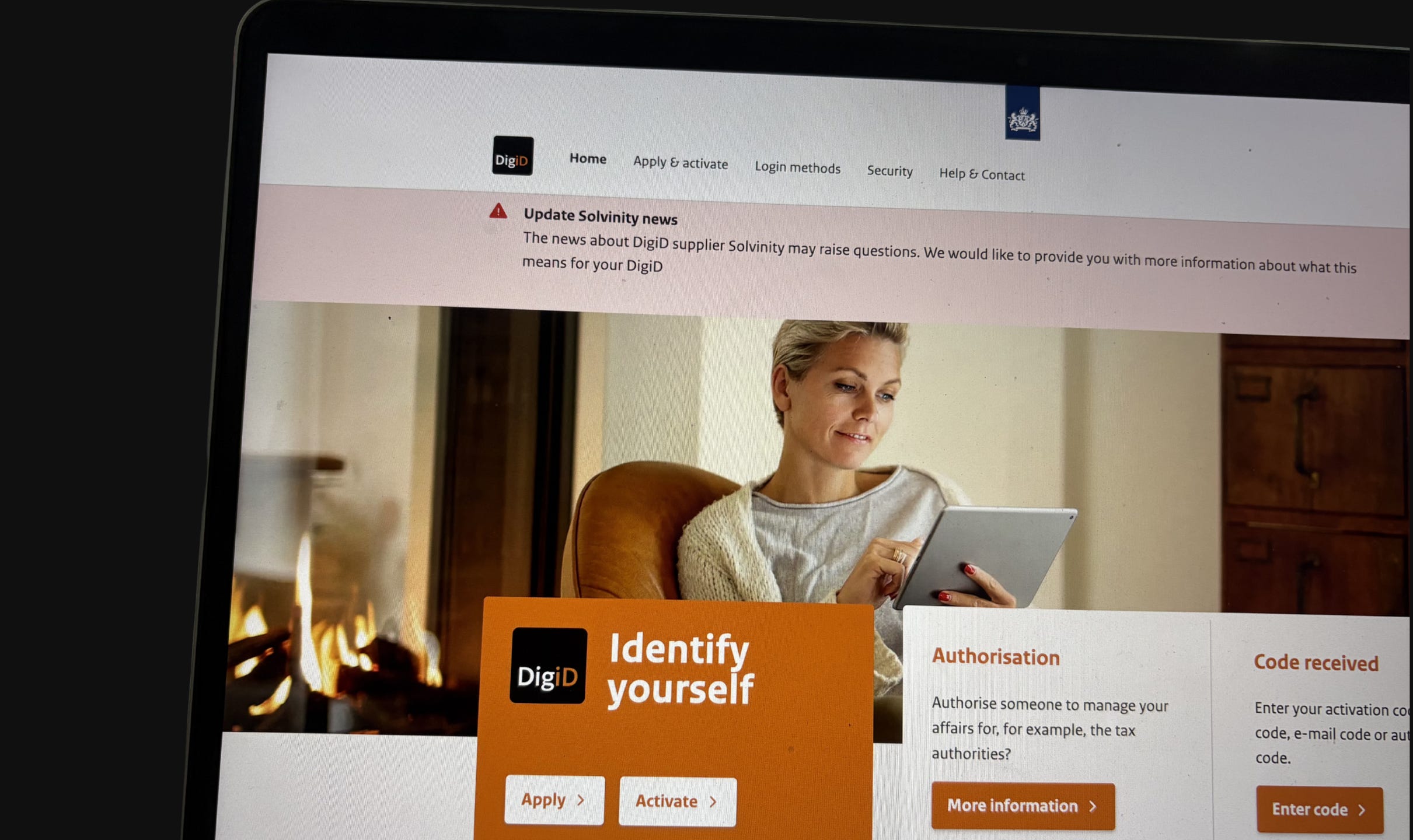
Solvinity, the Dutch IT firm that runs the infrastructure behind digital identity service DigiD, is appealing against the government’s decision to block its takeover by American technology company Kyndryl. The move, first reported by NRC and confirmed by the ministry of economic affairs, means the case will now be decided in court.
Why Solvinity is going to court
The takeover, worth at least €100 million, was blocked at the end of May by state secretary for economic affairs and digital economy and sovereignty Willemijn Aerdts (D66), citing a negative advice from the Bureau Toetsing Investeringen (BTI), the Dutch agency that screens investments, mergers and acquisitions for national security risks.
Solvinity says it does not dispute the concerns raised by the government. According to its statement to NRC, the company “takes the government’s concerns seriously” but “needs clarity about the factual and legal grounds for the decision in order to take considered next steps.” A spokesperson for Aerdts confirmed that “the request is now with the court,” and said the ministry would not comment further while the case is being heard.
SPONSORED
You’re overpaying your accountant. And they still don’t call you back.
Neno gives you a dedicated bookkeeper, automated admin, real-time financial insights and a free business bank account. Everything your business needs, in one place.
No chasing. No surprises. No unnecessary costs.
Why the deal was blocked
Solvinity manages the cloud infrastructure that DigiD and MijnOverheid run on, the systems through which millions of people in the Netherlands log in to the tax office, healthcare providers, pension funds and other parts of government. Its takeover by Kyndryl, a New York-based IT services firm spun out of IBM in 2021, raised concerns that Dutch personal data could end up subject to US laws such as the Cloud Act, which can in some cases force American firms to hand over data to US authorities. Critics in parliament and IT-security circles also warned that Washington could, in theory, block or interfere with access to essential Dutch government services.
A majority in the Tweede Kamer opposed the takeover, and a petition against it was signed by almost 200,000 people and presented to the parliament’s digital affairs committee. Competition watchdog ACM had earlier approved the deal on competition grounds; the sensitivity, the cabinet said, lay in Solvinity’s strategic role rather than its market position.
“It is a decision I have not taken lightly, because intervening in the market is a heavy instrument,” Aerdts said when she announced the block. “But the fact that we could not eliminate the risks and could not guarantee the public interest makes intervention necessary.” She stressed that the BTI investigation was “country-neutral, risk-based and proportional,” and added that the Netherlands “attaches great value to the presence of foreign, including explicitly American, technology companies.”
Kyndryl’s earlier reaction
Kyndryl said at the time of the block that it was “extremely disappointed” with the decision, accused the Dutch government of “politicising” the process, and said the move had overshadowed “clear and important benefits” the transaction could have offered Solvinity’s customers and Dutch citizens. The company added that it would continue to support its Dutch customers regardless.
A test case for Dutch digital sovereignty
The Solvinity case is one of the first major tests of the Netherlands’ national security investment-screening regime, set up under the Wet veiligheidstoets investeringen, fusies en overnames (Vifo Act). It also sits in a wider Dutch and European push for “digital sovereignty”: the country has been actively trying to reduce its reliance on American Big Tech, with Dutch universities exploring alternatives, and the cabinet has also intervened in earlier cases such as the Chinese-owned chipmaker Nexperia.
Whatever the outcome of the court case, the existing arrangements are not in immediate danger of unravelling: the contract between the Dutch state and Solvinity for DigiD runs until 2028, and was extended for two years by The Hague earlier this spring despite the political controversy over the takeover.
What happens next
The court will now examine whether Aerdts’s block stands up against the legal framework for investment screening, including the proportionality and reasoning of the BTI’s risk assessment. A ruling against the government could open the door to a renewed takeover attempt, perhaps with additional safeguards; a ruling in its favour would confirm one of the Netherlands’ strongest interventions yet in defence of digital sovereignty. For now, neither the ministry nor Solvinity is commenting on the substance.