


See more of Dutch Brief in your Google search results
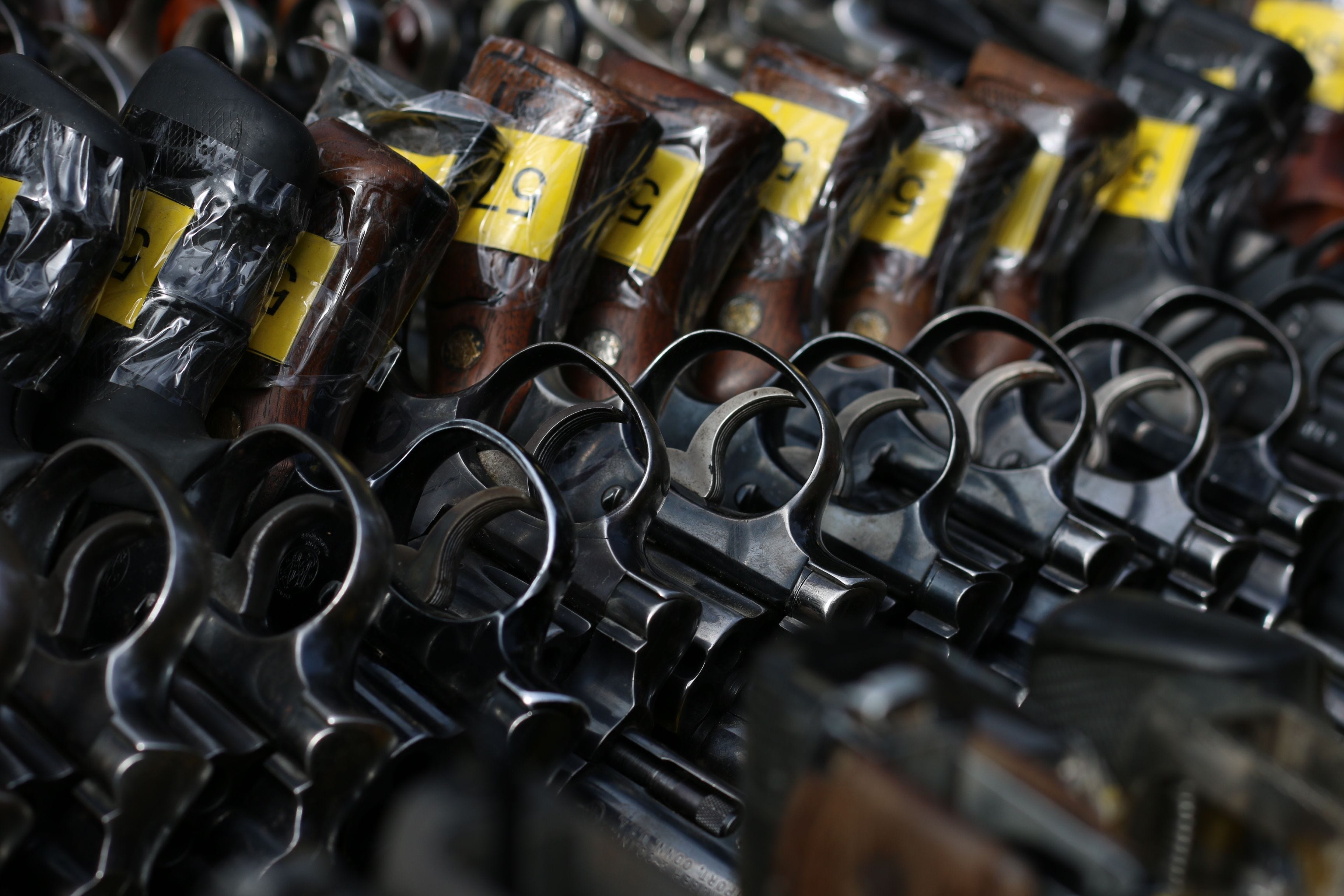
Dutch police have expressed concern about a sharp rise in the number of gas and alarm pistols, air weapons and pepper sprays they are seizing, weapons that are often bought cheaply just across the border and are difficult to tell apart from real firearms.
The figures
In 2022, police confiscated 4,080 weapons in this category. Last year the figure rose to 5,165, an increase of almost 27 percent, according to numbers the police gave to the broadcaster NOS. The trend has continued into 2026.
Pepper spray, which is banned for civilians in the Netherlands, has become notably more common in the figures. Seizures rose from 992 in 2022 to 1,446 last year, and in the first half of 2026 alone police took 851 canisters. Gas and alarm pistols also went up, from 1,685 in 2022 to 1,959 last year.
What the numbers do and do not show
It is worth being careful about what such figures mean. The police themselves stress that they do not know whether more people are actually walking around with these weapons, or whether the rise simply reflects the fact that finding and confiscating them has been given more priority in recent years. In other words, a jump in seizures can be a sign of harder policing as much as of a bigger problem. The police also note that this is an issue that has been running for some time and already has their attention.
SPONSORED
You’re overpaying your accountant. And they still don’t call you back.

Neno gives you a dedicated bookkeeper, automated admin, real-time financial insights and a free business bank account. Everything your business needs, in one place.
No chasing. No surprises. No unnecessary costs.
Why gas and alarm pistols worry the police
Even so, one part of the trend genuinely concerns them. Gas and alarm pistols are the main worry, said police spokesman Martin van der Meij, because they are barely distinguishable from real firearms. An alarm pistol makes a loud bang but fires no projectile, while a gas weapon can release something like tear gas.
The deeper problem is what can be done with them. “They are cheap, readily available, and relatively simple to convert into a live-firing weapon, in other words, into a real firearm,” Van der Meij said. That is not a theoretical risk: a converted pistol of this kind was used in the 2021 murder of the well-known crime reporter Peter R. de Vries. The police have said these weapons are a growing feature of serious violence in the criminal world.
Bought over the border, a criminal offence to bring home
A large share of the weapons enter the country from just across the border. In the Netherlands, it is illegal to buy a weapon that is hard to distinguish from a real firearm, but in Germany these items can be bought without a licence by anyone over 18.
Herman Oldenkotte, who runs a gun shop in Gronau, just over the German border from Enschede, told NOS that he estimated 80 to 90 percent of his customers were Dutch. He does not record where his customers come from, which he is not required to do, and says he checks that buyers are over 18. He said he does not sell by post, even though people ask: customers have to come to the shop.
There is an important catch that not everyone knows about. “People do not always realise that they are committing a criminal offence when they buy such a weapon in Belgium or Germany and then bring it to the Netherlands,” Van der Meij said. Police also report that a growing number of these weapons are arriving by post.
Calls for European rules
The Netherlands has pushed for years for a licence requirement within the European Union or an outright ban on these weapons, so far without such rules being introduced.
Pepper spray remains banned for civilians under Dutch weapons law. In June, the justice ministry said it planned to allow permits for people at particular risk, such as victims of stalking, while ruling out legalising it for everyone.