


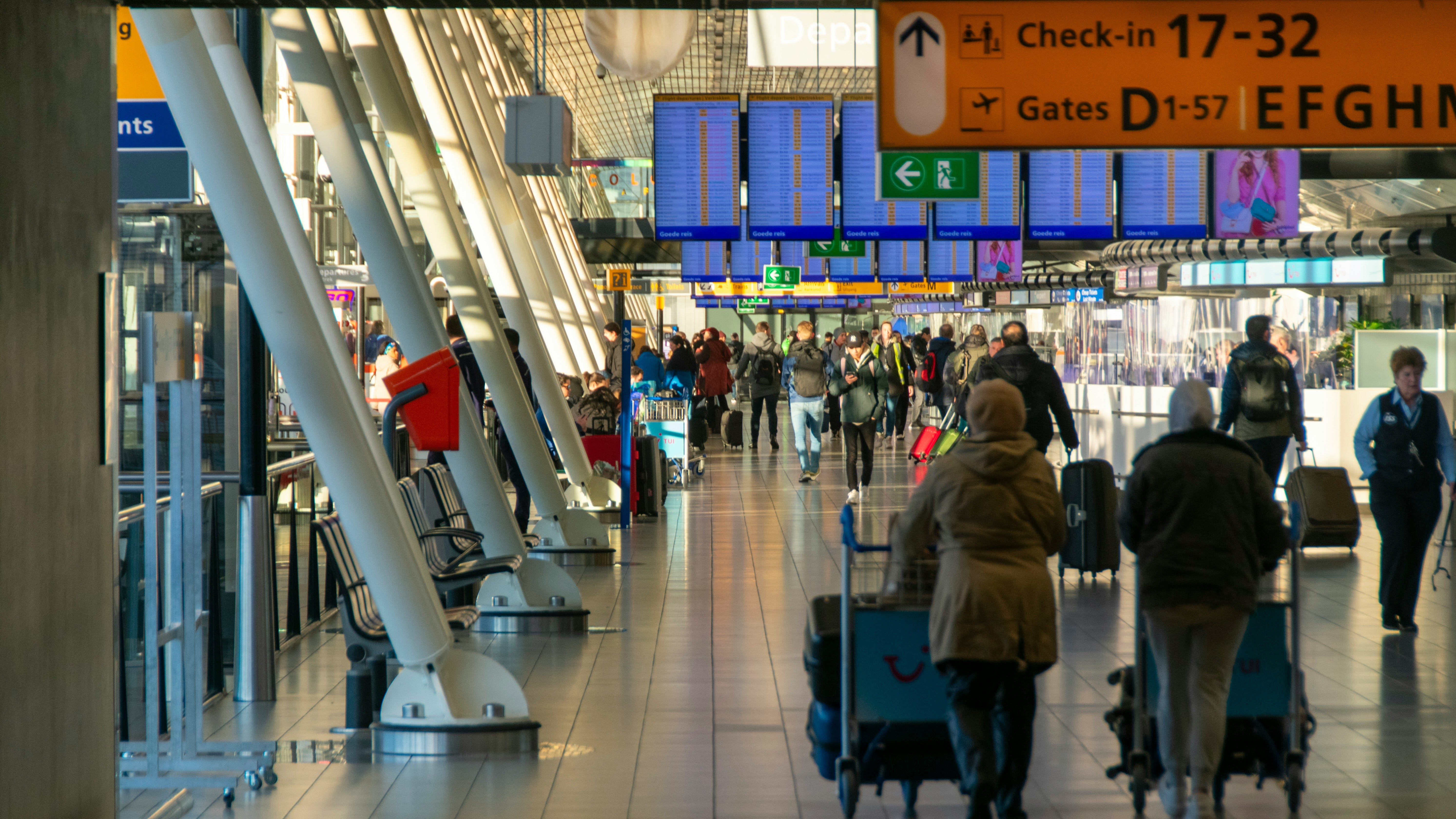
Amsterdam’s Schiphol Airport has begun the largest reorganisation of its security operation in a decade, with the bulk of its 4,000 security guards switching employers from Monday, 18 May. The change is part of a long-planned move to reduce the number of private security firms working at the airport from five to three. Unions are warning that ongoing disputes over rosters and working conditions could lead to staff unrest and longer queues at security checkpoints.
Rentals in the Netherlands
Signaal tracks the Dutch rental market and notifies you the moment something matches your search. Be first to apply.
From five companies to three
Schiphol’s security at passenger checkpoints, baggage handling and other airside posts will from now on be run by just three firms: I-SEC, Securitas and Trigion. Two previous suppliers, G4S and CTSN, are leaving the airport after losing the tender awarded in summer 2025. CTSN’s roughly 900 employees were transferred to I-SEC on 2 March, while the bulk of the remaining switches, mainly affecting former G4S staff, take place on 18 May.
The transition follows an unusually long lead-time, including a legal challenge by G4S and CTSN. A court in The Hague ruled in November 2025 that Schiphol’s procedure had been correct, but Schiphol still postponed the original start date of 2 March across the board, partly to avoid disruption during the May school holidays.
The new contracts run for ten years and are worth around €4.7 billion in total, making the tender one of the largest in the Netherlands. As part of the deal, Schiphol takes a 25 percent stake in three new joint ventures, one with each security firm, while the security companies hold the remaining 75 percent. The terminal is divided into three “percelen,” or zones, each managed by one of the joint ventures.
Workers move with their job, in theory
Under Dutch law on the transfer of undertakings, security guards employed under the outgoing contracts move to the new operators with their existing terms and conditions, in theory keeping the same workplace and roster. A covenant signed last year between unions and the firms confirmed the principle that around 80 percent of security guards should stay on the same zone with the same colleagues.
In practice, the unions say, that promise is fraying. In recent weeks, members of FNV, CNV and De Unie have flagged broken roster agreements, unilateral schedule changes and a switch from monthly to four-weekly pay at some of the new employers. CNV has opened a dedicated reporting line (”Contractwisseling Schiphol 2026”) for affected guards.
According to CNV negotiator André Quist, the situation echoes the troubled 2020 tender, after which queues and missed flights blighted the airport. “Some people will soon no longer be able to combine their job with their private life. People are already on the phone telling me they will look for another job because they will soon have to work nights instead of days,” Quist said earlier in the process. “The fact that security guards say they will leave straight away puts pressure on the organisation and possibly leads to longer queues for travellers.”
Why passengers may notice
For travellers, the immediate concern is straightforward: if too many security guards quit or reduce their hours after switching employer, the new operators may struggle to cover all the shifts needed at peak times. Schiphol already had a fragile summer last year, and Dutch journal Het Telegraaf has reported repeated warnings from union and industry insiders that the transition risks both longer queues and higher ticket prices, given that Schiphol will eventually pass higher security costs on to airlines.
The airport itself says it has built in safeguards. All staff have been re-screened by the intelligence service AIVD, the Royal Marechaussee continues to supervise security work, and Schiphol points to a new shared Security Academy to standardise training. With its 25 percent ownership in the three new joint ventures, the airport says it now has more leverage to intervene if things go wrong.
What to watch in the next weeks
In the next weeks, the question will be whether the new structure can handle peak passenger flow without the kind of hours-long queues seen during the post-pandemic years. Schiphol expects a summer crowd of well over 13 million travellers, and the new European Entry/Exit System (EES) for non-EU travellers, in place since April, has already added extra checks at the border.
For travellers in the Netherlands, the practical advice from the airport remains the same: book one of the free security time slots, arrive at the recommended time before the flight, and keep an eye on the live queue indicators. The bigger test, of whether a 10-year-long, €4.7 billion experiment in airport security delivers on its promise of more stability, is only just beginning.