


See more of Dutch Brief in your Google search results
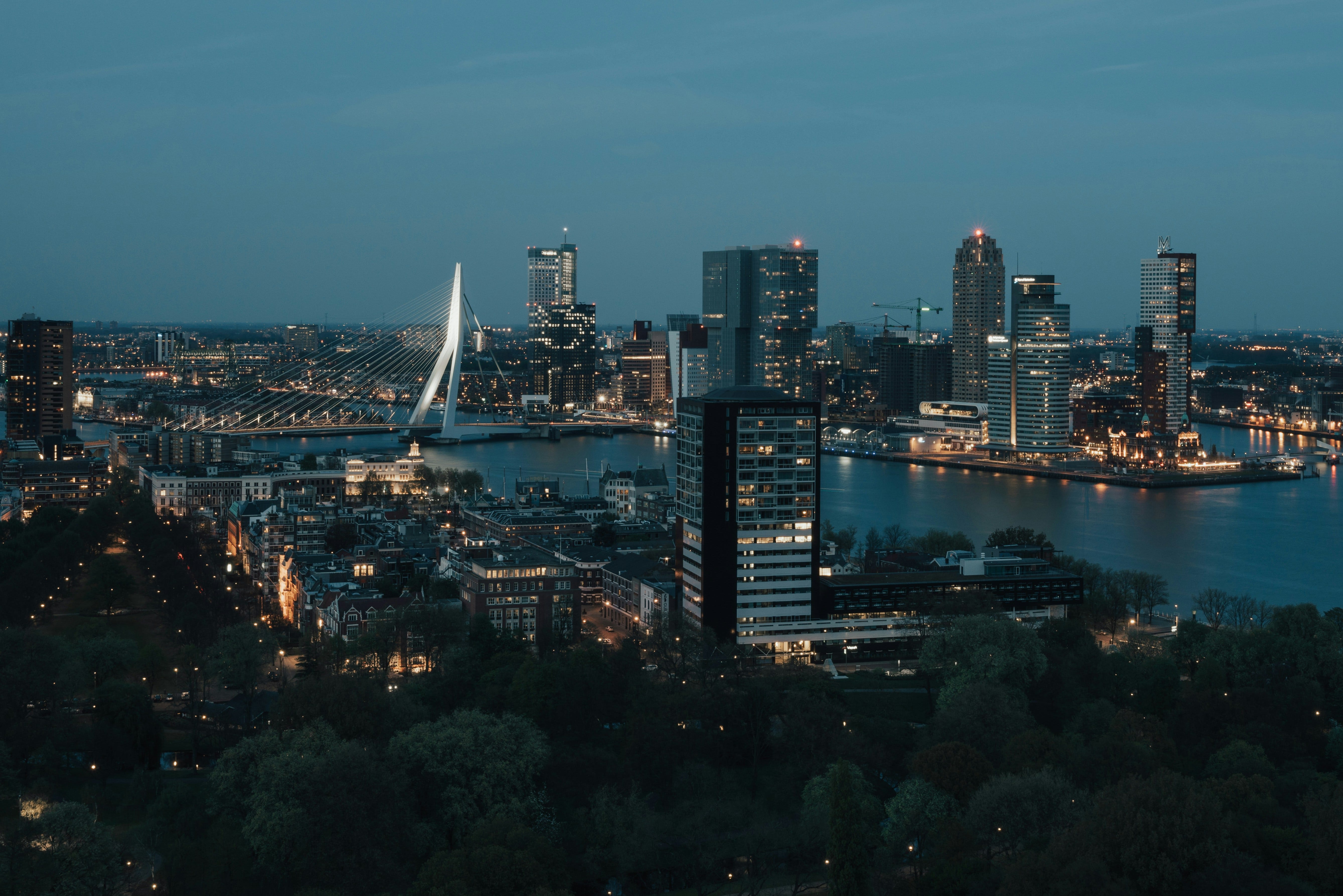
Since Thursday evening, being in large parts of the Rotterdam neighbourhood of De Esch at night without a good reason to be there is a criminal offence. The measure, which legal experts say has no precedent in the Netherlands, is the city’s attempt to end years of night-time disruption that earlier efforts failed to stop.
What the ban means
The order applies every night between 11pm and 5am, in a designated part of De Esch and along the Kralingen quaysides, on the eastern edge of the city. Anyone in the area during those hours can be stopped and asked why they are there. Those who cannot give a reason are committing an offence and risk a fine. The police are responsible for enforcement, and the ban runs for three months, after which it will be evaluated.
It does not apply to everyone. In a letter to the city council, mayor Carola Schouten set out that residents, people visiting residents, anyone going to an event or to a bar or restaurant in the area, and people who work there are all exempt.
Why it was introduced
The ban follows what residents describe as almost three years of serious disruption, beginning shortly after the coronavirus pandemic and caused mainly by people coming in from outside the neighbourhood. “There is street racing, drug and laughing gas use, and prostitution,” one resident told NOS. According to the municipality, visitors from elsewhere cause noise and disturb public order in the evening and at night.
The scale is significant. Christiaan de Jong, who chairs the neighbourhood council covering De Esch, said dozens and sometimes hundreds of people come into the area at weekends.
Residents describe the toll it has taken. “We were pretty much at our wits’ end,” one told NOS. “Something really had to change, and it just never did. Then you get very despondent.” She said the behaviour was unheard of, and that women and children no longer go out in the evening. Another resident said the noise sometimes continues until five in the morning, and that he had become fairly depressed because of it, adding that he knows others in the area who cannot cope any more. A resident who once challenged a group about their behaviour said six eggs were thrown at her window afterwards.
SPONSORED
You’re overpaying your accountant. And they still don’t call you back.

Neno gives you a dedicated bookkeeper, automated admin, real-time financial insights and a free business bank account. Everything your business needs, in one place.
No chasing. No surprises. No unnecessary costs.
What was tried first
The council did not start here. It had already placed concrete blocks in the area, increased supervision and held talks with the people causing the disruption. Those measures, it says, did not help enough. The neighbourhood council wrote to the mayor urging action, and both it and the police asked for the ban. Schouten is using a power under article 2:47a of the city’s general local by-law, known in Dutch as the APV.
“Liveability in the neighbourhood is under pressure,” Schouten said. “Calm must return to De Esch and residents must feel comfortable and safe. That is why I am using this power.”
De Jong acknowledged that the ban is a heavy instrument. “It is a very firm measure, but a very careful process preceded it,” he said. “As a neighbourhood council, we came to the decision unanimously that this is best.”
Why the police say they needed it
The police explain the step in practical terms. Enforcing against the disruption itself often does not work, a spokesperson said, because residents report a problem, and by the time a patrol car arrives the behaviour has stopped. Officers have to witness it themselves in order to act.
Making presence in the area an offence changes that. “Criminalising presence gives us the tools to enforce against the disruption,” the spokesperson said, adding that the intention is not to send away people walking a dog or passing through the area on their way to or from work.
Why lawyers call it unprecedented
Dutch mayors can already ban named individuals from a specified area. What is new here is that the order applies to anyone who cannot explain why they are present.
Michel Vols, professor of public order law at the University of Groningen, told NOS he knows of no other Dutch municipality that has done this, calling it an unprecedented step by a mayor. “It is quite a bizarre ban, because you create a kind of no-go area,” he said. “The mayor is saying: do not come here.” He described it as an enormous restriction on freedom of movement, and gave an example that sits awkwardly with the police’s reassurance: someone living in the next neighbourhood who walks the dog through De Esch in the evening would be breaking the law.
Vols accepts that wanting to end the disruption is a legitimate aim, but considers the response disproportionate, and sees legal objections to it. His central question is why the police do not enforce better against the disruption itself, rather than against people’s presence in the area.
What happens next
Matrix signs in the neighbourhood now announce the ban. Whether it stays will depend on the evaluation in three months, and, potentially, on whether anyone challenges it in court.