


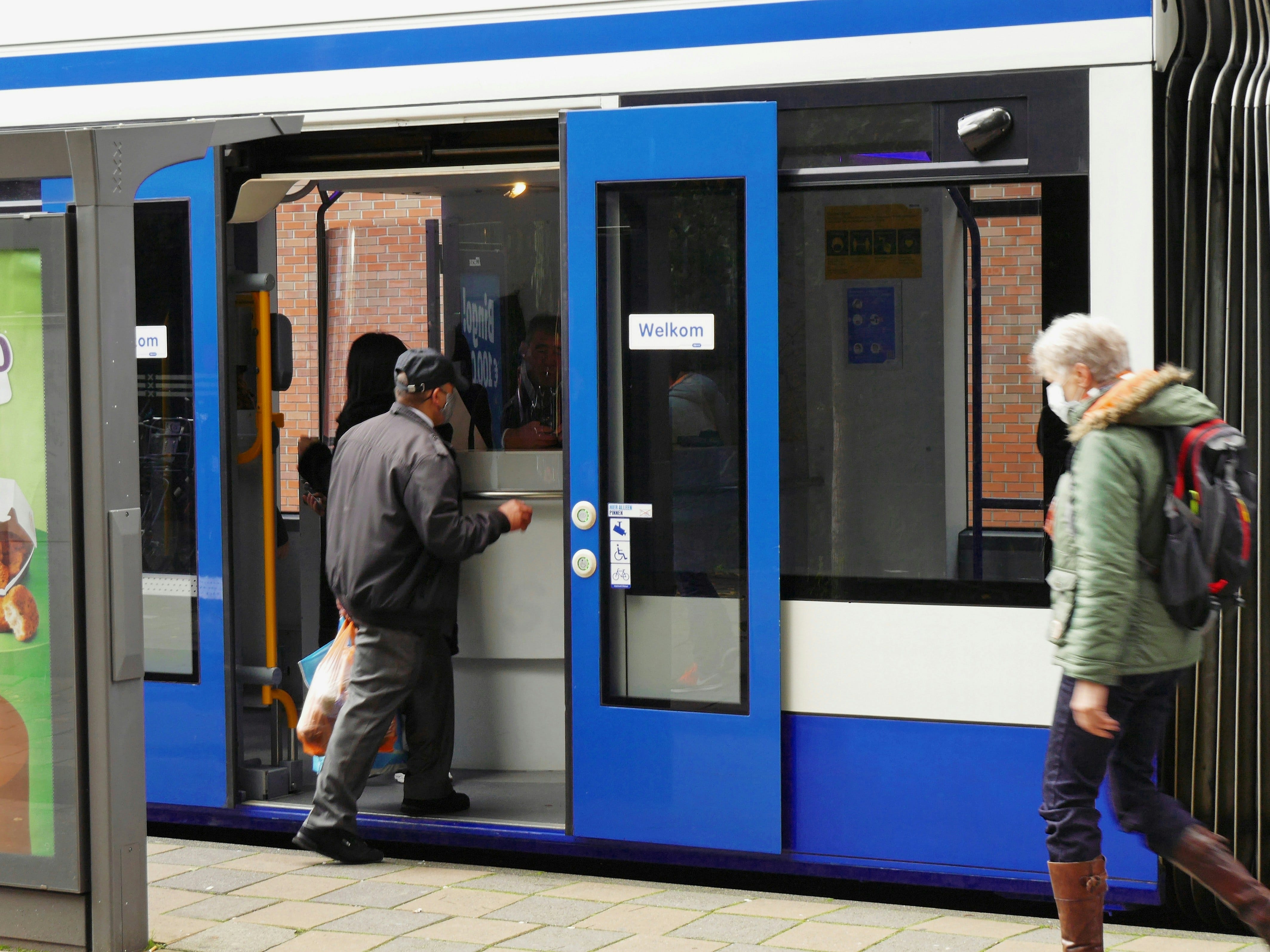
Travellers in the Netherlands face widespread disruption on the morning of Wednesday, 24 June, after trade union FNV announced a nationwide public transport strike in protest at the government’s plans to cut social security. Staff working on trains, buses, trams and metros will only begin work at 8 am that day, meaning there will be no public transport in the early morning hours.
Rentals in the Netherlands
Signaal tracks the Dutch rental market and notifies you the moment something matches your search. Be first to apply.
Why the unions are striking
The strike is not about pay in the transport sector itself, but about national policy. FNV is protesting against the Jetten cabinet’s plans to cut back on social security. According to the union, the government wants to alter earlier agreements on the AOW state pension and raise the pension age more quickly, shorten the duration of unemployment benefit (WW), make the disability benefit (WIA) less generous, and lower the maximum daily wage on which benefits are calculated.
FNV argues that, taken together, these measures would force people to work longer while losing security exactly when they fall ill or lose their job. The decision to strike was taken at a meeting of action leaders from the union’s three transport branches: FNV Spoor (rail), FNV Stadsvervoer (city transport) and FNV Streekvervoer (regional transport).
Still conditional on an ultimatum
The strike is not yet a certainty. The unions have given the cabinet an ultimatum that expires at midnight on Monday, 25 May. They are demanding that the plans to scale back the WW and WIA and to lower the maximum daily wage be scrapped, and that the proposal to speed up the rise in the AOW age be dropped. If the government does not give way, the 24 June strike will go ahead.
“A first pinprick”
FNV is presenting the action as an opening move rather than a one-off. “If the Jetten cabinet continues with the dismantling of social security, then strikes are inevitable,” said Edwin Kuiper, director of FNV Vervoer. “This is a clear warning: the measures have to come off the table. If that does not happen, more actions will follow.”
He warned that the disruption could escalate sharply after the summer. “If we are still in this position after the summer, then bigger actions will follow. Then you really have to think of 24-hour strikes, so in that sense this is a first pinprick.”
Acknowledging the impact on travellers
The union acknowledged that passengers will bear the consequences. “We understand very well that travellers are affected by this action, and we find that unfortunate,” Kuiper said. “People have to be able to get to their work, school or appointments. Our members would prefer that too. But the cabinet refuses to listen to the concerns of working people.” He stressed that the union sees a strike as “a last resort,” and is acting “not only for workers in public transport, but for all Dutch people who depend on good social security.”
For travellers, the practical advice is to expect no trains, buses, trams or metros before 8 am on 24 June, and to watch for further announcements as the 25 May ultimatum deadline passes. The last time the Dutch railways were hit by strike action was last year.