


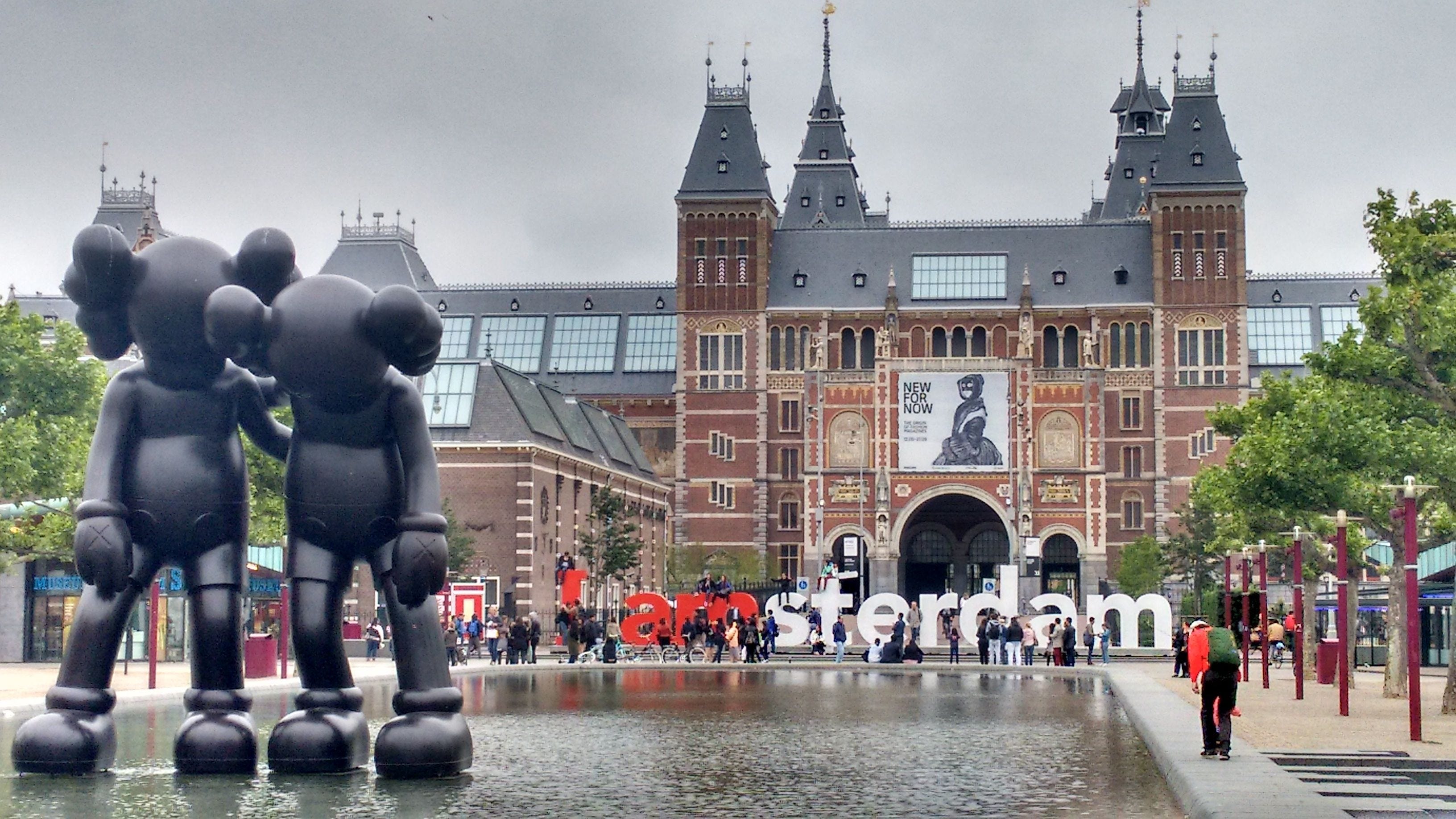
Amsterdam's new centre-left coalition has presented its plans for the next four years. Within hours, the agreement, which the parties call a vision for "our Amsterdam," drew criticism from opposition parties, lobby groups and experts. Concerns range from vague goals and budget cuts to a lack of clear attention for tech startups and the city's large international community.
SPONSORED
You’re overpaying your accountant. And they still don’t call you back.

Neno gives you a dedicated bookkeeper, automated admin, real-time financial insights and a free business bank account. Everything your business needs, in one place.
No chasing. No surprises. No unnecessary costs.
What is in the plan
The 70-page agreement, “Jouw stad is mijn stad. Ons Amsterdam” (”Your city is my city. Our Amsterdam”), was presented on Wednesday at the OBA library in Zuidoost by negotiators Zita Pels (PRO Amsterdam, the local alliance of GroenLinks and PvdA) and Melanie van der Horst (D66). It will set the city’s direction until 2030. The council will debate it on 10 June, when the nine new aldermen (six from PRO, three from D66) will also be installed.
PRO won 17 of the 45 council seats at the March 2026 elections; D66 has 8. The agreement focuses on affordable housing, hiring more teachers, free public transport for under-17s, a smaller and more service-oriented city organisation and a new “offensive” for the safety of women. The coalition is making €344 million in cuts against €292 million in new investments. Around 2,500 city jobs are due to disappear by 2031. The tourist tax will rise from 12.5 percent next year to 16 percent, and gradually to 20 percent by 2031, the highest in Europe.
Early criticism from the council
The first wave of criticism came from inside the council itself. The opposition VVD welcomed plans to speed up housing construction and shrink the city workforce, but warned that the agreement, in its words, leans towards “more government, more rules, more spending and, in the end, a higher bill for the Amsterdammer.”
The pro-European party Volt, also in opposition, called itself generally positive but said the agreement was “still too cautious” and noted that “the word Europe is not mentioned once.” Volt also pointed back to a recent report by the city’s audit office, which found that the previous coalition’s promises were hard to track in practice. The party said it would push for more measurable goals so that “in four years’ time, we can see what has actually happened.”
Startups: ambition trimmed back
A second line of criticism focuses on what the agreement does not say. The word “startup” does not appear anywhere in the 70 pages, and the previous coalition’s stated goal of making Amsterdam the tech hub of Europe has been dropped. “There is a good chance that Amsterdam will sink even further in the rankings,” Johan Schaap of the Dutch Startup Association warned in comments to local press.
That observation lands at a delicate moment for the city. Last week, the market research firm Dealroom reported that Amsterdam had slipped from a place in the European top three a few years ago to seventh in Europe (and 28th worldwide), overtaken by cities such as Stockholm, Berlin, Munich and Cambridge. The number of foreign tech companies setting up in Amsterdam has also dropped sharply, from 161 in 2019 to 39 in 2025, according to a separate Dealroom analysis. Economist Barbara Baarsma argued last month in Het Financieele Dagblad that the number of skilled migrants coming to the Netherlands is falling fast, even though they are seen as important to productivity and future growth.
Internationals: “barely mentioned”
A third concern is that the agreement makes little clear mention of internationals, even though around 13 percent of Amsterdammers were born in other EU countries and another 25 percent outside the EU. “The international community is barely mentioned,” Juliet Broersen of Volt said. “International students, young Europeans and internationals are not just temporary guests or an economic asset, but residents, neighbours and part of our city. If this coalition truly wants Amsterdam to be a city for everyone, it must also make sure housing, participation and city services work for people who do not yet speak Dutch.”
The CDA’s Rogier Havelaar called for “Dutch lessons in every neighbourhood where internationals and locals meet, a one-stop shop for practical and legal questions, and good access to international schools, healthcare and housing.” Brigitte Vonck, founder of the charity Serve the City, where about 70 percent of volunteers come from the international community, said the agreement lacked “the sense of community: doing things together, and making sure Amsterdam is a city for everyone.”
The coalition’s response
The coalition itself says the ambition is there, even if the language is different. Melanie van der Horst, the new alderwoman for economic affairs, said the coalition wanted Amsterdam to have “a broad role within Europe as a tech region.” She added: “We want to buy more from the European market in order to be independent from American big tech. And we need a good environment so that start-ups and scale-ups can flourish.”
The agreement itself stresses that “everyone who lives in our city should feel at home and get every chance to develop themselves,” that the municipality should “stand alongside Amsterdammers,” and that the city wants to keep up its existing pipeline of 68,000 planned new homes, while shifting attention from new plans to delivery.
A wider Dutch picture
The Amsterdam debate sits within a broader Dutch one. The current Jetten cabinet has set out plans to tighten the rules for knowledge migrants and limit international student numbers, partly because of housing and education pressures. At the same time, the wider Dutch tech sector is still substantial: Amsterdam start-ups have raised more than $10 billion in venture capital since 2020, and the city is still home to more than 20 unicorns, including Booking.com, Adyen and Just Eat Takeaway. The question now is whether the new coalition can square its housing, equality and frugality priorities with the open, international and entrepreneurial reputation Amsterdam has long traded on.
A first chance for changes comes when the council debates the agreement on 10 June.