


See more of Dutch Brief in your Google search results
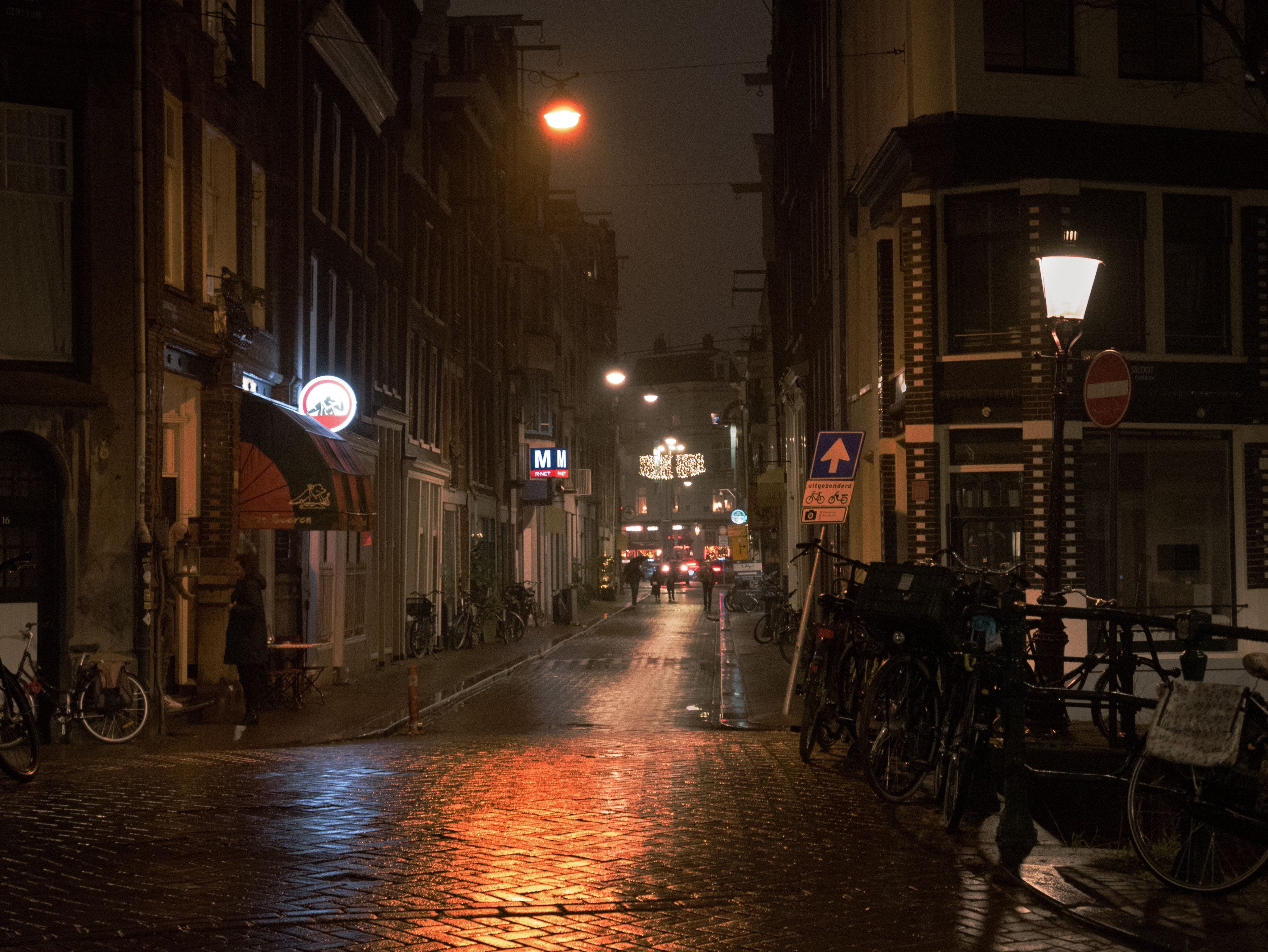
Hundreds of cyclists have taken part in night-time women’s safety rides in cities across the Netherlands, a year on from the murder of a teenage girl that put the safety of women in public spaces at the top of the national agenda. The rides, held overnight from Friday into Saturday, were largely peaceful, though minor incidents were reported in several places.
What the rides are
The demonstrations are organised by the feminist action group Dolle Mina and form part of a movement known as “We Reclaim the Night”, in Dutch #WijEisenDeNachtOp. Participants cycle through the streets, usually around midnight, ringing their bells and calling out slogans, to draw attention to the routes and public spaces where women frequently feel unsafe. Their message is a simple one: that everyone should be able to move around freely at night, and that safety in public space is a shared, collective responsibility rather than something women alone must manage.
This year’s rides passed through cities including Amsterdam, Leeuwarden, Apeldoorn, Den Bosch, Middelburg, Zutphen and Deventer. Around 150 people took part in Amsterdam, including at least 25 men, according to Dolle Mina, and about 125 in Leeuwarden, with roughly 100 between Zutphen and Deventer and around 50 each in Den Bosch, Middelburg and Apeldoorn. As elsewhere, most participants were women. They carried signs with messages such as “The night belongs to us too,” “Not afraid, but angry,” and “Men, when will you finally see the light?”
The incidents
Most of the rides passed off without serious trouble, but organisers reported that participants were harassed in several cities. In Leeuwarden, scooter riders tried to provoke those taking part, and some motorists attempted to drive through the group. In Apeldoorn, a group of fat-bike riders briefly caused a disturbance, and in Den Bosch participants were heckled. No injuries were reported. The disruption echoed last year’s rides, when participants were also harassed at several locations, something campaigners point to as part of the very problem the demonstrations are meant to highlight.
SPONSORED
You’re overpaying your accountant. And they still don’t call you back.

Neno gives you a dedicated bookkeeper, automated admin, real-time financial insights and a free business bank account. Everything your business needs, in one place.
No chasing. No surprises. No unnecessary costs.
The case that sparked it
The movement traces its origin to a single, shocking crime. In the early hours of 20 August 2025, Lisa, a 17-year-old from the town of Abcoude, was cycling home after a night out in Amsterdam. Along the Holterbergweg in Duivendrecht, between the city and her home, she was attacked. She managed to call the emergency services, and police were able to locate her using her phone, but help arrived too late; her body was found beside the cycleway. She had been stabbed to death. Because she was a minor, her surname has been withheld.
A 22-year-old man was arrested shortly afterwards at a refugee centre in Amsterdam, and has since confessed to the killing, according to the public prosecutor. He has been charged with Lisa’s murder and rape, and is also suspected of a separate violent sexual assault. The case remains before the courts.
The killing caused national grief and anger, and it resonated far beyond the immediate tragedy because of what it seemed to represent to many people: the fear, familiar to a great many women, of an ordinary journey home at night. Tributes, flowers and, more recently, a memorial mural painted by two young women who were Lisa’s age when she died, have marked the spot and her memory.
A debate that became political
Lisa’s death also fed into a wider and more contentious national debate. Because the suspect is an asylum seeker, the case became entangled in the charged politics of immigration and asylum, particularly with parliamentary elections due at the end of October. It has been invoked in arguments over asylum policy, over women’s safety, and over proposals such as loosening the rules on self-defence sprays. These are divisive questions on which opinion in the Netherlands is sharply split, and this article does not take a position on them.
What the organisers of the safety rides have consistently stressed is that their focus is on women’s safety itself. Campaigners have pointed out that most violence against women does not happen at the hands of a stranger on a dark road, but closer to home, and have called for a broader cultural change in how society treats violence against women and girls, rather than for the issue to be reduced to any single cause.
A year on
The renewed rides show that the movement Lisa’s death set in motion has not faded. Organisers say women’s safety has received more attention over the past year, but stress that “there is still a lot of work to be done.” For those taking part, the point is both to remember Lisa and to keep pressing a demand they say should not be controversial: the freedom to move through their own cities, at any hour, without fear.