


The first thing Upstream Festival taught me is that I can’t read a banner.
My Uber dropped me somewhere near the Van Nelle Fabriek, which is a sprawling old UNESCO-listed factory on the northwest edge of Rotterdam, and not, as it turns out, at the entrance. There was a long walk involved. The organizers had clearly anticipated people like me, because there were banners everywhere pointing the way in, and I dutifully followed them until I found the door. Fine. Sorted. It was only on my way out, hours later, that I actually read one of those banners properly. It said something to the effect of:
“If you can’t find the entrance, you’re not going to make it.”
That should have been my warning that the people running this thing have a sense of humor, and that I was going to be on the receiving end of it.
At some point during the day, someone mentioned there was a “prison stage” tucked away in the building. A banner in the toilets had apparently advertised it: a special stage where the entire speaker lineup was made up of convicted felons, the disgraced FTX founder supposedly among them, all appearing in one specific time window. I never saw the banner myself. I heard it secondhand, the window had already passed, and I spent a genuine stretch of the afternoon believing I’d missed a stage full of white-collar criminals giving talks at a Dutch startup festival.
I was shocked enough that I went and found the founders to ask if this was real.
It was not real. The Van Nelle Fabriek happens to sit opposite an actual prison, and they had decided that was too good to leave alone. So they invented a prison stage, advertised it on a banner in the bathrooms and a few other spots, and waited. I fell for it completely. To their credit, they let me sit in my confusion for a bit before explaining.
You’re overpaying your accountant.

Neno gives you a dedicated bookkeeper, automated admin, real-time financial insights and a free business bank account. Everything your business needs, in one place.
No chasing. No surprises. No unnecessary costs.
The locked room
It turns out the prison stage joke is not a one-off. Lisette and Robbin, the two people who run Upstream, have a tradition where the organizing team locks themselves in a room before each edition and brainstorms ideas, the crazier the better, and then finds ways to smuggle the best ones into the actual event. The prison stage was this year’s. There were others I’ll politely leave out of this article.
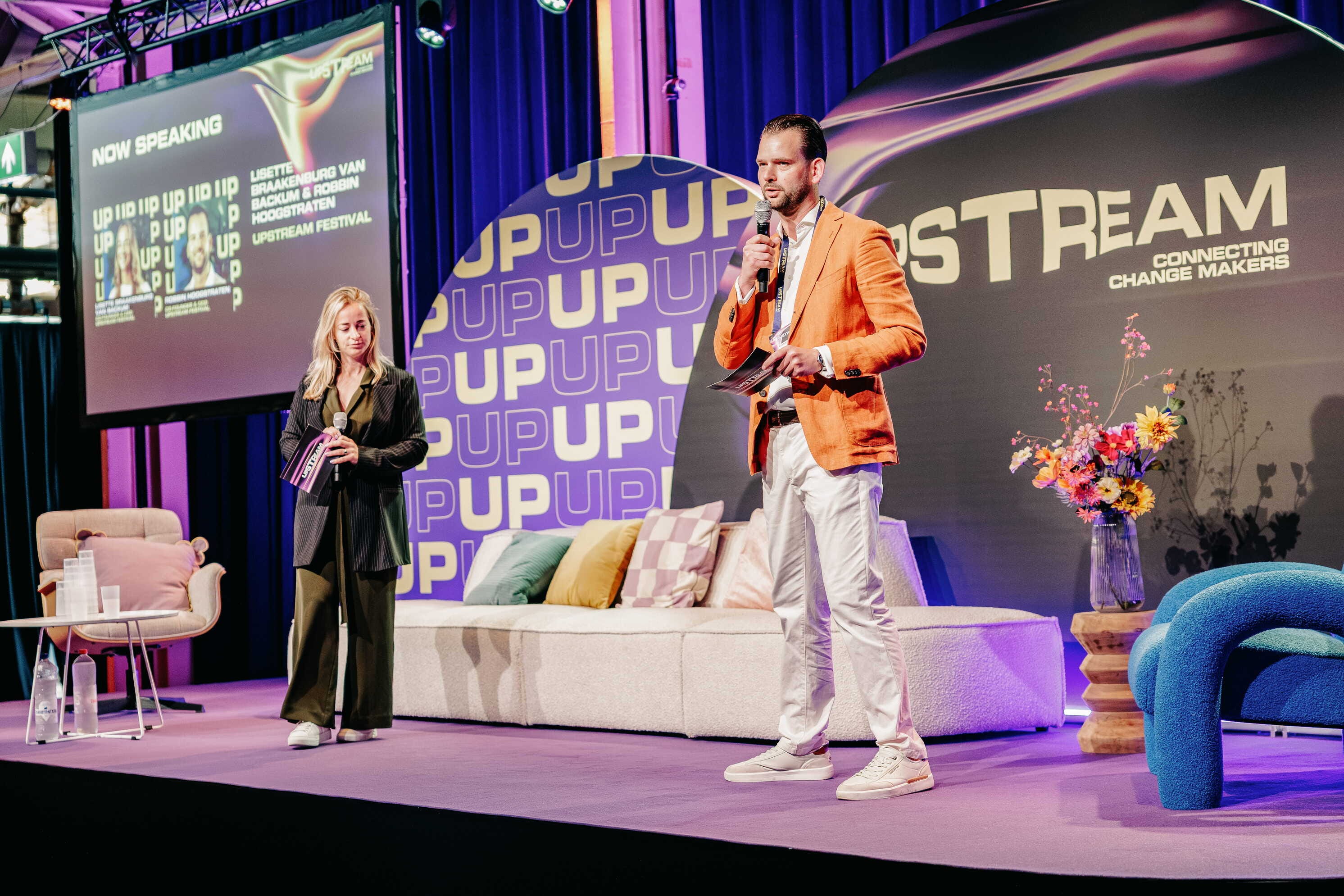
I want to be clear that this is not a festival that’s all jokes and no substance. The opposite, really. But the humor tells you something about how they operate, and it’s worth holding onto as we get into the part that genuinely impressed me.
Also, before I forget: the food was excellent. I only tried the chicken tenders but they were lekker. And the drinks were essentially unlimited, which for a free-flowing networking event is either generous or reckless depending on how your afternoon went.
How a City Program Became a Company
One thing I didn’t know about Upstream is that it didn’t start as a private event company at all. It began as a public initiative, part of the City of Rotterdam’s broader push to pull its scattered startup scene together. Lisette Braakenburg van Backum and Robbin Hoogstraten, the two people who run it today, were already helping organize it back then, during the municipal days. And it grew. It grew enough that staying inside a city program stopped making sense, and at that point the two of them took it private.
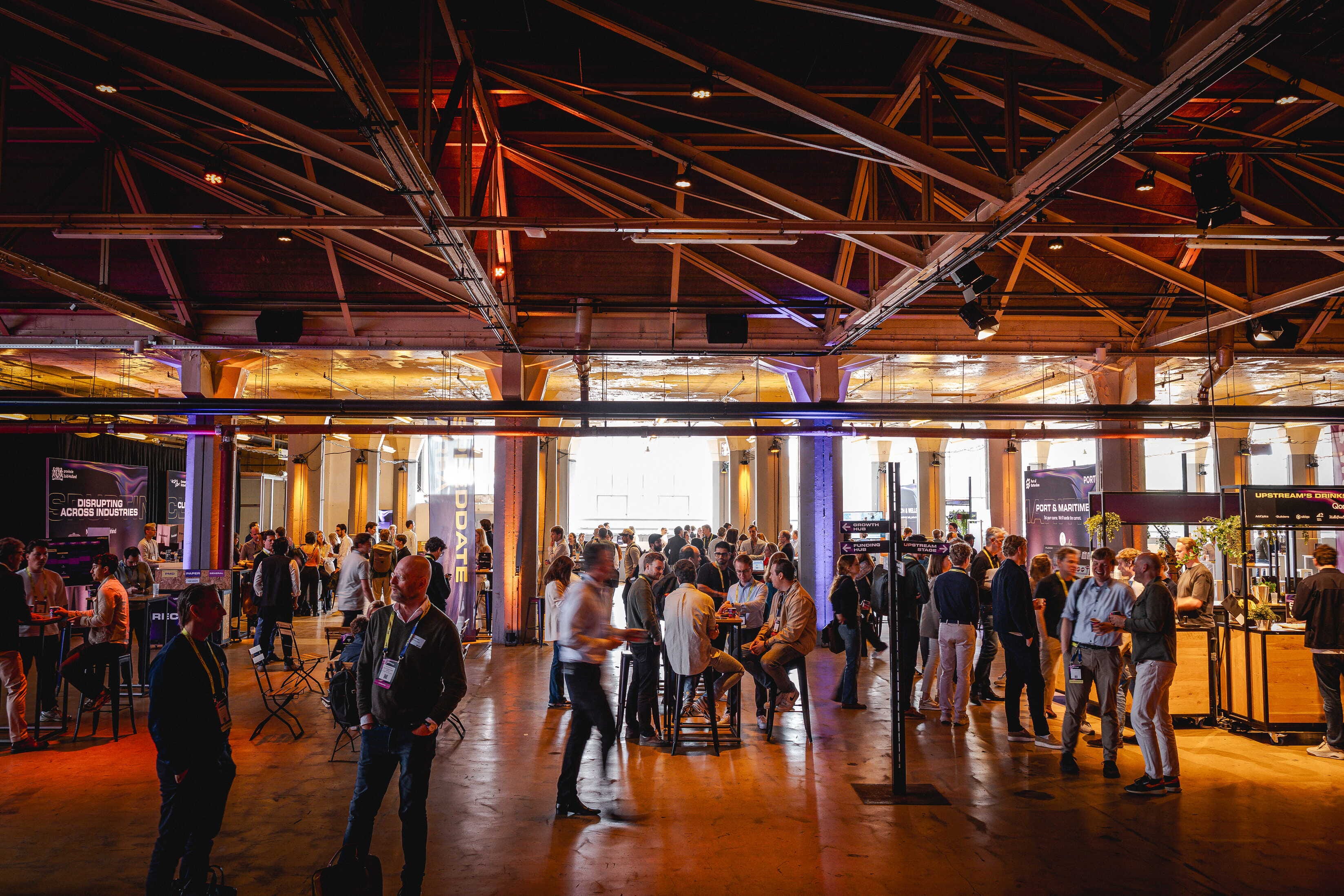
The interesting part is that the city didn’t disappear when that happened. Rotterdam is still a partner, still closely involved, still very much in the room. So you have this slightly unusual arrangement where two people built a real, self-sustaining event business out of a government program, kept the government as a backer rather than a boss, and now run one of the largest startup festivals in the Benelux. This year over 800 people bought tickets, which for a curated, founder-first event is a serious number.
For context on how long this took: the whole thing was dreamed up around 2019, was forced online in 2020 when the pandemic hit, ran hybrid for a stretch, and only later became the in-person festival it is now. So the version I wandered into is the result of about six years of figuring it out.
The Sectors Nobody Writes About
Here’s what actually stuck with me, and it’s the reason I think this event matters more than a typical conference.
Upstream organizes itself around three focus areas, each with a dedicated partner. Port and Maritime, run with PortXL and the Port of Rotterdam. Climate and Energy, run with the Municipality of Rotterdam. And Health and Wellbeing, run with Rabobank.
Notice what’s missing from that list. There’s no “AI” focus, no “SaaS” track, none of the stuff that gets written about constantly. And that’s the point. These three sectors are notoriously hard to give any publicity to. The founders tend to be tucked inside closed networks, research teams, or larger companies. A lot of the support and dealmaking happens quietly, behind doors, between people who already know each other. And on top of that, the average person simply does not care about floating solar or quantum-secure communications the way they care about the next app.
Think about it this way. When you picture a Dutch startup success story, you probably land on something like WeTransfer, or Booking.com, or Framer. You almost certainly don’t land on Q*Bird, the Delft quantum company, or SolarDuck, which builds floating solar out at sea. Both were represented at Upstream. So were people like Constantijn van Oranje, who leads the national tech body Techleap, and a whole roster of deeptech founders running important companies most people have never heard of and probably never will.
Getting those people into one room, and getting anyone to pay attention to them, is genuinely difficult. Upstream does it anyway, and does it without pretending these are consumer brands. That’s the quiet achievement underneath all the chicken tenders and prison jokes.
That said, they welcome people from the more “mainstream” verticals and label them as sector-agnostic.
The Week, and the Best Idea at It
One more thing worth knowing next time you go: Upstream isn’t really a day, it’s a week. The festival itself is the finale, but the days leading up to it are packed with side events run by partners across the city, everything from mini golf to investor breakfasts.
My favorite of these is a format called Superconnectors, which I’d actually come across at another conference before learning it spun out of Upstream around 2020. The premise is simple and a little bit genius. Startups pitch to a room. But instead of pitching for money, they’re pitching for introductions. The audience is full of “superconnectors,” people who, as each startup presents, offer up who in their own network they could connect that founder to. Then everyone votes on whose proposed introduction is the most useful, and the top three connectors walk away with a prize, usually a bottle of champagne and the very public prestige of being the most useful person in the room.
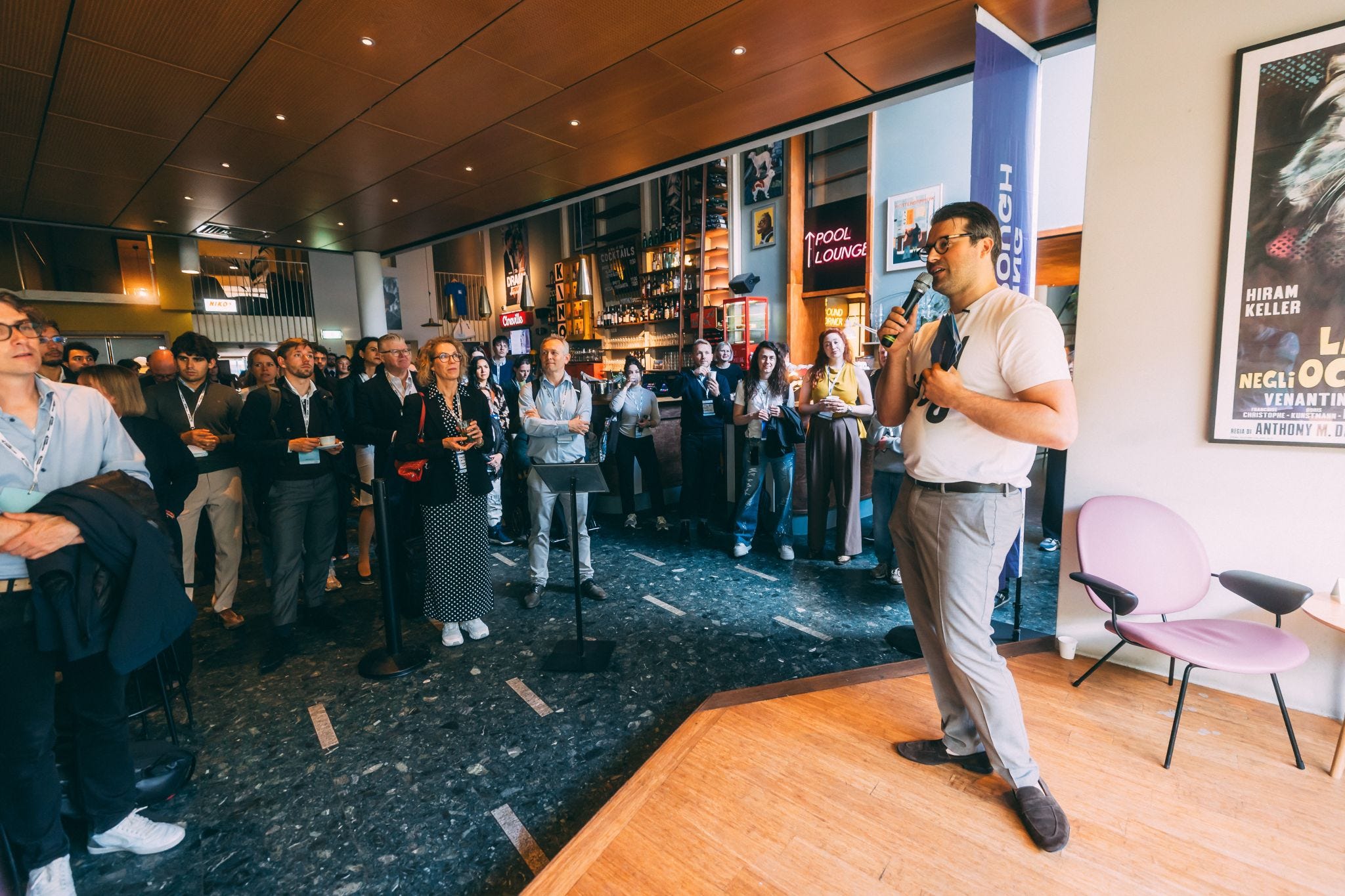
It works because it lowers the stakes. Nobody’s being asked to write a check or commit to anything heavy. You’re just being asked to be helpful, and you get rewarded for it. Compared to the usual pitch-to-investors format, where founders perform and then mostly nothing happens afterward, this one actually connects people. It’s the kind of small, smart idea that probably came out of one of those locked-room sessions, and it’s spread to other events since.
So yes, they fooled me with a fake prison stage. But I left genuinely impressed, slightly full of chicken tenders, and convinced that the two people running this thing know exactly what they’re doing, jokes and all.