


See more of Dutch Brief in your Google search results
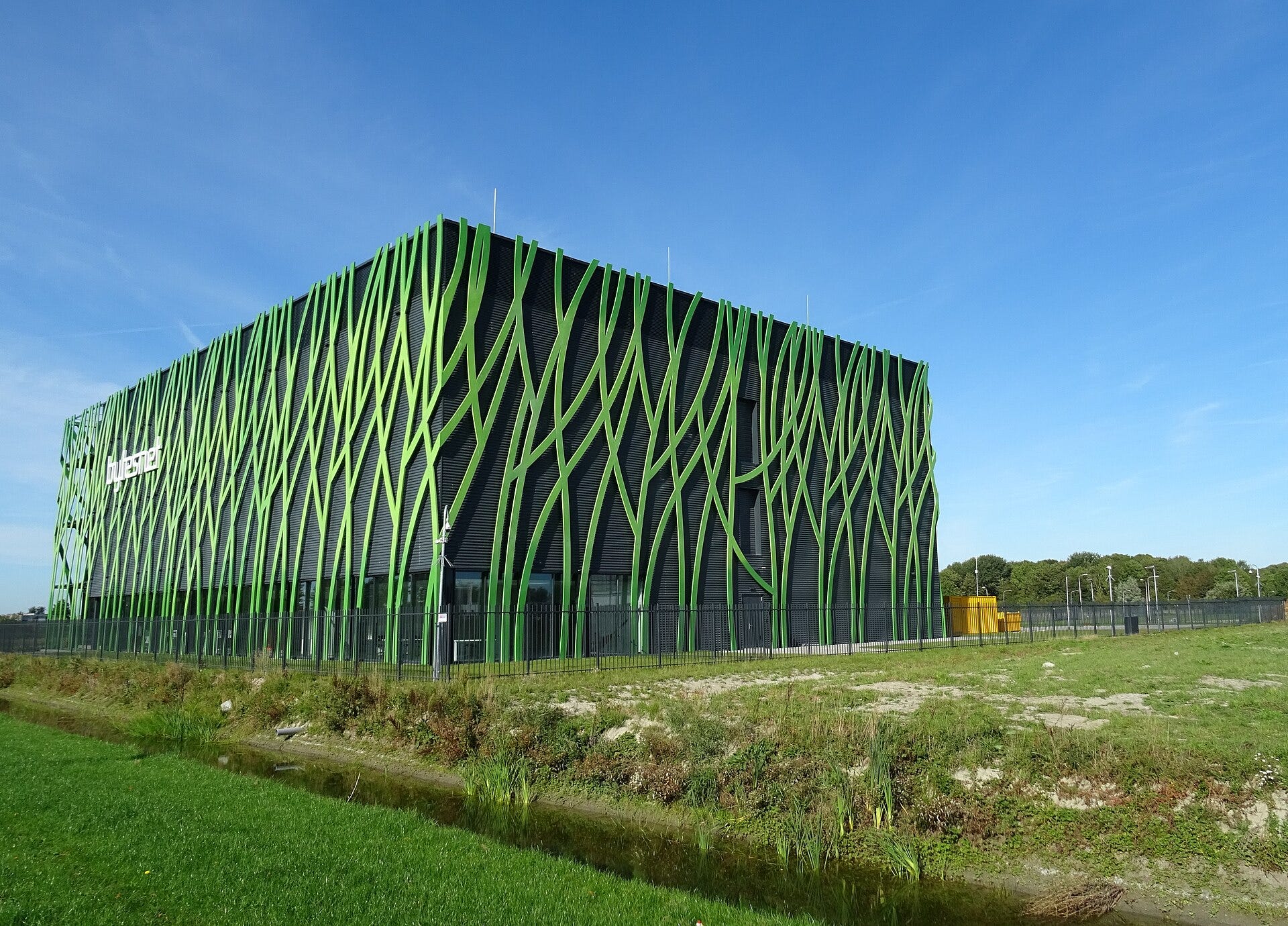
The northern province of Groningen is quietly becoming one of the fastest-growing datacentre regions in Europe, expanding more rapidly than long-established hubs such as London and Frankfurt. The shift is being driven by a simple problem: the places that used to host Europe’s datacentres are running out of room and power, and Groningen has both.
Why the big hubs are stuck
For years, Europe’s datacentre industry has clustered in five markets known by the shorthand “FLAP-D”: Frankfurt, London, Amsterdam, Paris and Dublin. Together they still account for a large share of the continent’s capacity. But these hubs are increasingly hitting their limits, not so much for lack of physical space as for lack of electricity.
According to the property consultancy Cushman & Wakefield, whose market data underpins the reporting, power shortages, congested electricity grids and lengthy permit procedures are now the main factors deciding where new datacentres can be built anywhere in Europe. As the established hubs fill up, investment is shifting to secondary markets and regional clusters where large amounts of power can actually be connected and where permits are less of an obstacle.
The Netherlands shows the pattern clearly. Amsterdam remains one of Europe’s largest datacentre hubs, with around 852 megawatts of operational capacity, but its room to grow is under pressure from grid congestion, strict rules and slow approvals. So investment is moving elsewhere, and within the Netherlands, Groningen has emerged as the standout alternative.
What Groningen offers
Groningen’s appeal comes down to space, power and speed. The province has land available for large developments, relatively better access to electricity, and often shorter approval times than the crowded west of the country. That combination makes it attractive for exactly the kind of large, energy-hungry projects that the AI boom is generating.
The region is not starting from scratch. Google has been building in the province for years, with a major datacentre in the Eemshaven, opened in 2018, and a third Dutch site more recently in Winschoten, part of billions of euros the company has invested in Dutch digital infrastructure. The Eemshaven’s draw is partly its physical connections: several transatlantic data cables come ashore there, and the area has significant power-generation capacity nearby, both essential for a datacentre. National policy has reinforced the trend, steering the very largest “hyperscale” campuses towards the Eemshaven and Middenmeer rather than the Randstad.
SPONSORED
You’re overpaying your accountant. And they still don’t call you back.
Neno gives you a dedicated bookkeeper, automated admin, real-time financial insights and a free business bank account. Everything your business needs, in one place.
No chasing. No surprises. No unnecessary costs.
The engine: artificial intelligence
Behind the surge is the global race to build artificial intelligence. Training and running AI systems requires enormous amounts of computing power, which in turn requires datacentres and the electricity to feed them. That demand is growing faster than the traditional hubs can absorb, which is precisely what is pushing operators towards places like Groningen. It is the same boom that has lifted the Dutch chip-machine maker ASML, whose equipment is essential for producing the advanced processors these datacentres run on, and it places the Netherlands, once again, close to the centre of the AI supply chain.
Fast growth, but from a smaller base
The claim that Groningen is growing faster than London or Frankfurt is worth putting in perspective. It reflects the pace of growth, not the total size: the established hubs are far larger in absolute terms, and a smaller region will naturally post higher percentage increases as big new projects arrive. Groningen is a rising challenger, not yet a rival in scale.
There is also a national caveat. Even as Groningen grows, the Netherlands as a whole has been losing ground to faster-expanding markets such as Spain, France and Germany. Dutch datacentre capacity reached around 1.5 gigawatts at the end of 2025, up about 7 percent on the year, but that lagged the wider European growth rate. The Dutch Data Center Association has warned that power shortages, waits of up to a decade for grid connections, permit processes that now average four and a half years, and staff shortages are all holding the sector back.
The trade-offs
None of this is without controversy, and datacentres are a genuinely divisive subject in the Netherlands. They consume large amounts of electricity and water, add to the strain on an already congested power grid, and take up space, concerns that have led some municipalities, including Amsterdam and Haarlemmermeer, to impose moratoriums on large new campuses in the past. Supporters counter that the facilities are strategically essential to a modern economy, support digital sovereignty and jobs, and are increasingly built with green power and features such as waste-heat reuse, with some Groningen datacentres already feeding warmth into local heating networks.
For Groningen, a province more often in the news for the earthquakes left by its closed gas fields, the datacentre boom represents a different kind of energy story: one where its space and its access to power are turning it, for now, into one of Europe’s rising digital hotspots. Whether that growth proves sustainable will depend, as elsewhere, on the same hard limits of electricity, grid capacity and public consent.
Amsterdam's ceiling is less about zoning than about the grid itself. The IEA counted around 10,000 large users waiting for a new electricity connection in the Netherlands in early 2025, some for years, so a province with actual power headroom wins by default. What I find most striking is the history repeating: Groningen spent decades powering the whole country through its gas field, carried the earthquakes that came with it, and saw little of the revenue. Datacentres are a cleaner business than gas, but the old pattern of the north hosting while the west decides is worth keeping an eye on.