


See more of Dutch Brief in your Google search results
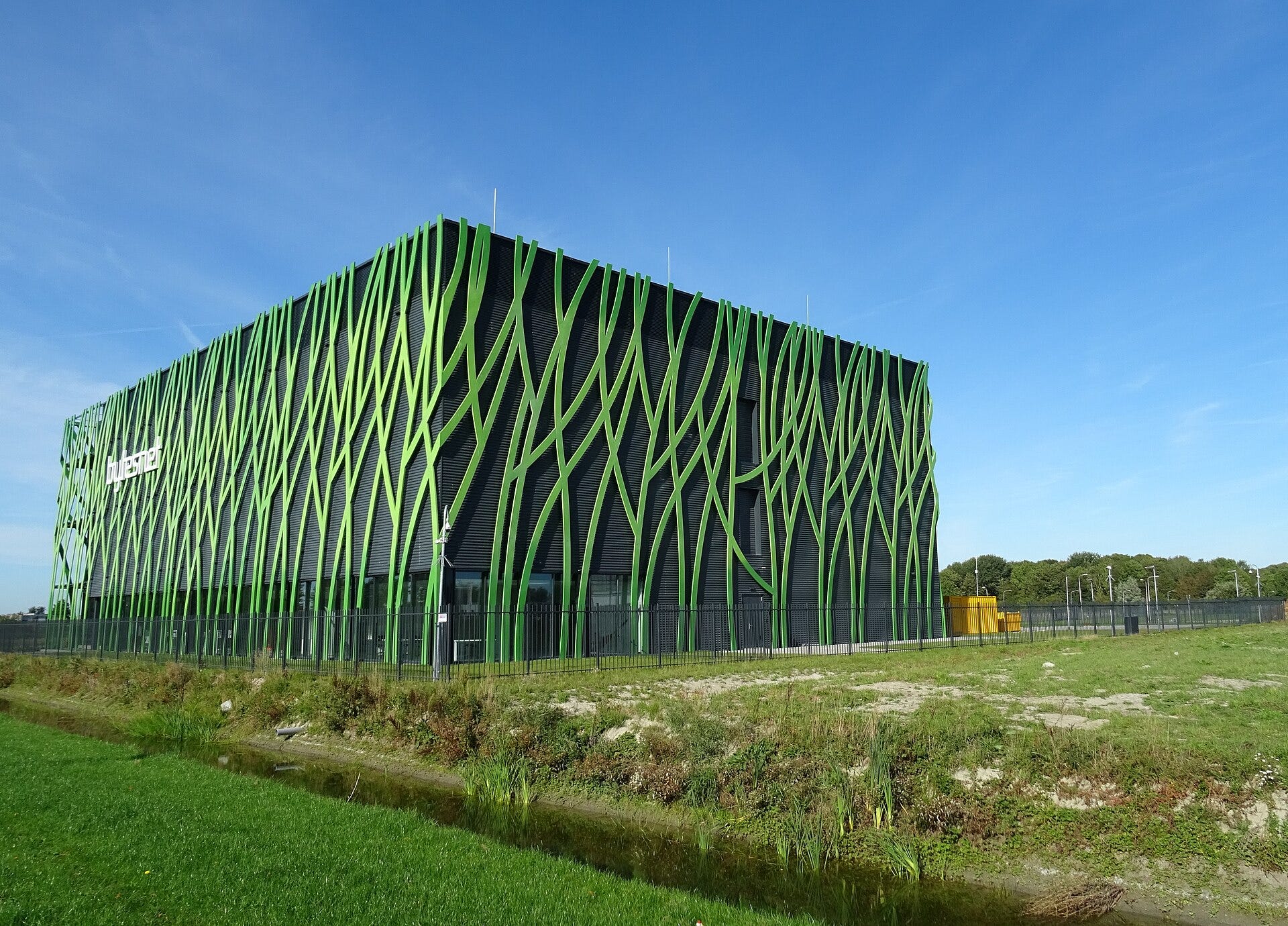
The Netherlands will build its first national AI supercomputer in Groningen, the centrepiece of a 201 million euro project meant to give the country its own capacity to develop artificial intelligence. It will be installed at a data centre in the northern city, as part of a plan that also carries a notable strand of local history.
What is being built
The machine will form the computing heart of the “Dutch AI factory”, a facility where researchers, companies, educational institutions and governments can develop and train their own AI tools rather than relying on foreign providers. The IT cooperative SURF, acting for the consortium behind the project, has chosen to house the supercomputer at Eurofiber’s data centre on the University of Groningen’s Zernike Campus, picked over two other candidate sites. It is due to be installed in 2027 and fully operational by early 2028.
The supercomputer is one half of the project. The other is an expertise centre, already underway, in the historic former Niemeyer tobacco factory in Groningen, where a team of AI specialists will help businesses and institutions use the computing power. A supercomputer handles calculations too large for an ordinary machine, using many powerful processors linked together, and is used for everything from weather forecasting to scientific research and training heavy AI models.
An unusual source of funding
Of the 201 million euros in public money, 71 million comes from EuroHPC, the EU’s supercomputing agency, which chose the Netherlands as one of six new AI-factory sites across Europe in October 2025. The Dutch government is contributing 70 million. The final 60 million comes from Nij Begun, the state recovery programme set up to repair Groningen and northern Drenthe after decades of earthquakes caused by gas extraction. In effect, money intended to help a region long scarred by the downside of one era’s energy economy is being used to give it a stake in the next.
SPONSORED
You’re overpaying your accountant. And they still don’t call you back.
Neno gives you a dedicated bookkeeper, automated admin, real-time financial insights and a free business bank account. Everything your business needs, in one place.
No chasing. No surprises. No unnecessary costs.
Why the Netherlands wants it
The world’s most powerful supercomputers are in China and the United States, and Europe’s strongest runs in Germany. The government concluded that this left the Netherlands too dependent on other countries for a technology now central to the economy, and decided to invest in its own capacity. The University of Groningen and the UMCG hospital both backed hosting it locally and will contribute expertise; the UMCG, for instance, expects to use it to analyse hospital data to better predict which treatment suits each patient.
A machine built for the region, with a catch
The project leans on Groningen’s strengths as an emerging data-centre hub. Almost all of the facility’s waste heat is to be fed into the city’s WarmteStad district heating network, and no surface or drinking water will be used for cooling.
SURF warned in August that the soaring global cost of AI hardware, driven by big technology firms’ spending on processors, memory and storage, means the roughly 64 million euros set aside for the computer itself no longer buys what it would have eighteen months ago. As a result, the supercomputer will be less powerful than originally planned, a small sign of just how fierce the worldwide race for AI computing has become.