


See more of Dutch Brief in your Google search results
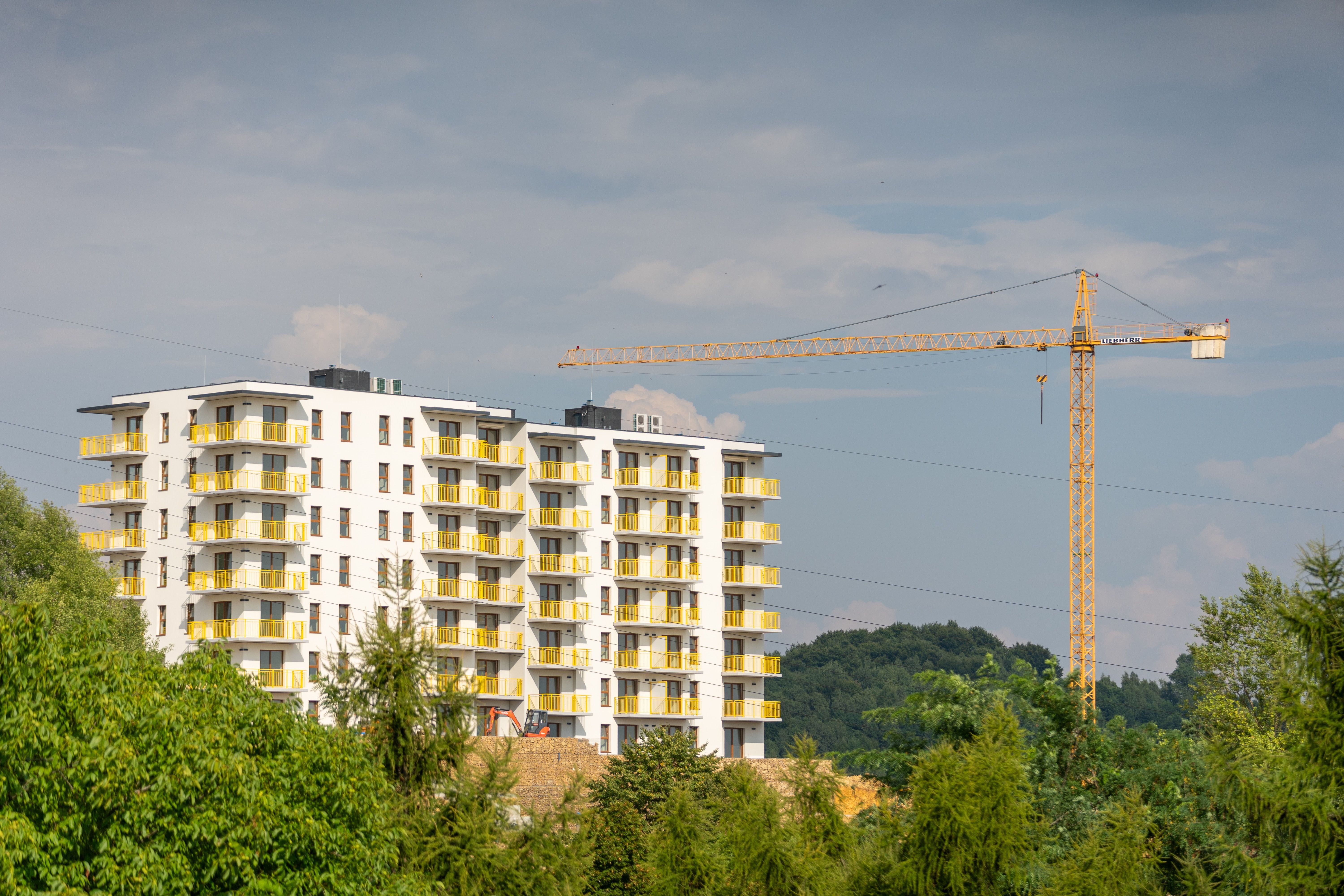
Plans for more than 30,000 new homes in four Dutch cities have stalled because the government cannot find the money to build the roads and rail crossings needed to reach them. The four municipalities (Alkmaar, Apeldoorn, Hengelo/Enschede and Helmond) say they are ready to start building, but cannot do so until the missing infrastructure is paid for. They have together written an urgent letter to the cabinet.
SPONSORED
You’re overpaying your accountant. And they still don’t call you back.

Neno gives you a dedicated bookkeeper, automated admin, real-time financial insights and a free business bank account. Everything your business needs, in one place.
No chasing. No surprises. No unnecessary costs.
Approved homes, no way to reach them
The four cities were personally designated last summer, by then-housing minister Mona Keijzer (BBB) of the Schoof I cabinet, as locations for large-scale housing construction. They were added to 17 earlier locations chosen by her predecessor Hugo de Jonge (Rutte IV), with the current Jetten cabinet planning to designate another nine before summer. Together, these large-scale sites are supposed to make a serious dent in the national shortage of around 400,000 homes.
In the four newer locations, the planning is done and the funding for the housing construction itself is in place. The problem is the access: a condition for starting to build is that the new neighbourhoods are reachable by car and train. For that, the four municipalities together need €425 million for new roads, tunnels under the railway and adjustments to junctions. So far, they have received €99 million from another housing pot.
Concrete examples
In Apeldoorn, the plan is for more than 6,300 homes, but residents would have to cross the railway line on busy level crossings several times a day. The municipality wants to build two tunnels under the railway, has set aside €100 million of its own, and is counting on roughly €100 million more from the state, which has not been promised. In Alkmaar, the city is asking for €122 million for, among other things, a new bridge, a railway underpass and changes to several intersections.
Two ministries, two empty pots
The previous Schoof cabinet had a budget of €2.5 billion for the construction of roads, rail tracks and tunnels around such large-scale housing sites. That money was fully distributed to the 17 De Jonge locations, leaving the four Keijzer locations to apply later. In a parliamentary letter last November, Keijzer herself acknowledged that the support given so far was “not enough for the total development of these locations” and that it would be up to a new cabinet to find the rest.
The new cabinet does not have the money lying around either. The budget of the ministry of housing is exhausted, which pushes the problem onto the ministry of infrastructure. Earlier this year, that ministry made clear it is staring at a budget gap of around €80 billion for the maintenance and construction of all infrastructure in the Netherlands between now and 2039. Many motorways and bridges are ageing and badly in need of repair. “There is no ATM with free money here at the ministry,” infrastructure minister Vincent Karremans (BBB) said.
An urgent letter from the four municipalities
The four municipal boards have sent the cabinet an urgent letter (”brandbrief”). “Without this investment, homes in these areas will not arrive, and with them the prospect for thousands of households,” they wrote. “We are ready to build over 30,000 homes in our four large-scale housing locations: give us the starting signal. Let us get to work.”
A familiar tension
The Dutch housing shortage and an ageing infrastructure are colliding. The Jetten coalition agreement aims for 100,000 new homes per year and the restart of 17 paused infrastructure projects, but the most recent academic and audit-office estimates put the cumulative infrastructure maintenance gap up to 2050 at around €50 billion. Several parliamentary parties have asked for more money for roads, bridges and railways; Karremans has spoken mainly about the need to “prioritise.”
What happens next
The cabinet plans to announce after the summer which projects it will press ahead with and which will be shelved. Until then, the four municipalities sit in what local politicians have called a “bureaucratic limbo.” For the wider housing debate, the case is a sharp illustration of a familiar dilemma: it is one thing to designate sites for tens of thousands of new homes; it is quite another to pay for the roads, bridges and railways that bring them to life.