


See more of Dutch Brief in your Google search results
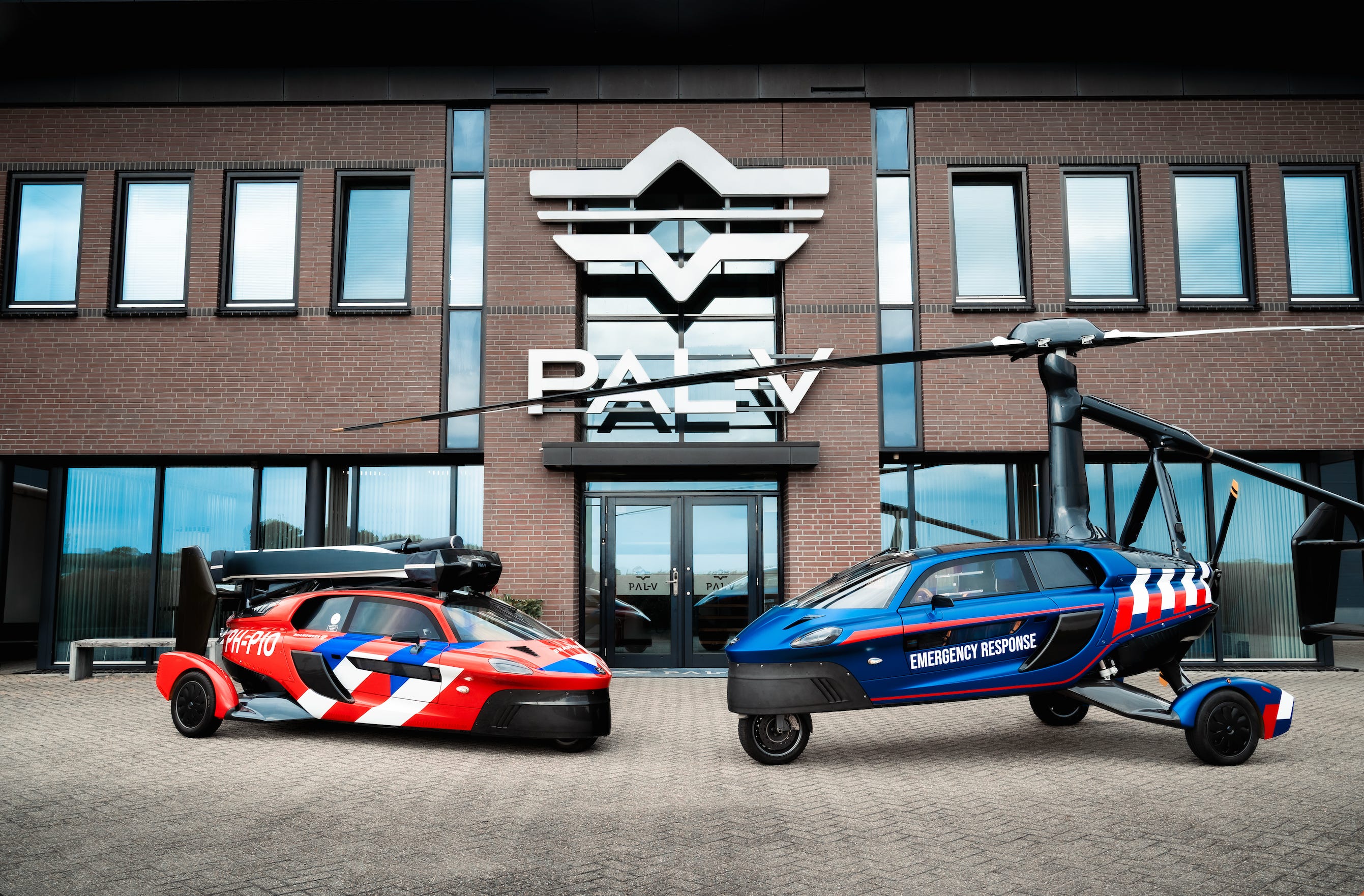
It sounds like something out of a science fiction film: cars that lift off the road to carry people or parcels from one place to another. Now that the Dutch company Pal-V has been granted permission to produce flying cars, that vision has come a step closer to reality, though experts caution against expecting the skies to fill up any time soon.
What has been approved
Pal-V has received approval from the European Union Aviation Safety Agency (EASA) to build its flying car, the milestone the company had been waiting years for. The vehicle has been allowed on the road by the Dutch driver and vehicle authority (RDW) since 2020, but selling a commercial model was repeatedly delayed, from 2021 to 2025 and then 2026.
“Now that approval from the European aviation authority EASA is in, we will soon really start producing the first cars,” said Pal-V’s general director, Robert Dingemanse. Those still have to be tested again to demonstrate that they meet all the guidelines, he said, “which will take about another year and a half.” That points to the first flying cars getting airborne around 2028.
How it works
The vehicle has three wheels and, tucked away while driving, a set of rotor blades. On a full tank it can fly around 500 kilometres. Its appeal, according to the experts, is precisely that it is road-legal as well. “The big advantage is that they are also allowed on the road,” said aviation professor Jacco Hoekstra. Because of the design, little space is needed to take off and land, and it can be mass-produced like a car, which, at large volumes, could make it far cheaper to build than a helicopter.
The idea itself is far from new. As long ago as 1842, two inventors filed a patent for a “flying steam carriage”, and people have been experimenting ever since, with most attempts ending in failure. “Driving and taking off whenever you like, it sounds great,” said aviation expert Joris Melkert. “But technically it’s complicated. And even if you manage it, it all still has to be approved.”
SPONSORED
You’re overpaying your accountant. And they still don’t call you back.

Neno gives you a dedicated bookkeeper, automated admin, real-time financial insights and a free business bank account. Everything your business needs, in one place.
No chasing. No surprises. No unnecessary costs.
Why the skies won’t fill up
Approval to build the vehicle does not mean flying cars will suddenly be everywhere, and here the experts are notably measured. Flying cars are subject to the same rules as aircraft. “You can’t just fly anywhere,” said Hoekstra, “and Dutch airspace is quite full”, the same obstacle facing companies that want to deliver parcels by drone.
Taking off and landing is only allowed at so-called airstrips, small airfields with a simple landing strip, of which there are currently about twenty in the Netherlands. Hoekstra thinks it “not inconceivable” that more will appear if demand grows. Pal-V is already toying with the idea of building special flying strips next to petrol stations. “That may seem unthinkable now,” he said, “but if demand is big enough, you make room. That happened years ago with electric charging points for cars, too.”
Who is buying, and why mostly abroad
The flying car will cost between 299,000 and 499,000 euros. The first 250 have already been sold, and because the company can produce at most 100 a year, sales are temporarily frozen. About half the orders, according to Dingemanse, have come from emergency services such as the fire brigade, police or the military, with the rest from specialists who need to reach a location quickly, such as maintenance workers, and a handful for private use.
Apart from the Dutch fire brigade, the orders come mainly from abroad, and the reason is telling. “In the Netherlands we have a good road network,” said Melkert. “But that’s not the case everywhere. In Norway, for example, it’s sometimes impossible to get to the other side of a fjord quickly.” Even in the Netherlands, he can imagine situations where getting emergency services somewhere fast would help, such as assessing this summer’s wildfires, “but you can get a long way with a small plane or a drone. A flying car is not crucial here.”
A legal cloud
The company is dealing with a single complication. Pal-V is due to appear in court in 2027 on suspicion of fraud involving NOW coronavirus support, the scheme that helped cover wage costs during the pandemic. The labour inspectorate and the public prosecution service suspect the company wrongly received millions in aid. Pal-V denies this, and says it followed the rules.