


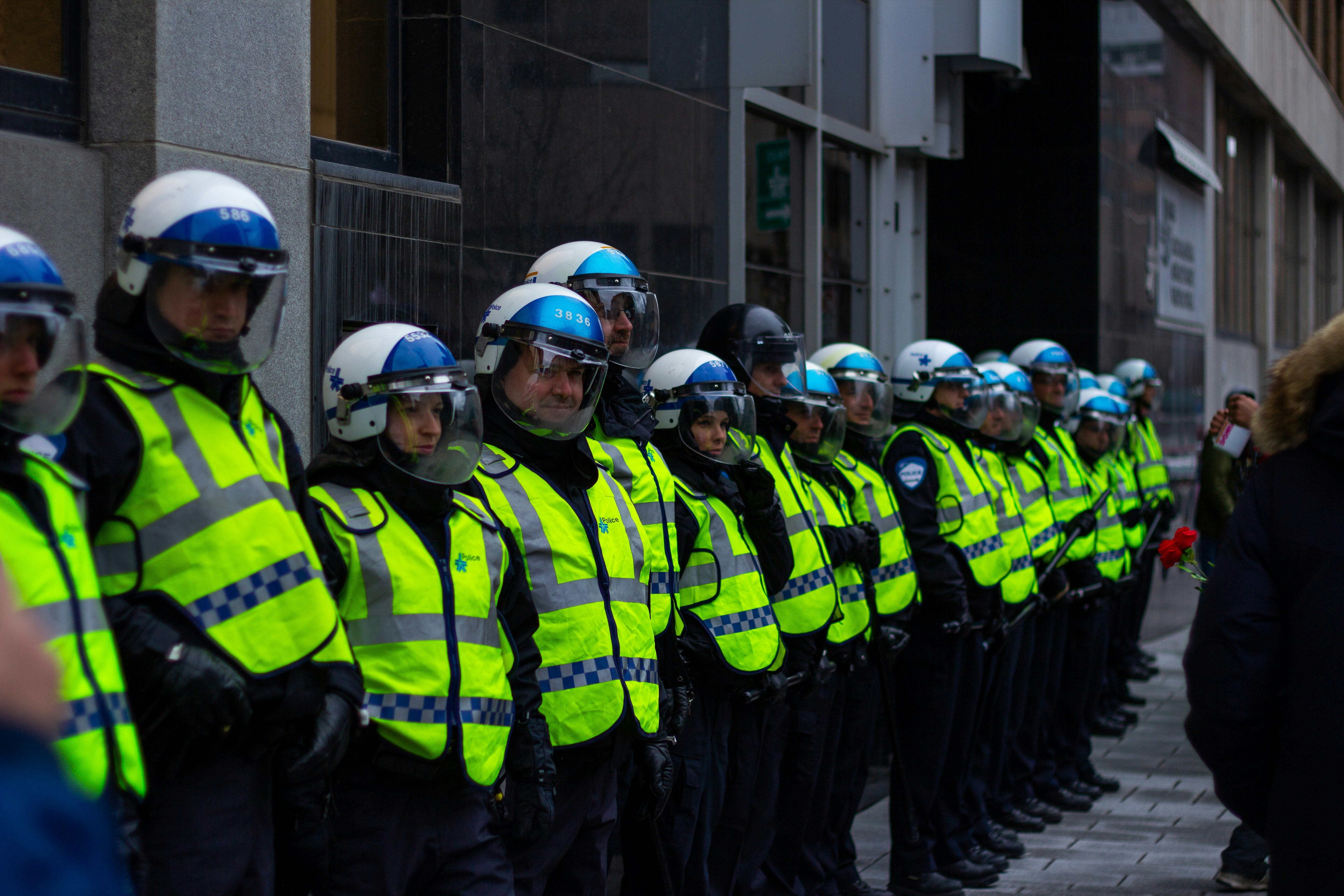
The Dutch government wants mayors to be able to intervene more quickly and more forcefully when a protest gets out of hand, justice and security minister David van Weel and interior minister Pieter Heerma wrote in a letter to the Tweede Kamer on Tuesday. The cabinet plans to combine new emergency powers for mayors, a tool to physically move demonstrators, and tougher criminal penalties for offences committed at protests.
Rentals in the Netherlands

Signaal tracks the Dutch rental market and notifies you the moment something matches your search. Be first to apply.
Why the cabinet wants to change the rules
The number of demonstrations in the Netherlands has more than tripled in the past decade, the cabinet says. The vast majority pass without incident, but the recent weeks have included several that did not. Anti-asylum protests in Loosdrecht, IJsselstein, Den Bosch and Apeldoorn turned violent, with fireworks and torches thrown at a building in Loosdrecht where 15 asylum seekers were inside. Last weekend, climate group Extinction Rebellion blocked the railway near Utrecht Centraal despite a ban by mayor Sharon Dijksma.
According to the ministers, these “completely derailed” demonstrations show that local “triangles” of mayor, police and public prosecutor need stronger and clearer tools to act in a “targeted and proportional” way.
What is being proposed
The cabinet is preparing three main changes. First, a new emergency power in the Public Manifestations Act (Wet openbare manifestaties, Wom) that would allow mayors to act more swiftly during serious disturbances of public order at a demonstration. Second, a new legal basis in the Municipal Act (Gemeentewet) that would let mayors forcibly relocate demonstrators and other groups, for example by putting them on buses. Third, a revision of the criminal provisions in the Wom, so that criminal offences committed during a demonstration can be punished more severely by the courts.
The cabinet is also exploring further measures against blockades of railways, motorways and damage to cultural heritage. Earlier in the year, it announced plans for a general ban on face-covering clothing at demonstrations, which is already before parliament.
“Rioters who misuse demonstrations have to be tackled harder,” Van Weel said. “Activists who block our infrastructure will also be punished faster, more often and more severely, and will themselves pay for the damage. Highways and railways are not places to demonstrate.”
A fundamental right, with limits
The cabinet stresses that the right to demonstrate remains a fundamental right, and that the goal is to act against those who abuse that right, not against peaceful protest.
That message has not reassured everyone. The National Ombudsman, Reinier van Zutphen, warned last week that further curbs on the right to protest “threaten our democracy.” Speaking to Nieuwsuur, he noted that 97 percent of demonstrations in the Netherlands pass without incident, “without incidents and in good consultation between organisers, mayor and police.” Mayors themselves, he added, have not asked for a national face-covering ban; “they don’t need it.”
Where it fits
The plans are part of a wider package on what the cabinet calls a “weerbare democratische rechtsstaat” (a robust democratic rule of law), announced in April 2026, now being filled in with concrete proposals. They also fit with separate moves by state secretary for transport Annet Bertram, who has said the government will adjust the law to make it easier for mayors and railways to act against demonstrations that block train tracks, and for affected parties to recover damages from organisers.
What happens next
Van Weel and Heerma will now begin drafting the legislative texts. The Tweede Kamer and Eerste Kamer will both have to approve the changes before they can take effect, and several civil-society groups are likely to scrutinise the proposals closely. With autumn protests already widely expected over social-security and asylum policies, the question of where the line lies between protecting public order and protecting the right to protest is unlikely to fade from Dutch politics any time soon.