


See more of Dutch Brief in your Google search results
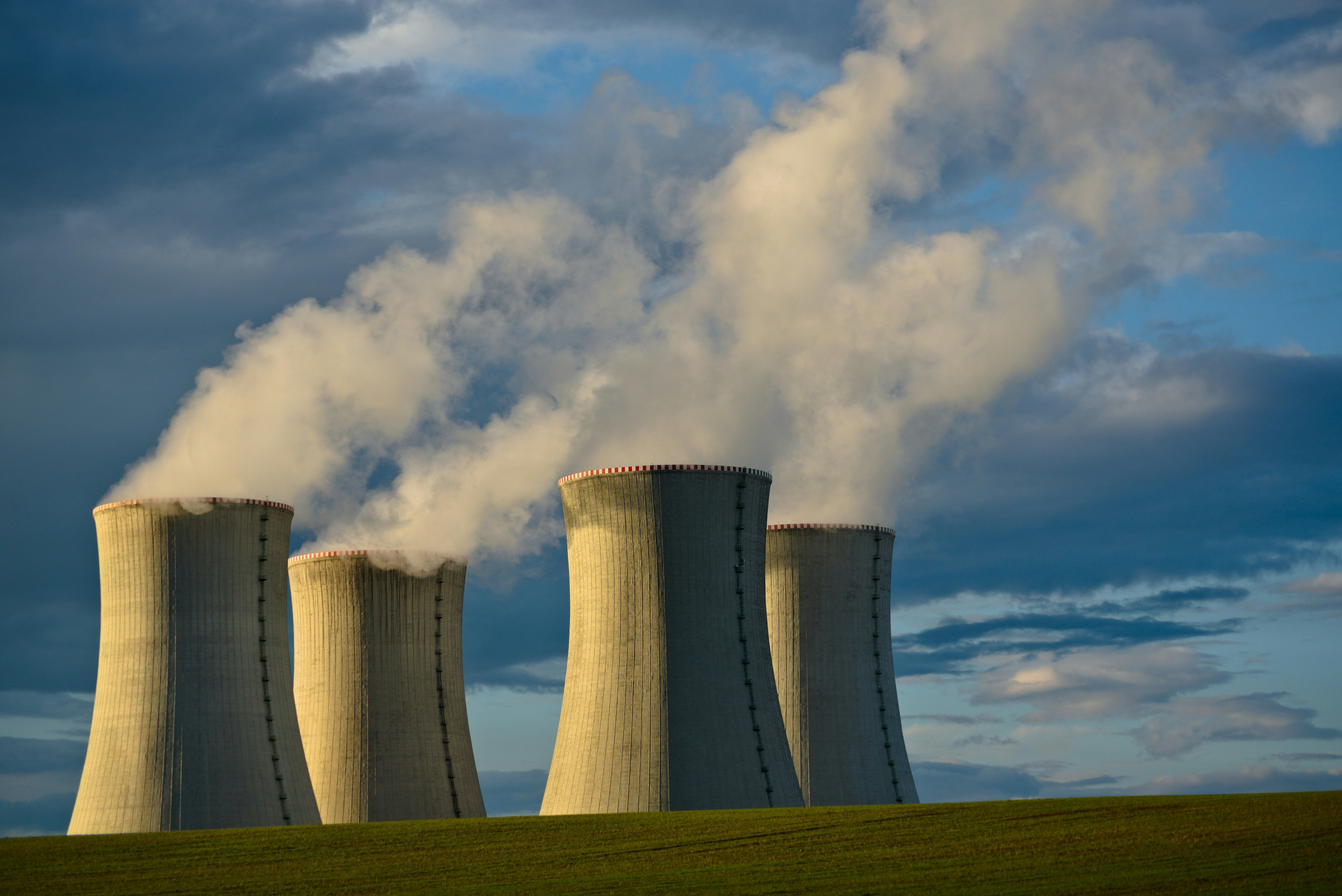
The Dutch government has decided that two new nuclear power plants will not be built on the Tweede Maasvlakte at Rotterdam, narrowing the choice for the country’s largest energy project in decades to Terneuzen in Zeeland or the Eemshaven in Groningen. The decision is set to be confirmed on Thursday in a letter from state secretary for climate and green growth Jo-Annes de Bat (CDA) to the Tweede Kamer.
Why the Maasvlakte is out
The decision is a clear win for Zuid-Holland. Although Rotterdam and the neighbouring municipality of Voorne aan Zee had earlier indicated they were open to research into a small modular reactor (SMR) on the Eerste Maasvlakte, the province itself opposed putting large reactors at the Tweede Maasvlakte. In a letter to De Bat, the provincial government wrote that the port area is “too busy” and that there would be safety risks. The cabinet has, in the end, agreed.
The cabinet had originally planned to take its location decision in September. It has, with this move, made a serious narrowing-down well ahead of schedule. According to Omroep Zeeland, the Borssele (Sloegebied) and Vlissingen sites in Zeeland are also dropping out, leaving only Paulinapolder/Mosselbanken at Terneuzen in Zeeland and three locations within the Eemshaven in Groningen.
SPONSORED
You’re overpaying your accountant. And they still don’t call you back.

Neno gives you a dedicated bookkeeper, automated admin, real-time financial insights and a free business bank account. Everything your business needs, in one place.
No chasing. No surprises. No unnecessary costs.
TenneT: only the Eemshaven really works
The choice has gained an extra twist in the past 24 hours. According to the Volkskrant, a confidential advice from grid operator TenneT, drawn up at the request of the ministry of climate and green growth, concludes that “from the point of view of system and cost efficiency” only the Eemshaven is a workable site for two new full-size nuclear plants. Bringing the reactors onto the network in Zeeland, TenneT warns, would mean substantially more grid investments and extra costs.
That advice complicates the political picture significantly. The Eemshaven was originally added to the list mainly to make the procedure legally robust, with then-climate minister Sophie Hermans (VVD) stating that the cabinet preferred a location in Zeeland. The Tweede Kamer adopted a motion to that effect, and successive ministers have repeated the same line.
Groningen pushes back
The province of Groningen has reacted with surprise and concern. “As is known, the province of Groningen and the municipalities of Het Hogeland and Eemsdelta are against the placement of nuclear power plants,” the provincial government said in a statement. It pointed to existing promises from The Hague and Tweede Kamer motions that no nuclear plants would be built in the Eemshaven, and to its own omgevingsvisie (spatial vision), which explicitly states that there is no room in Groningen for nuclear energy but plenty for wind, hydrogen and other renewables.
The region’s reluctance has historical roots: years of damaging earthquakes caused by gas extraction, and the closeness of the vulnerable Waddenzee, a UNESCO World Heritage Site. Under the Nij Begun programme, the Rijk has separately promised that at least a third of the power generated by new offshore wind farms will land in the Eemshaven, with a so-called Tunnelroute of cables and pipes being built to make that possible. The province argues that the Eemshaven is therefore already essential for the country’s energy transition, and that more nuclear capacity would risk pushing those plans aside.
A €20-30 billion project
The two large reactors are the centrepiece of a wider Dutch nuclear push, alongside two small modular reactors (SMRs) the cabinet wants to add later, in line with the Jetten coalition agreement of January 2026. The reactors together would have a capacity of around 2,300 to 3,300 megawatts, against 485 MW for the existing Borssele plant. The earliest realistic completion date, according to the government, is the late 2030s. A first cost estimate puts the total bill at €20 billion to €30 billion.
The pressure to build them has only grown. Earlier this month, TenneT itself warned that the Netherlands will struggle to meet its electricity supply standard from 2030, several years sooner than expected, because of fast-growing demand for power and the closure of coal- and gas-fired plants. Yesterday, the Tweede Kamer approved an extension of the life of the existing Borssele nuclear plant beyond 2033.
What happens next
For Zeeland and Groningen, the political battle is now sharper, not softer. The cabinet has previously stated its preference for Zeeland; TenneT’s confidential advice argues that, from a technical and financial standpoint, only the Eemshaven works. The Paulinapolder near Terneuzen, where local protest groups such as “Terneuzen tot de Kern” are already campaigning hard, would in the meantime become Europe’s largest building project since the Delta Works.
The formal preferred-location decision is expected after the summer, once the environmental impact study (plan-MER) and the Integrale Effectenanalyse (IEA) are complete. Until then, the final choice between a Zeeuws polder and a Groningen port remains open, but the Maasvlakte (the option many in Rotterdam saw coming for years) is now definitively off the table.