


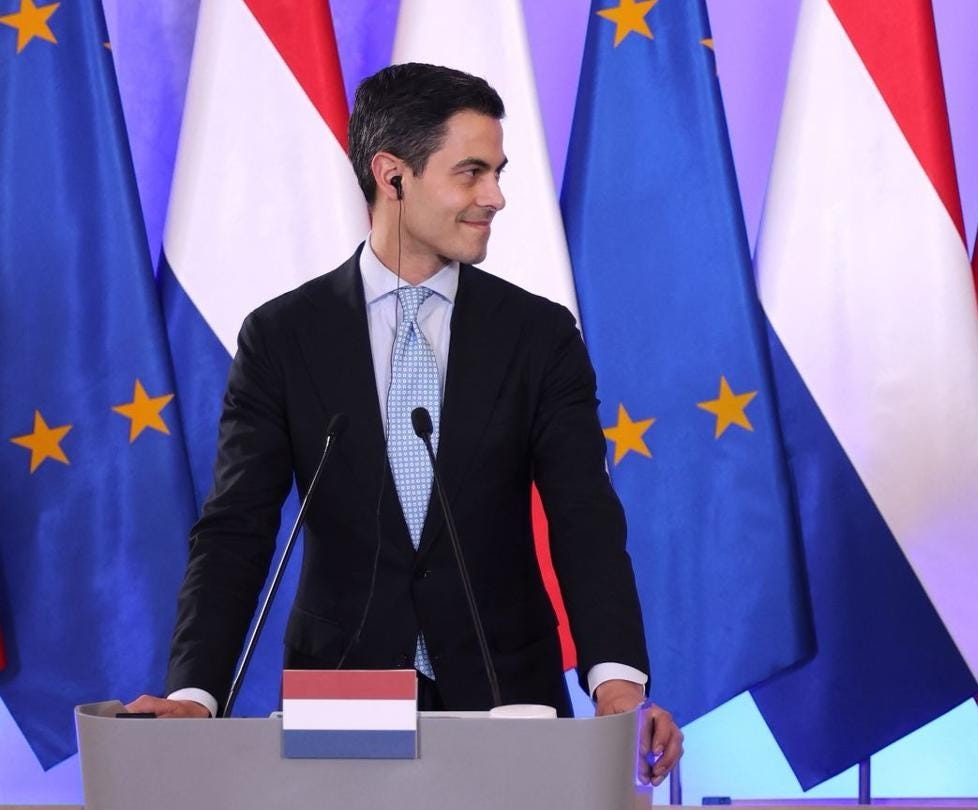
The Dutch council of ministers has agreed on a measure to ban trade in goods originating from illegal Israeli settlements in the occupied Palestinian territories and the Syrian Golan Heights. The decision, taken on Friday, 22 May, comes in response to a request made by parliament last year and is grounded, the cabinet says, in the Netherlands’ obligations under international law.
Rentals in the Netherlands
Signaal tracks the Dutch rental market and notifies you the moment something matches your search. Be first to apply.
What the ban covers
The proposed measure goes further than a simple import ban. Under the planned sanctions, it would become illegal for any person or company in the Netherlands to import goods from the illegal Israeli settlements, to buy or sell such goods, to provide intermediary trade services relating to them, or to circumvent any of those bans.
The rules would apply to everyone in the Netherlands, including the Caribbean islands of Bonaire, Sint Eustatius and Saba, as well as to all Dutch nationals and Dutch companies abroad. The ban is set to last three years, unless it is replaced by separate legislation.
For now, the measure covers only goods. The cabinet says EU law provides a “clear basis” for a ban on trade in goods, but not for a ban on services and investments. It is still examining whether a wider ban, also covering services and investments, would be legally possible.
Why the cabinet is acting
The cabinet bases its decision on the position, shared by the International Court of Justice, that the Israeli occupation of the Palestinian territories and the Golan Heights is unlawful. The Netherlands, the government argues, has an international obligation not to contribute to maintaining that unlawful situation.
In a letter to parliament, foreign affairs minister Tom Berendsen and foreign trade minister Sjoerd Sjoerdsma expressed “grave concerns” about the situation in the occupied areas. “The expansion of illegal settlements and excessive violence by settlers cause an increasingly deteriorating situation, in which a two-state solution moves ever further away,” they wrote.
Prime minister Rob Jetten said at a press conference that the goal was to ensure that “we, as Dutch society, do not contribute with our economic activities to an unlawful occupation and the maintenance of illegal settlements.” He added that the cabinet continues to work on “additional sanctions against violent settlers on the one hand and terror organisation Hamas on the other,” and that it still sees a two-state solution as “the only path to lasting peace.”
A national step after EU efforts stalled
Parliament asked for a national import ban in September last year. The previous caretaker cabinet under Dick Schoof took no concrete action on that request; the Jetten cabinet is now following it up.
The Dutch government says it would have preferred a Europe-wide ban, which it argues would be more effective and easier to enforce within the EU’s single market, and has repeatedly pushed for one. However, there is not enough support among EU member states for such a measure.
Criticism of the measure
Not everyone supports the plan. The organisation Christians for Israel (Christenen voor Israël) has argued that a boycott is counterproductive because it mainly harms Palestinian workers. Pieter van Oordt, director of the affiliated Israël Producten Centrum, has called the trade ban “an extraordinarily strange measure,” saying that there are few businesses in the settlements and that those who work there are largely Palestinians, who, he argues, benefit from employment at Israeli pay standards, including a minimum wage, sick pay, maternity leave and pension contributions.
What happens next
The cabinet has sent the sanctions decision to the Council of State, the government’s highest advisory body, for an urgent recommendation. After receiving that advice, the cabinet will draft a response, finalise the decision and publish it in the official gazette, the Staatsblad. The sanctions would then take effect two months after publication.
This is a politically sensitive topic, and the final shape of the measure may still change depending on the Council of State’s advice and the subsequent parliamentary process.