


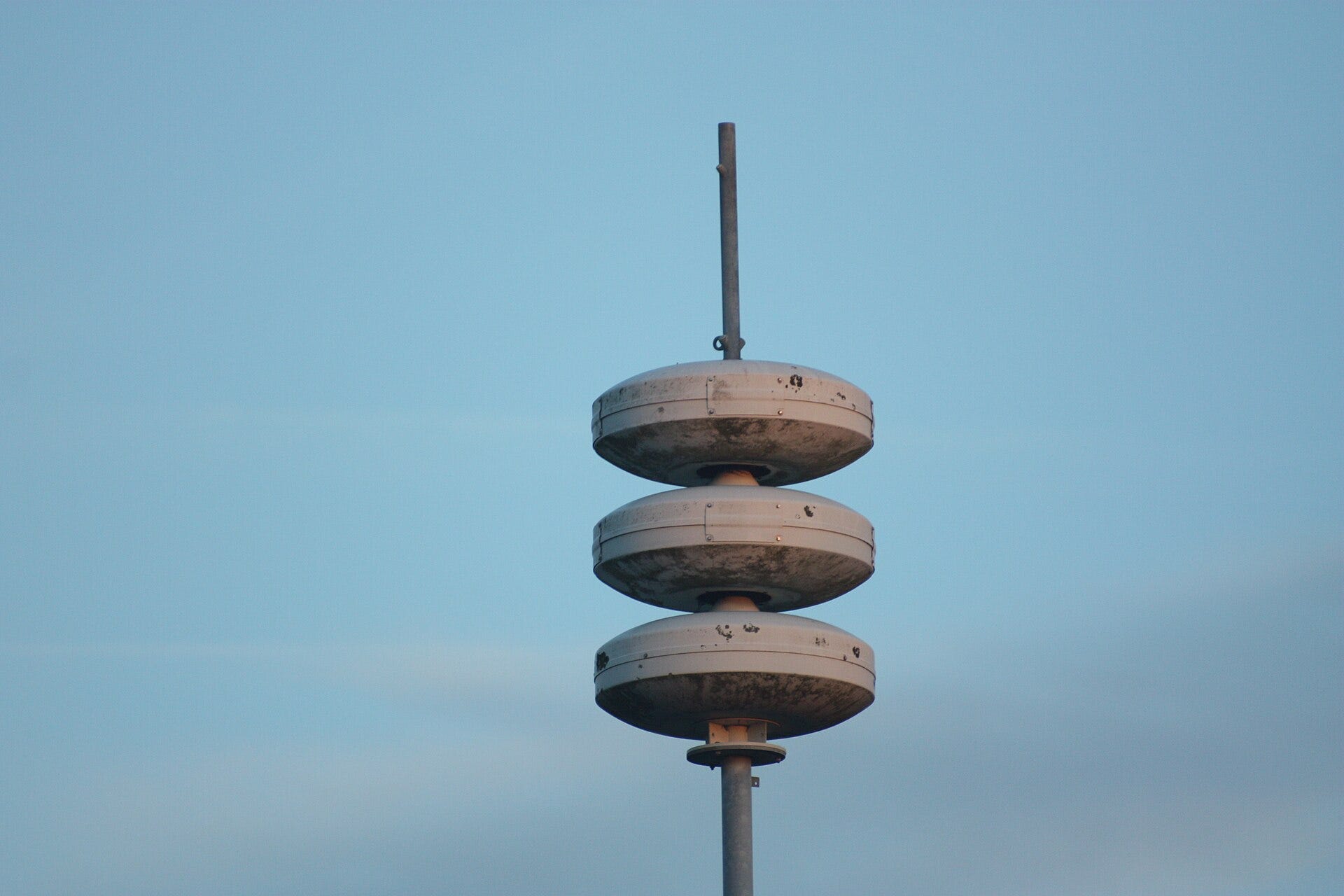
The familiar wail of the Dutch air-raid sirens is not disappearing after all. Justice and security minister David van Weel and defence minister Dilan Yeşilgöz announced that the Netherlands will get a new nationwide siren network, in cooperation with the armed forces. The move reverses a decision Van Weel made only three weeks ago, when he said there was no money for a replacement and the existing system would be phased out from 2028.
SPONSORED
You’re overpaying your accountant. And they still don’t call you back.

Neno gives you a dedicated bookkeeper, automated admin, real-time financial insights and a free business bank account. Everything your business needs, in one place.
No chasing. No surprises. No unnecessary costs.
A clear U-turn
On 19 May, Van Weel wrote to the Tweede Kamer that “no financial means” had been found for a new innovative siren network. As a result, the monthly siren test on the first Monday of every month would stop at the end of 2027, and the existing system would be phased out from 1 January 2028. NL-Alert, the emergency message sent to Dutch mobile phones, would take over.
A large majority of the Tweede Kamer rejected that conclusion. Members of parliament from across the political spectrum, including 50Plus, BBB, the SP and others, warned that around 8 percent of the population, including many elderly people, people who do not yet speak Dutch and people without a smartphone, could not reliably be reached by NL-Alert alone. The safety regions raised similar concerns. Surveys cited in the media showed strong public support for keeping the sirens.
A few days later, Van Weel said he would look for “an alternative,” together with the defence ministry. That alternative has now arrived.
A new system, linked to Defence
The new siren network will replace the existing Waarschuwings- en Alarmeringssysteem (WAS), the network of around 4,200 siren poles set up in the 1950s during the Cold War and last refurbished in 1998. Its biggest novelty is that it will be tied directly into a detection system run by the Dutch armed forces.
“That these systems are going to work together is new, and an important step needed to be prepared for the threats of our time,” Van Weel said. “That the network will soon have nationwide coverage and can also be operated nationally is also new. When Defence detects a threat, people are directly alerted via NL-Alert and the innovative siren network. But we can also alarm people in a specific area in the case of floods or other crisis situations.”
Defence will pay for part of the new network. According to the ministers, the renewed system is explicitly designed “as an addition to NL-Alert, not a replacement,” so that people are not dependent on their phone alone to be warned.
No gap in coverage
The transition will be gradual. The existing WAS network of roughly 4,200 sirens will remain fully operational until at least 2028, and the monthly first-Monday test will continue until the new structure is ready. “Citizens do not need to fear a gap in coverage,” the Defence and Justice ministries said in their joint statement. Only when the new system is functioning smoothly will the old one be definitively retired.
Why now
The U-turn fits a wider shift in Dutch security policy in response to the changed geopolitical situation, including the war in the Middle East, the war in Ukraine and growing concerns about cyber attacks and drone incursions. Van Weel framed the new system as a way to make the country “more resilient and more crisis-proof.”
For the public, the practical effect is that the first-Monday siren test (and the broader assurance that there is more than one way to receive an emergency warning) will continue. Exactly what the new system will look like, and when it will be ready, is still to be worked out in the coming months.