

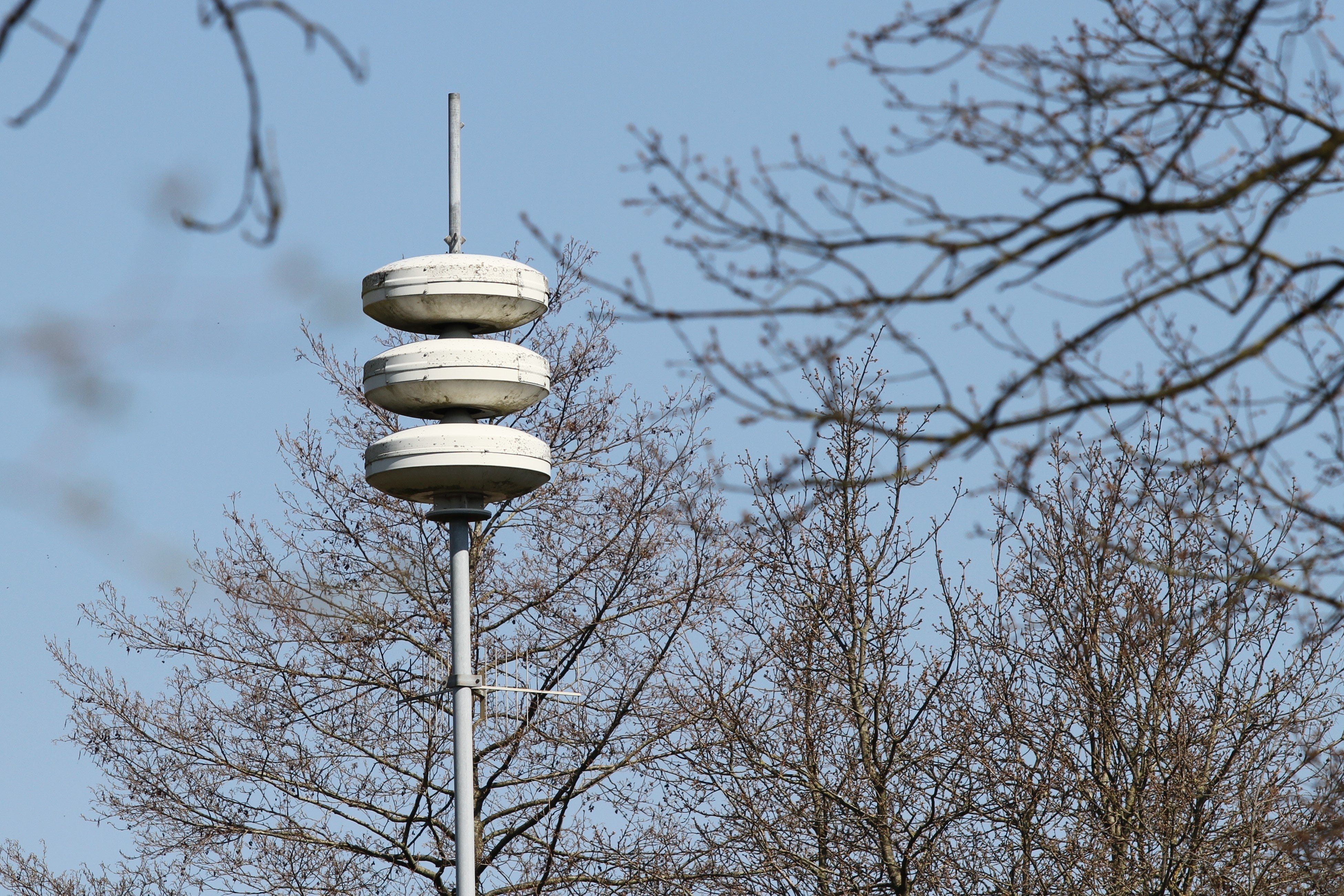
The familiar wail of the Dutch air raid sirens on the first Monday of every month will fall silent from 2028, after the cabinet decided it cannot afford to build a new warning system. The phase-out marks the end of a feature of Dutch public life that has run uninterrupted since the 1950s.
Rentals in the Netherlands

Signaal tracks the Dutch rental market and notifies you the moment something matches your search. Be first to apply.
No money for a new system
Justice and security minister David van Weel (VVD) wrote to parliament on Monday that the government has been unable to find money for an “innovative” new siren network to replace the current ageing one. The maintenance contract with the existing suppliers runs until 1 January 2028, and the cabinet will not extend it again. From that point on, the “phasing out, in line with the earlier decision, will have to be carried out,” Van Weel said. The decision still has to be voted on by parliament.
The decision reverses, in effect, an earlier instruction from the Tweede Kamer. Two years ago, a large majority of MPs voted to secure the future of the system after the cabinet announced plans to switch it off in 2025. At the time, the contract with the suppliers was extended to early 2028, partly to give time to design a replacement. That replacement, the minister now says, will not come.
Why the cabinet wants to drop the sirens
The current network of roughly 4,200 sirens was set up in the 1950s and last refurbished in 1998. The cabinet has long argued that the system is “strongly outdated” and that not everyone in the country can be reached by it. In its place, the government wants to rely on NL-Alert, the emergency message that pops up on Dutch mobile phones. According to Van Weel, around 92 percent of the population can be reached through NL-Alert.
The minister did leave a small door open: he says he will consider keeping an alarm system in place for high-risk areas, such as towns prone to flooding. He will also consult the Dutch Institute for Public Safety (NIPV) and the regional safety regions about how the phase-out should be carried out.
A familiar Dutch sound
For most people in the Netherlands, the sirens have been less about war than about routine. Their spiralling tones have rung out at noon on the first Monday of every month for decades, just long enough to be checked. The end-of-year 2027 test will, if the plan goes through, be the last.
The sirens were originally designed to warn citizens to take cover from aerial bombing, but in practice they have most often been used to alert people to other dangers, such as floods and large fires. They were last switched on outside the monthly test for fast-rising river water in southern Limburg in 2021, and for the release of toxic chemicals from the Chemelot industrial site, also in Limburg, in 2019.
Concerns about losing the sirens
Not everyone is convinced that NL-Alert can fully replace the sirens. Safety experts point out that not everyone always has a mobile phone with them, that older devices may not receive the alerts, and that phone networks or electricity supply can themselves fail during a disaster. For people outdoors, in busy public spaces or in places with poor coverage, the high, distinctive wail of a siren is still seen as an important “recognition signal” that something is wrong.
That same concern was already on parliament’s mind two years ago, when MPs voted to keep the system going. Whether they will accept the cabinet’s revised position now, and whether they will demand that at least some sirens remain in high-risk areas, will become clear when parliament debates the decision in the coming months.