


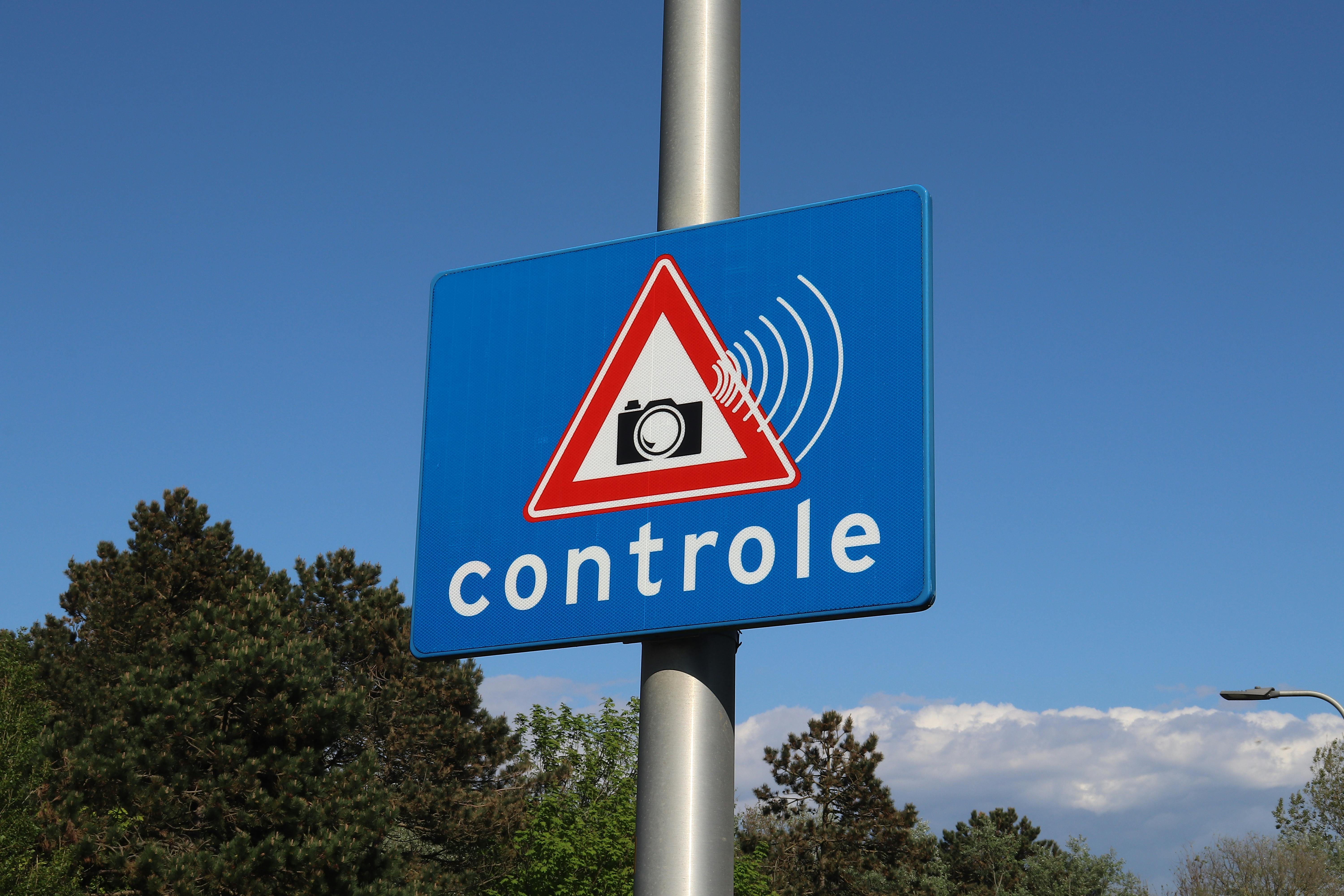
The Dutch Public Prosecution Service (Openbaar Ministerie, OM) plans to more than double the number of locations where mobile speed cameras can be placed this year and to launch a trial of section-based speed control on streets inside towns and cities. The aim, according to the OM, is to improve road safety and to free up police officers for more complex enforcement work.
Rentals in the Netherlands

Signaal tracks the Dutch rental market and notifies you the moment something matches your search. Be first to apply.
From 650 to 1,450 locations
At present, mobile speed cameras in the Netherlands can be set up at around 650 prepared locations across the country. The OM wants to raise that number to 1,450 by the end of 2026. The agency is also buying around 50 extra cameras and increasing the number of so-called “focusflitsers,” cameras that can detect drivers holding a mobile phone, from 40 to 50. The country’s separate, movable “flexflitser” units, which measure speed, are set to grow from 75 to 125.
Preparing a single new location is not as simple as it sounds. “Focus cameras have to stand on a concrete slab, and you have to prepare that,” an OM spokesperson explained. “And for many speed cameras you also need power supply or to make space so you can reach them.” Today, focus and flex cameras are typically moved to a new location about every two months. The OM wants to experiment with rotating them more quickly.
Section control inside built-up areas
The biggest novelty is the planned introduction of section control, or trajectcontrole, on streets inside towns and cities. Section control measures the average speed of a car between two points and issues a fine if that average is too high. The Netherlands currently has 63 such systems active at 31 locations, mainly on motorways and other longer through-routes. The new trial would be the first time this approach is used within a built-up area. If it leads to a clear drop in violations, the OM wants to extend the system to other locations.
The OM points to its earlier experience. After section control was activated on the A7 motorway between Hoorn and Purmerend in January 2026, the number of drivers caught speeding fell by around 90 percent within two weeks. “Since enforcement started, many more drivers are sticking to the limit. That is good news, because fewer offences mean a safer road for everyone,” Marc Pluimers of the OM said at the time.
Why the OM wants to push automation
Pluimers, of the OM, frames the wider expansion as a way to use technology where it can take pressure off the police. “By using more speed cameras and other systems, the police can focus even more on situations where human deployment has real added value, such as repeat offenders who are often involved in serious accidents,” he said. Around 75 percent of speeding and red-light offences in the Netherlands are already handled automatically, without human intervention, a share the OM describes as unmatched anywhere else.
The expansion is also a response to a wave of local 30 km/h zones. More and more Dutch municipalities are lowering the maximum speed on their roads from 50 to 30 km/h. The OM says it wants to help those municipalities enforce the new limits with mobile flex cameras and other tools.
Looking further ahead
The plans are part of the OM’s outlook for traffic enforcement for 2026-2030. Beyond the immediate expansion, the agency is also studying further innovations. One example, already in use abroad, is the so-called “rolling radar”: an unmarked car that drives along with traffic and measures the speed of other road users, issuing fines automatically.
For now, the most visible change for drivers will be the steady appearance of new camera positions, in particular in the neighbourhoods where the speed limit has just dropped to 30 km/h.