


See more of Dutch Brief in your Google search results
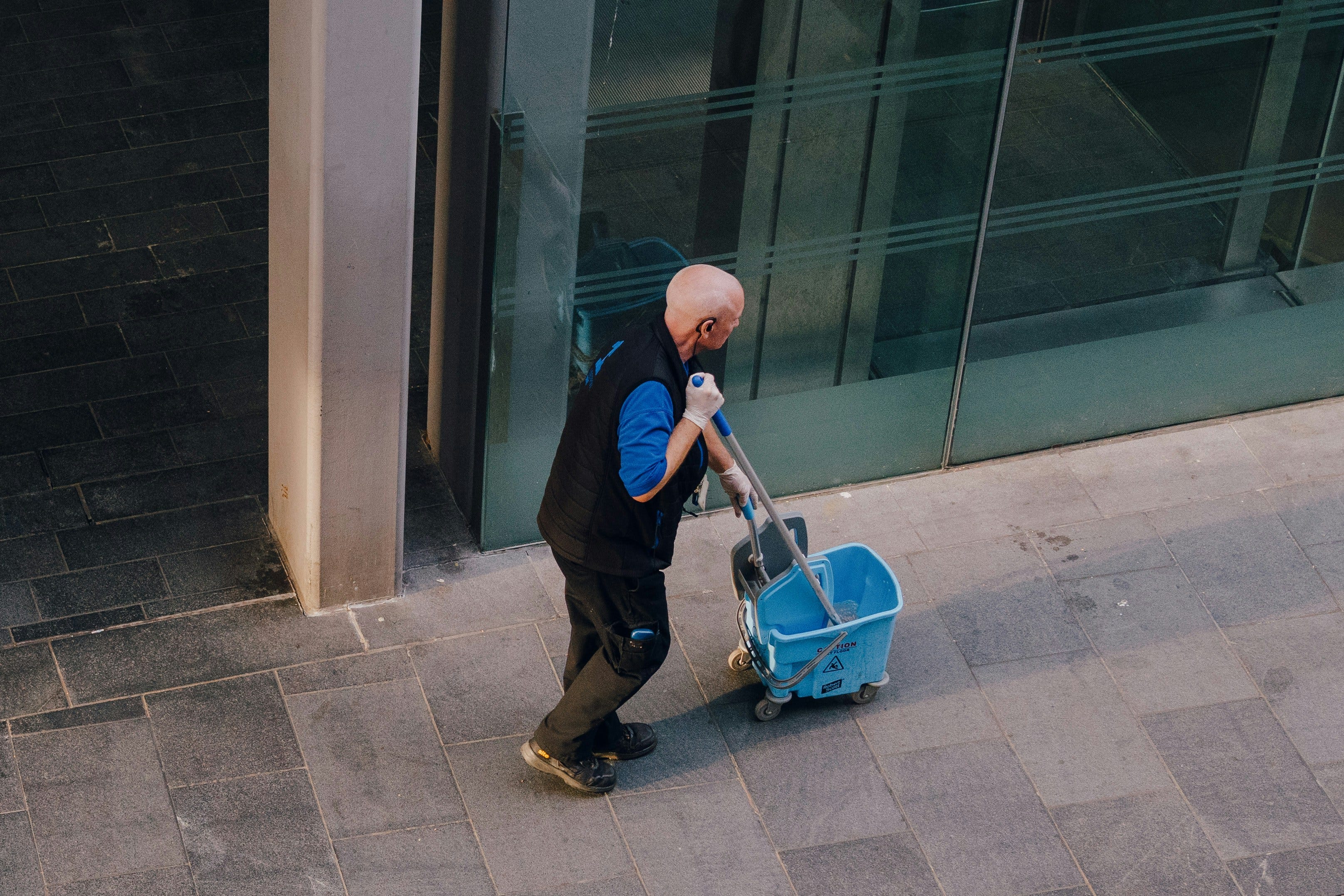
Cleaners at Schiphol Airport, major railway stations and universities across the Netherlands are downing tools all week in a dispute over their new collective labour agreement, the country’s largest union, FNV, has announced. The strike runs from Monday 14 to Friday 18 September.
What the dispute is about
The dispute revolves around a new collective agreement (cao) for the cleaning industry. The employers’ group Schoonmakend Nederland agreed to the deal with the union CNV, but most FNV members declined it. Now, FNV insists on reopening and renegotiating the agreement so that, as union official Caroline Lamberts states, workers are “actually listened to.”
Its members want a bigger pay rise and wages that rise automatically with inflation. A central sticking point is sick pay: under the existing arrangement, cleaners employed for less than six months receive 70 percent of their daily wage while ill, rising to 90 percent after six months and 100 percent after two years. FNV has also demanded, across all sectors, a 5.5 percent pay rise including automatic price compensation; collectively agreed wages rose 4.5 percent in the first quarter of the year.
Where, and who is affected
The union has called on cleaners nationwide to join in. Strikes are taking place at Schiphol, at large train stations and at a number of universities and colleges. Notably, cleaners in hospitals are not striking, so care settings are unaffected.
On the first day, Monday 14 September, Lamberts said most cleaners at Schiphol walked out, and there was “full-scale” striking at stations including Utrecht, Rotterdam, Groningen and Nijmegen. Only around 10 percent of all cleaners are FNV members, however, so the effect is uneven. NS said the impact on its stations and trains had so far been limited, and that not everywhere was being struck. The rail company is not itself a party to the dispute, hiring cleaners through cleaning firms, but has agreed with FNV that a minimum level of cleaning will continue where dirt could otherwise create safety risks, such as debris reaching the tracks or passengers slipping. NS asked travellers to take their own rubbish with them.
SPONSORED
You’re overpaying your accountant. And they still don’t call you back.
Neno gives you a dedicated bookkeeper, automated admin, real-time financial insights and a free business bank account. Everything your business needs, in one place.
No chasing. No surprises. No unnecessary costs.
Why a week
FNV chose a full week deliberately, because the effect of a cleaning strike builds slowly. “Cleaners are normally invisible. You notice their work mostly when it is done,” Lamberts said. “By not cleaning, we make visible how important their work is.” The real impact, she added, only becomes clear after a few days, when the mess accumulates. A large national gathering of striking cleaners is planned for Thursday 17 September.
The action follows a series of earlier strikes, at Schiphol on 19 August, at NS’s head office in Utrecht on 20 August, at Schoonmakend Nederland in Den Bosch on 1 September, and in The Hague on 8 September, none of which achieved the result the union wanted. Whether the Ministry of Social Affairs declares the CNV-signed agreement binding for the whole sector, even without FNV, is now its decision.