


See more of Dutch Brief in your Google search results
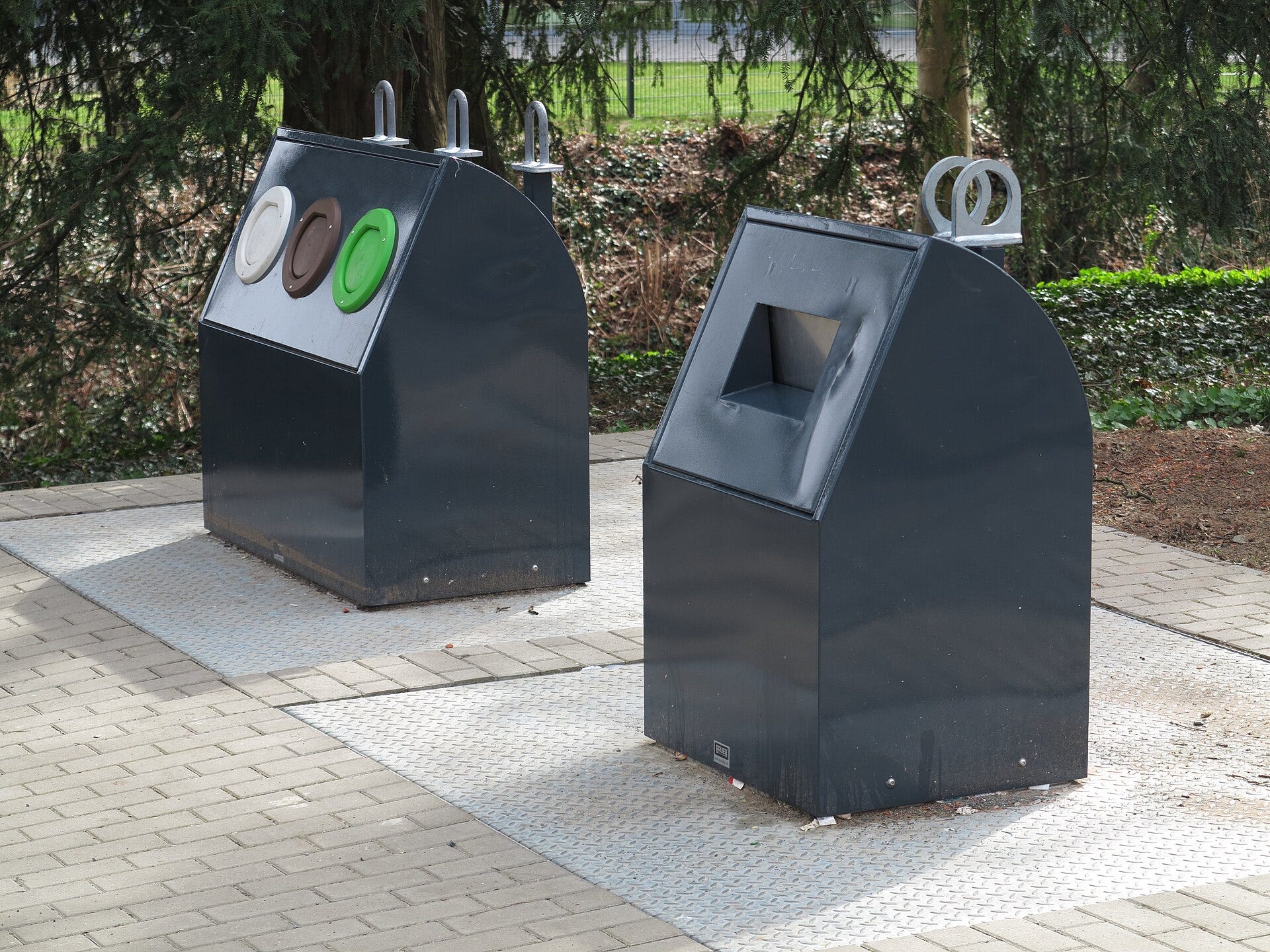
Millions of people in the Netherlands are used to carefully rinsing yoghurt pots, figuring out which bin orange netting goes in, and separating food waste, plastic, metal, and drink cartons (PMD). Now, in more and more places, that responsibility is fading as municipalities let machines handle the sorting.
What is changing
New data from the statistics office CBS shows that almost 60 percent of Dutch municipalities now separate household waste after collection (nascheiding), either fully or partly, instead of asking residents to do it themselves. This is a big jump from just a quarter of municipalities in 2023. In 2025, 195 municipalities used some form of post-separation. In these areas, people can put most of their waste in one bag, which is then taken to a special facility where machines extract reusable materials.
The biggest changes are happening in large cities. Rotterdam is leading, post-separating 73.5 percent of its residual waste, followed by Vlaardingen (71.3 percent), The Hague (69.7 percent), and Utrecht (60.2 percent). In twelve municipalities, more than half of residual waste is now sorted after collection. In contrast, places like Ommen, Staphorst, and Roosendaal only post-separate 0.2 percent.
So have I been sorting for nothing?
Many people are now wondering if all their sorting was for nothing. The answer is no, it wasn’t pointless. Before 2010, sorting machines couldn’t remove thin films, cartons, and cans from wet household waste, says Raymond Gradus, professor of governance and economics at the Vrije Universiteit Amsterdam, who has studied waste separation in depth. Today’s advanced systems use infrared scanners, magnets, and air sifters to do this job, often more accurately than people.
But not everything can go in one pile. Old paper and cardboard still need to be kept separate because they get wet and become useless if mixed with other waste. Glass also needs to be separated, since it can damage the sorting machines.
SPONSORED
You’re overpaying your accountant. And they still don’t call you back.

Neno gives you a dedicated bookkeeper, automated admin, real-time financial insights and a free business bank account. Everything your business needs, in one place.
No chasing. No surprises. No unnecessary costs.
It depends on your postcode
Whether you need to sort your waste depends a lot on where you live. Most municipalities use a mix of systems, Gradus says. People in low-rise homes with more space still separate their own waste, while in high-rise buildings and crowded neighbourhoods, sorting happens after collection. For people living in busy city centres and apartment blocks, post-separation is a relief. A bag of mixed packaging and food scraps on the third floor can quickly cause smells and attract pests. There are also fewer wheelie bins on the pavement and fewer bin lorries in narrow streets. “In the big city, post-separation is the superior approach,” Gradus says.
Outside the cities, it’s the opposite. In villages and areas with more space, almost no residual waste is sorted by machines. If you throw everything together there, valuable raw materials end up being incinerated.
Why you may want to keep sorting
In some municipalities, there’s a direct financial reason to keep sorting. The Diftar system (which stands for “differentiated tariff”) means you pay a small fee for each bag of residual waste you throw away. The better you separate plastic, food waste, and paper, the less residual waste you have, which can save you tens to hundreds of euros each year. The goal is to reduce household residual waste. Right now, each resident produces an average of 176 kilograms a year (the lowest since 1993), and many municipalities are now aiming for a maximum of 100 kilograms, since the earlier target of 30 kilograms turned out to be unrealistic.
Bottom line
Some say machine sorting is simply more reliable, since people often make mistakes, even when they try their best. For example, an orange net should go in residual waste, not with plastic, and there are also differences between types of plastic. Mistakes can cause whole batches to be rejected and incinerated. Gradus thinks machines will become clearly “superior” in the future, as packaging uses less single-use plastic and more deposit schemes. Until then, it depends on your postcode: in the city, you can usually skip the separate plastic bag, but outside the city, sorting properly is still worth it for both your wallet and the environment.
One important thing to remember: the post-separation percentages above show how much residual waste is sorted by machines, not how much is actually recycled. That’s a different number.