


See more of Dutch Brief in your Google search results
The macro picture
Dutch startups raised approximately €1.3 billion in publicly disclosed funding in Q2 2026, an increase of 81 percent year over year, according to the Quarterly Startup Report cited by IO+.
Much of that capital was concentrated in three unusually large rounds: Nearfield Instruments raised $380 million, General Intuition announced a $320 million Series A and QuantWare secured $178 million, equivalent to approximately €152 million. Together, these deals accounted for the majority of the quarter’s disclosed funding.
The number of deals tells a different story. Seed rounds were the most common type of funding round in the Netherlands during Q2, representing 41.4 percent of all deals. Yet they accounted for only 3.5 percent of the total capital invested.
That contrast matters. The headline figures point to a Dutch technology ecosystem capable of producing and financing more mature companies. At the same time, they show how heavily capital is concentrating in a small number of larger rounds.
Remove those deals from the picture and the market begins to look much closer to the environment in which most founders are operating: smaller rounds, longer fundraising processes and greater competition for early-stage capital.
Lucien Burm, chair of the Dutch Startup Association, has warned that declining access to early-stage funding could weaken the pipeline from which future scale-ups emerge. Against that backdrop, the seed rounds announced during the first eight months of 2026 deserve closer attention.
Deep tech attracts a disproportionate share of Dutch capital
Deep tech represented just 12 percent of the Dutch technology ecosystem in 2025, but attracted 41 percent of all venture capital invested that year. AI companies received 27 percent, according to the State of Dutch Tech 2026 report.
Two of the largest rounds announced in Q2 reflect that deep-tech strength. Nearfield Instruments develops advanced metrology equipment for semiconductor manufacturing, while QuantWare builds quantum processors and the infrastructure required to produce them at scale.
Part of deep tech’s appeal may lie in the barriers surrounding these businesses. Companies built on years of scientific research, specialised infrastructure and proprietary technology can be difficult to replicate. Once their underlying technical risk has been reduced, that defensibility can support a strong long-term investment case.
AI remains an important part of the Dutch funding landscape, but the market is highly uneven. Capital is available for companies that can demonstrate clear differentiation, proprietary advantages or rapid commercial traction, while the broader early-stage market remains selective.
SPONSORED
You’re overpaying your accountant. And they still don’t call you back.

Neno gives you a dedicated bookkeeper, automated admin, real-time financial insights and a free business bank account. Everything your business needs, in one place.
No chasing. No surprises. No unnecessary costs.
Amsterdam’s AI seed rounds keep coming
Amsterdam-based companies have continued to attract seed funding in 2026, particularly across different applications of AI.
SOUS closed a €4 million seed round in March, led by seed + speed Ventures. PeakBridge, āltitude, Gekko Capital and a group of angel investors also participated. The company develops an AI-powered growth platform that helps independent restaurants improve their digital visibility, generate direct sales and manage customer engagement.
Four months later, Promptwatch raised €6 million in a seed round led by seed + speed Ventures, with participation from Blum Ventures and existing investor Arches Capital. Promptwatch helps companies understand and improve how their brands appear in AI-powered search and chatbot responses. After surpassing €2 million in annual recurring revenue, the company is also expanding its presence in New York.
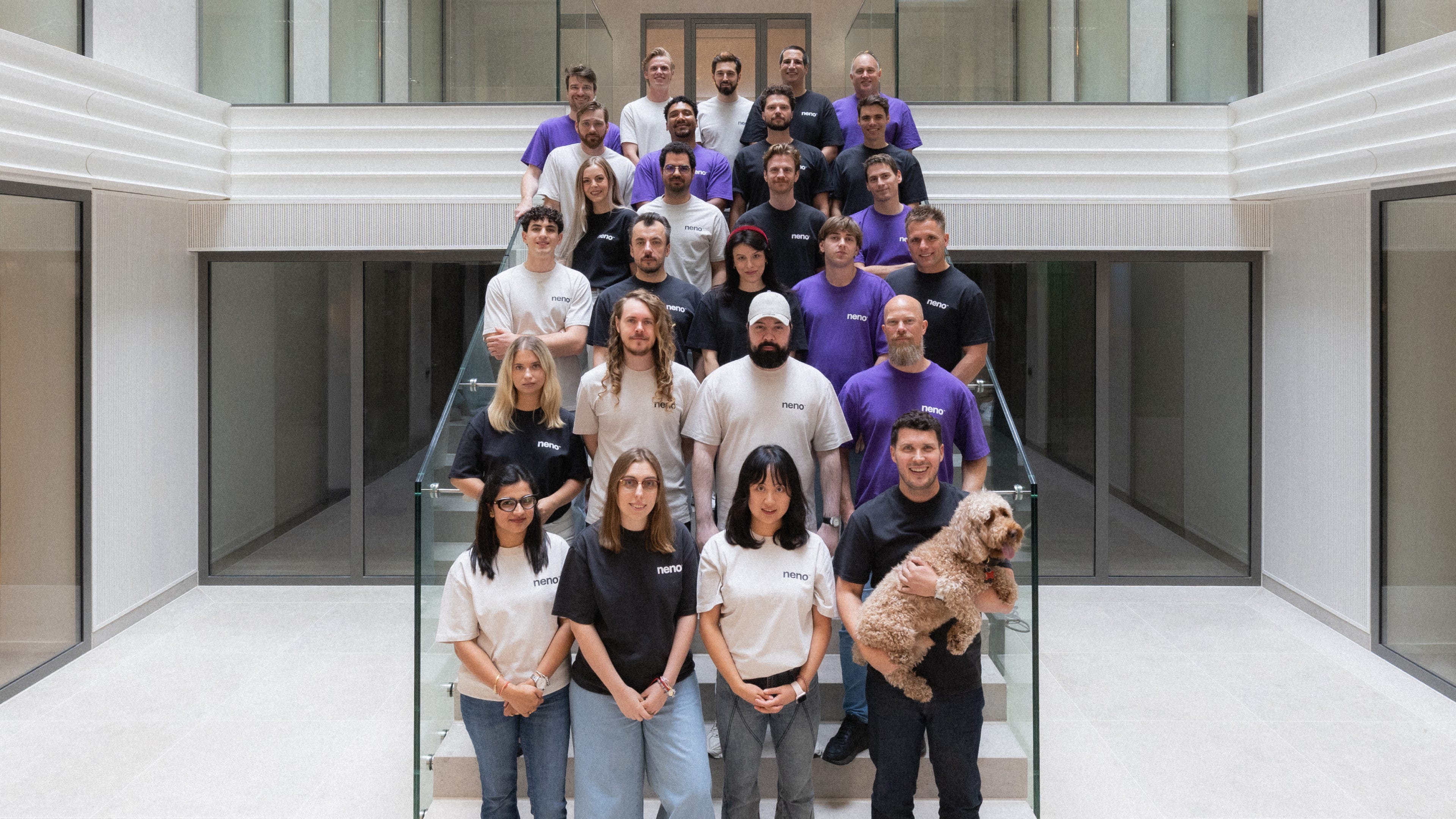
Six weeks later, Neno announced a €6.6 million seed round led by AlleyCorp, with participation from Motive Partners, Firstminute Capital and a group of angel investors. Neno combines accountancy, tax, payroll and business banking in an AI-native financial services platform. Its agentic general ledger automates repetitive financial workflows, while an in-house accounting team remains responsible for review and advice. Since launching in Q1 2026, the company has grown to nearly 200 customers.
Together, the three rounds show that Amsterdam-based AI companies are still attracting meaningful early-stage capital. They also represent three distinct applications of the technology: restaurant growth, AI search visibility and financial services.
Deep tech puts seed capital to work beyond Amsterdam
Amsterdam is not the only Dutch city where seed capital is being deployed. Some of the country’s largest seed rounds have emerged from the research and technology clusters surrounding Eindhoven, Delft and Utrecht.
Invisix, an Eindhoven-based spin-out from ASML, raised a €20 million seed round in June. The round included Hitachi Ventures, Transition Ventures, imec.xpand, Doosan Investment and a major semiconductor manufacturer. Invisix is developing soft X-ray metrology systems that allow chipmakers to inspect increasingly complex semiconductor structures.
In Delft, Groove Quantum announced €16 million in combined funding in April. This consisted of €10 million in seed equity, co-led by Innovation Industries and 55 North, and €6 million in grants from the EIC Accelerator and the EU Chips Act programme. The company is developing germanium spin-qubit processors designed to be compatible with existing semiconductor manufacturing processes.
Also in Delft, OrangeQS extended its seed round to €15 million with an additional investment from the European Innovation Council Fund. The company develops automated testing infrastructure intended to accelerate the development and production of quantum chips.
In Utrecht, biotech company Laigo Bio completed the final close of an oversubscribed €17 million seed round in March, co-led by Biovance Capital and Kurma Partners. The company is developing a targeted protein-degradation platform for potential applications in oncology and autoimmune diseases.
These rounds show that Dutch seed funding is supporting more than software companies alone. It is also helping fund capital-intensive technologies that require specialist research, hardware and infrastructure before they can reach commercial scale.
What it adds up to
During the first eight months of 2026, Dutch founders raised seed rounds across AI search, restaurant technology, financial services, semiconductor manufacturing, quantum computing and biotechnology.
These rounds sit within a market that is sending an increasing share of its capital toward fewer, larger deals. That makes the continued volume and range of seed funding significant. Seed remained the country’s most common funding stage in Q2, even though it represented only a small percentage of the total amount invested.
The three AI seed rounds announced by Amsterdam companies within roughly five months are a positive signal for the city’s early-stage ecosystem. At the same time, the large rounds emerging from Delft, Eindhoven and Utrecht underline the Netherlands’ growing strength in deep tech.
Megadeals may define the headline numbers, but seed funding remains where many of the companies that could shape the next generation of Dutch technology are first being built.
