


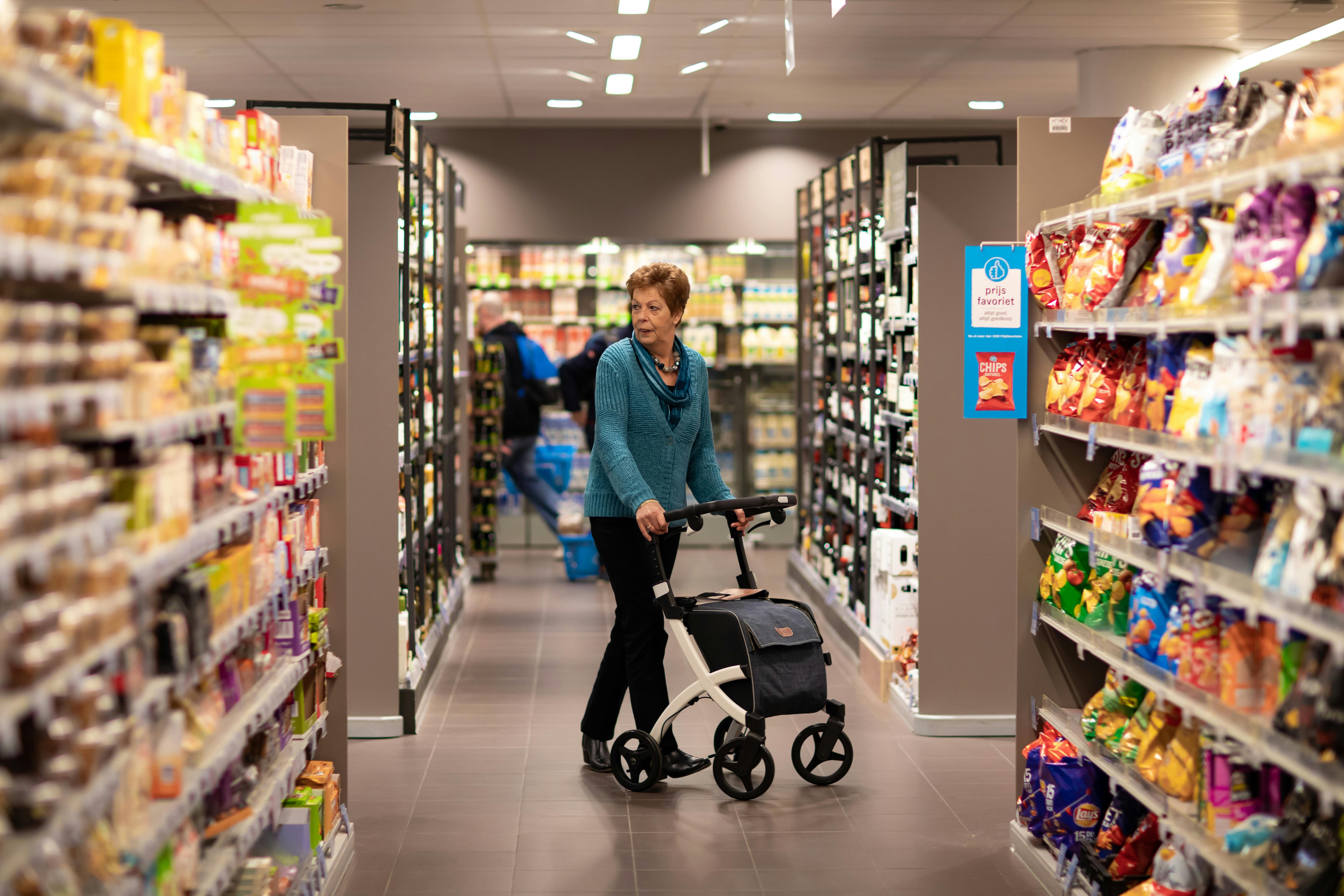
A new study by independent food watchdog Foodwatch has found that dozens of food products sold by Albert Heijn and Jumbo, the Netherlands’ two largest supermarket chains, contain pesticides that are banned in the European Union. The findings have led to calls for tighter controls and to a renewed debate about the so-called “boomerang effect,” in which chemicals produced in Europe come back into the country via imported goods.
Rentals in the Netherlands

Signaal tracks the Dutch rental market and notifies you the moment something matches your search. Be first to apply.
What the study found
Foodwatch had 64 products tested in laboratories in four countries. In 49 of them, traces of pesticides were found. In 45 cases, those substances were not authorised for use in the EU. In 14 cases, the residues exceeded the legal EU limits, meaning the products should not have been on sale at all, according to the watchdog.
The products tested included rice, tea, paprika powder, chilli and cumin. Every single sample of paprika powder, chilli and cumin contained traces of pesticides that are not allowed in the EU. The worst case was Verstegen’s mild ground paprika: a single jar contained 18 different pesticides, half of which are on the EU’s banned list.
Among the banned substances Foodwatch identified were the insecticides clothianidin, thiamethoxam and imidacloprid, all known to be harmful to bees, as well as chlorfenapyr, bifenthrin, spirotetramat, and the fungicide isoprothiolane.
The “poison boomerang”
The reason banned pesticides keep showing up in food on EU shelves lies in a quirk of European law. Companies based in the EU are allowed to manufacture and export pesticides that are forbidden for use inside the bloc, as long as they ship them to countries outside the EU. The chemicals are then used on crops grown abroad, which can be exported back into Europe with residues still on them. Campaigners call this the “gifboomerang,” or poison boomerang.
“Pesticides that are banned in the EU don’t belong in our food. And we certainly shouldn’t be exporting them,” Foodwatch director Nicole van Gemert said. “Both European consumers and farmers and communities abroad have to be protected.”
Foodwatch is calling on the EU to ban the trade and export of any pesticide that is not approved for use within the bloc. A petition against the poison boomerang has been signed more than 115,000 times. The watchdog also wants the EU’s two biggest supermarket chains in the Netherlands to use their market power to force their suppliers to comply with the rules.
Last year, the EU announced that it would tighten checks on imported food to keep banned pesticides out. Foodwatch says those new measures are inadequate, because they “would only cover a small portion of pesticide substances and would require an individual impact assessment every time the residue limit of a substance is to be considered.”
How the supermarkets responded
Albert Heijn said that “all Albert Heijn products meet strict European and national food safety requirements.” The two own-brand products mentioned in the Foodwatch report, AH Basmati rice and AH Green tea pure, are within the legal limits and “safe for consumption,” a spokesperson said. For A-brand products that exceeded those limits, Albert Heijn has contacted the suppliers in question, and has asked Foodwatch for full access to the test results.
Jumbo said that five A-brand products on its shelves were flagged in the study, with one of them exceeding the legal limit. “Responsibility for the quality of A-brand products lies first of all with the suppliers of those products, and we are going into discussions with them straight away to hear what action they are taking in response to this study,” a spokesperson said. The chain also regularly tests its own-brand products for pesticide residues, and said it would now carry out extra checks.
For now, the chemicals in question are still flowing in both directions: out of Europe in ships and tankers, and back into European homes in tea, rice and spice jars.