


See more of Dutch Brief in your Google search results
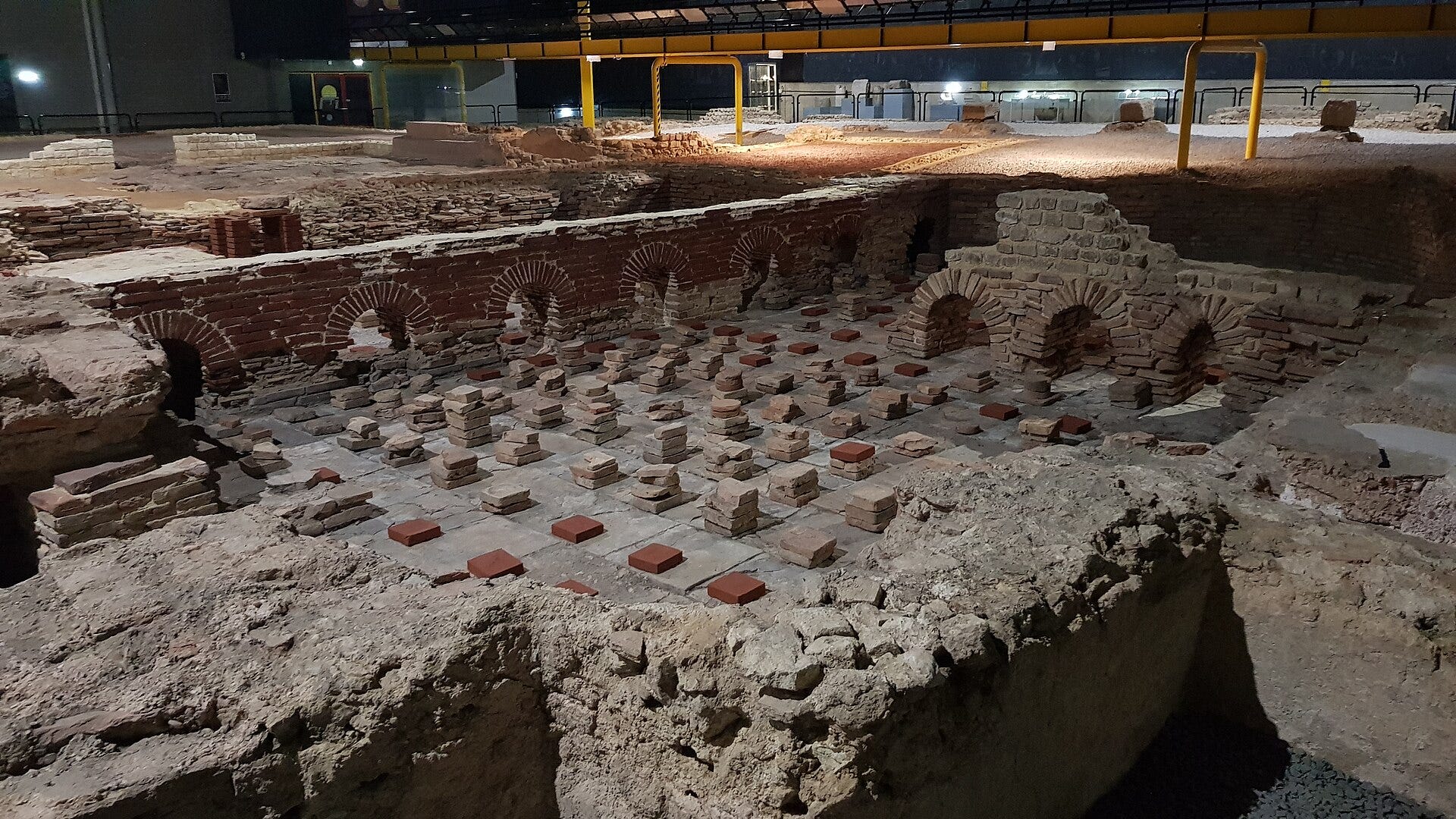
Archaeologists in Nijmegen have uncovered the remains of the largest Roman bathhouse complex ever found in the Netherlands, the city's municipality announced on Tuesday. The thermae sat in the heart of the Roman city of Ulpia Noviomagus, on a site in the Waalfront district where developer BPD is now preparing to build new homes. Around the bathhouse, the dig has also revealed parts of housing blocks, streets, luxury townhouses, a tower and tens of thousands of small finds.
Twice the size of the largest previous finds
According to the project leader, Erik Verhelst, the complex covered at least 4,900 square metres. That makes it more than twice as large as Roman bathhouses studied earlier in Voorburg and Heerlen, the country’s other best-known Roman bath sites. Excavations are being carried out by archaeological research bureaus RAAP and BAAC, on behalf of the municipality and BPD | Bouwfonds Gebiedsontwikkeling. They started in September last year and are due to run until July 2026.
Part of the bathhouse was first found in 1992, during the final expansion of the Honigfabriek (a former food factory on the same site), but only a small section could be studied at the time. Now that the rest of the area is being prepared for new housing, the whole bathhouse has been laid bare.
A “chic” building
The remains show that the thermae were once a high-status, “chic” building. The walls of the bathing rooms were lined with marble; the floors were paved with black and white limestone tiles; other rooms had brightly painted plasterwork, limestone columns and decorative mouldings. Two stone foundations still stand to a height of around two metres, which the archaeologists describe as some of the best-preserved Roman masonry in Nijmegen.
Excavators have also found extensive remains of the hypocaust, the Roman underfloor and wall heating system in which hot air was led through cavities beneath the floors and along the walls. A new series of rooms has been uncovered next to a hot-water bath already known from earlier work, including warm, tepid and cold baths, all in the typical Roman pattern. The new rooms appear to have been added later, possibly to replace older baths or to create separate sections for men and women.
SPONSORED
You’re overpaying your accountant. And they still don’t call you back.

Neno gives you a dedicated bookkeeper, automated admin, real-time financial insights and a free business bank account. Everything your business needs, in one place.
No chasing. No surprises. No unnecessary costs.
A glimpse of daily life
Around the bathhouse, the dig has produced tens of thousands of finds. They include bone hairpins, jewellery, coins, signet rings, a necklace with a gold clasp, parts of bronze statues and a striking bronze bust depicting Bacchus, the Roman god of wine. The municipality says these objects show that the inhabitants of this part of the city, roughly 1,800 to 1,900 years ago, lived in considerable wealth.
Why Nijmegen
Nijmegen is widely regarded as the oldest city in the Netherlands. Around the year 100 AD, the Roman settlement on the river Waal (in what is now Nijmegen-West) received city rights from the emperor Marcus Ulpius Trajanus, better known as Trajan. The city was renamed Ulpia Noviomagus in his honour, and the surrounding district became one of the most important Roman administrative centres north of the Alps. As Verhelst put it, the city was “immediately equipped with large public buildings of natural stone” after receiving its rights, of which the public bathhouse, open to all citizens, was one.
The wider region (the Lower German Limes, of which Nijmegen forms part) is a UNESCO World Heritage Site, recognised in 2021 for its concentration of Roman archaeology along the Rhine.
What happens next
Excavations on the Waalfront site continue until July, after which the area will become part of a new residential development. What will eventually happen to the most impressive finds, including the foundations, the hypocaust remains and the Bacchus bust, has not been finalised. For now, the municipality says, the discoveries already throw “new light on life in Roman Nijmegen,” in the most direct sense possible: under the feet of a city that will soon, once again, become a place for people to live.