


See more of Dutch Brief in your Google search results
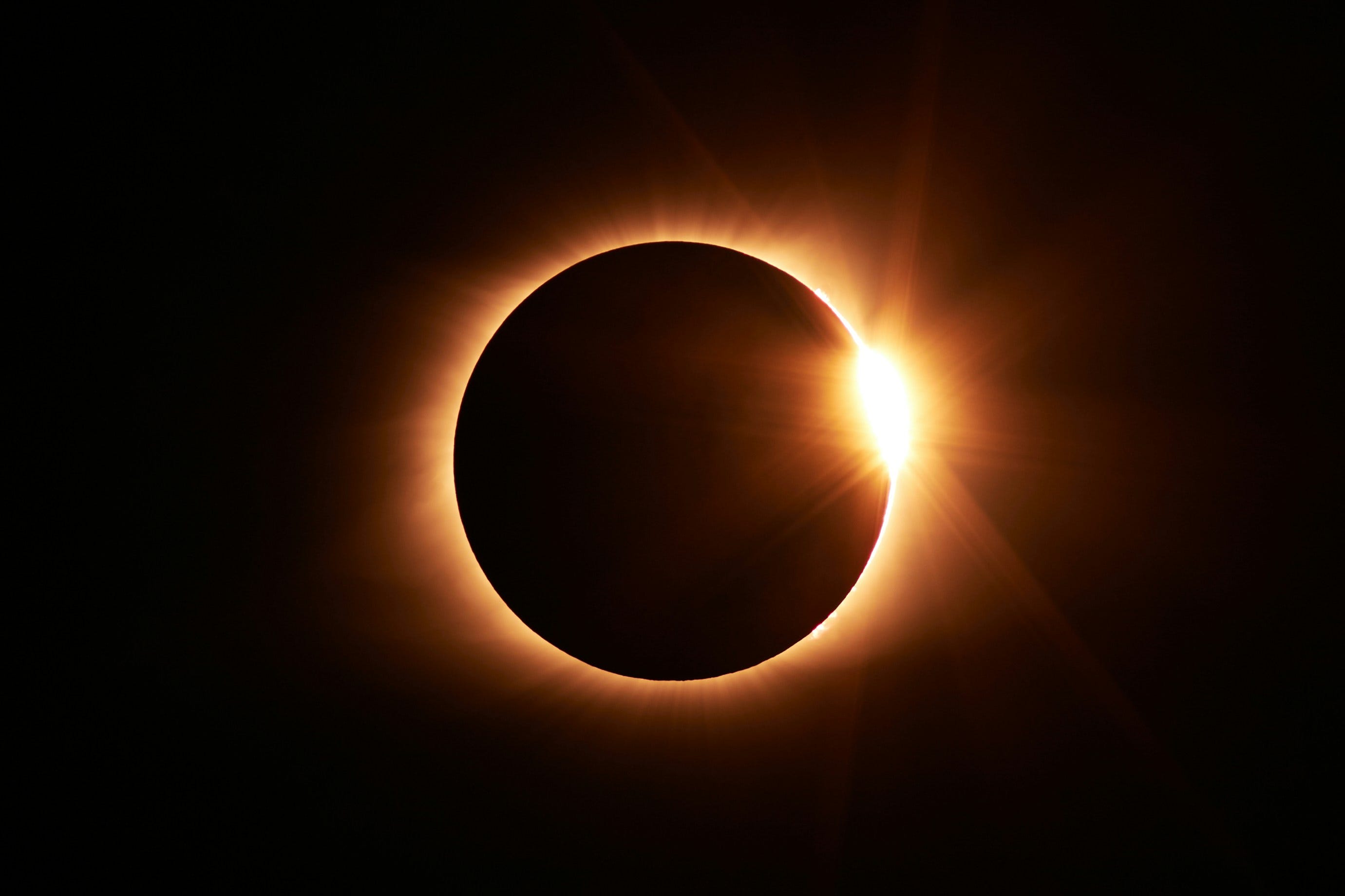
The Netherlands is about to witness an unusual sight in the sky. On the evening of Wednesday 12 August, the moon will pass in front of the sun and cover almost 90 percent of it, in the largest solar eclipse visible from the country in more than a quarter of a century.
A rare event
An eclipse of this size is uncommon here. The last time so much of the sun disappeared behind the moon, as seen from the Netherlands, was in 1999, and the next comparable events will not come until 2081 and 2090. That rarity has prompted observatories and universities across the country to open their doors for public viewing evenings.
The eclipse will begin at around 7.15pm and last until shortly after 9pm, close to sunset. It reaches its peak at about 8.11pm, when the moon covers nearly 90 percent of the sun’s disc. Because it happens on a summer evening, most people will be able to watch without it clashing with work or school.
It will not become fully dark. According to the Netherlands Research School for Astronomy, the sky will grow “noticeably darker,” with the light dimming and cooling in a way that is hard to miss. A true total eclipse, in which the sun is completely covered, will be visible elsewhere in Europe on the same day, including in Greenland, Iceland and the far north of Spain.
SPONSORED
You’re overpaying your accountant. And they still don’t call you back.

Neno gives you a dedicated bookkeeper, automated admin, real-time financial insights and a free business bank account. Everything your business needs, in one place.
No chasing. No surprises. No unnecessary costs.
How to watch safely
The single most important thing to know is that you must never look directly at the sun, not even when most of it is hidden. Astronomers stress that with around a tenth of the sun still visible, the light remains strong enough to cause serious and permanent eye damage, and the harm is painless and often only noticed hours or days later.
Ordinary sunglasses do not offer anywhere near enough protection. The safe options are certified eclipse glasses, which are designed to block almost all of the sunlight, or a telescope or binoculars fitted with a proper solar filter. Because there is no moment of totality in the Netherlands, there is no point during the whole event when it is safe to look without protection.
One other practical point: at its peak the sun will be low on the northwestern horizon. To see the eclipse well, you will want an open, unobstructed view in that direction, which is why coastal spots and other places with a clear western sky are especially good.
Where to go
Many observatories are organising events, often with telescopes and expert explanation. The University of Groningen is setting up observation points on the Wadden islands of Vlieland, Terschelling and Ameland, on the roof of the Forum building in central Groningen, and at Eemshaven, Lauwersoog and Noordpolderzijl.
Copernicus Observatory in Haarlem is taking its telescopes to the boulevard in Bloemendaal, where it will also hand out eclipse glasses. Saturnus Observatory from Heerhugowaard is heading to the dunes near Petten, and the Twente observatory Cosmos is placing special solar telescopes at a farm in Lattrop. Public viewing evenings are also planned at the Mercurius observatory in Dordrecht, Halley in Vinkel, Phoenix in Lochem, Midden-Nederland in Nijkerk and Vesta in Oostzaan.
For anyone who cannot get to one of these, some observatories will also stream the event online, and the astronomy portal Astronomie.nl is keeping an updated overview of activities around the country. If the weather cooperates, it should be well worth stepping outside for.